
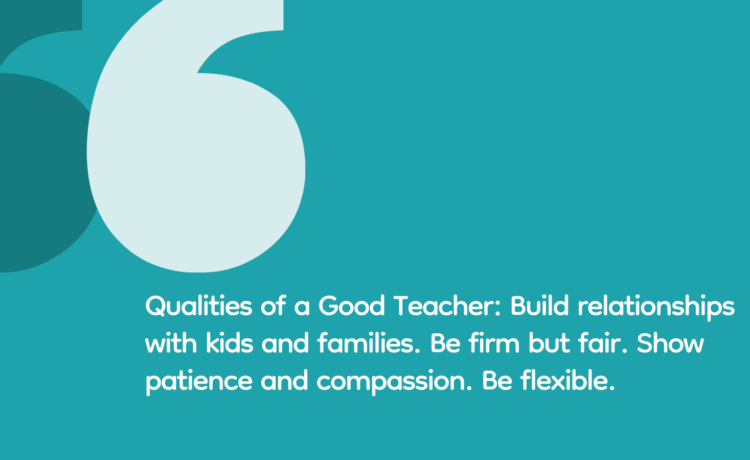
It’s a standard teacher interview question: “What do you think is the most important quality of a good teacher?” While everyone has a different answer, there are some that come up more often than others. We asked a group of experienced educators and administrators to share their thoughts on the key qualities of a good teacher. Here’s what they had to say.
Jump to:
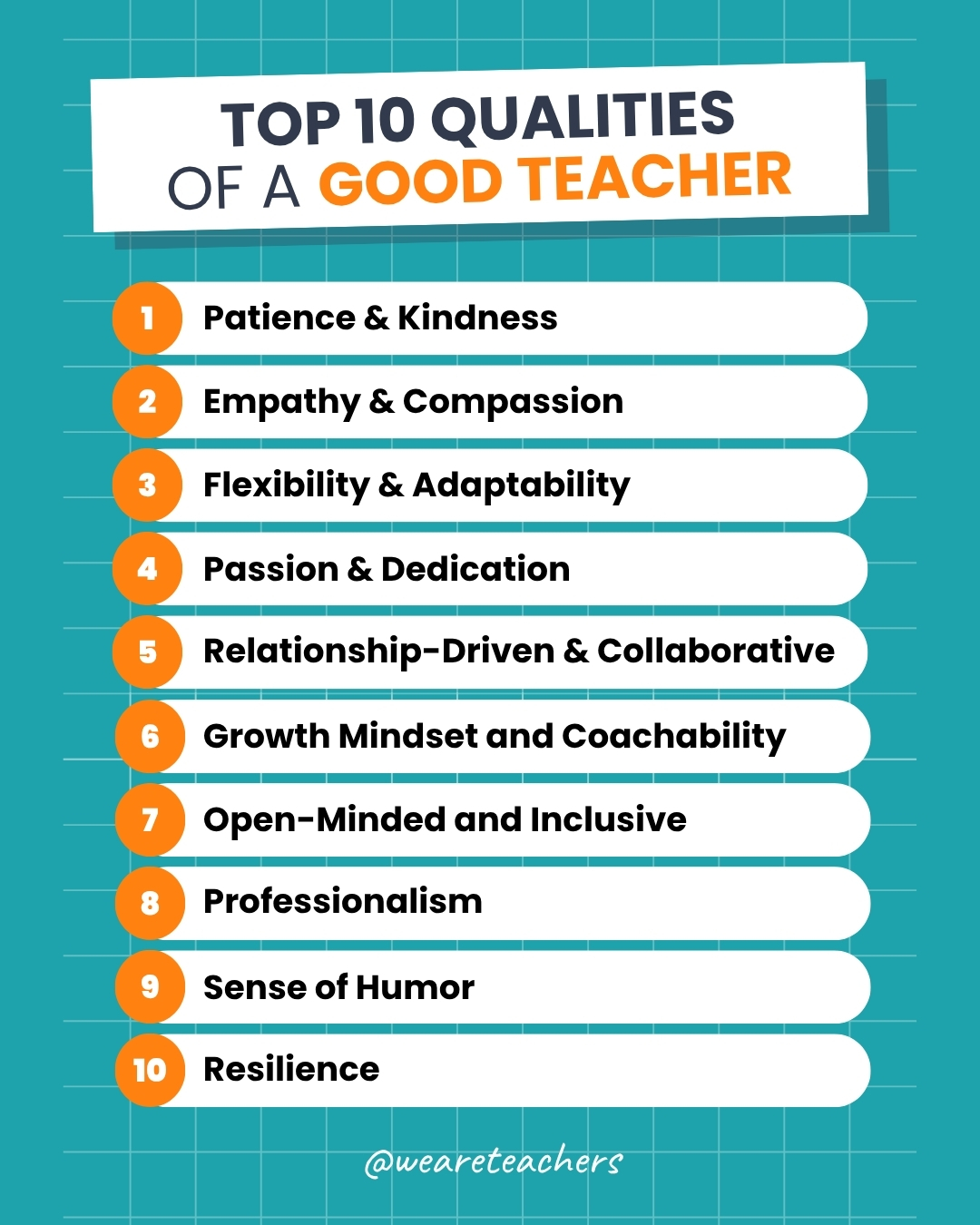
Top 10 Qualities of a Good Teacher, According to Teachers
Experienced teachers know what it takes to succeed in today’s education environment. These are the characteristics they believe are most important for top-notch teachers.
Patience
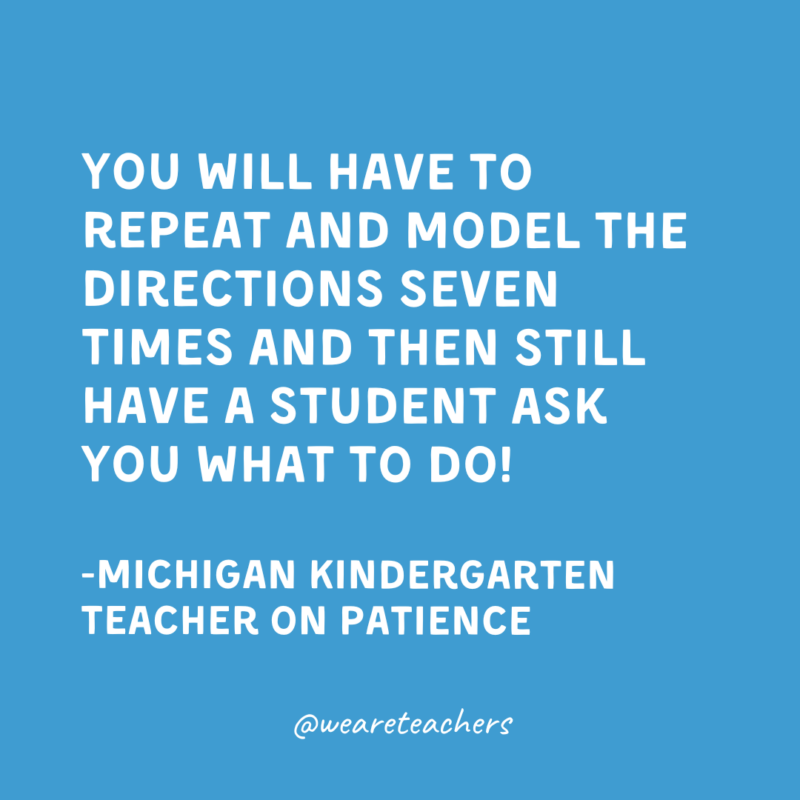
This was far and away the most commonly mentioned characteristic by educators in our survey. “Patience can be used in virtually every situation,” says high school ELA teacher Ann Cox. “If a teacher is able to remain calm, consider others’ points of view, and think through scenarios, they will be able to navigate just about anything that comes their way.”
She continues: “Patience helps teachers not to react in the moment when students are off task, disrespectful, etc. It’s also helpful when dealing with angry parents so you don’t say or do something you might regret later. And patience is definitely needed when sitting through meetings and professional development sessions!”
Patience tends to increase with experience. The more confidence you build as a teacher, the more comfortable you’ll be handling what could be stressful classroom situations. Your teacher preparation program, and the skills and strategies you learn there, is another crucial building block for teacher patience.
A program like Moreland University’s TEACH‑NOW Teacher Preparation Certificate Program is designed to help educators develop practical classroom management tools, reflective practices, and real‑world teaching confidence that support calm, patient decision‑making over time.
For ELA teacher Kenly CG, patience means “paying attention to each student’s needs and showing that you care about your students’ learning.” UK special ed school teacher Sarah Brown also advises “remaining calm, listening to and observing students’ needs, repeating instructions, and modeling again when necessary.”
Empathy and Compassion
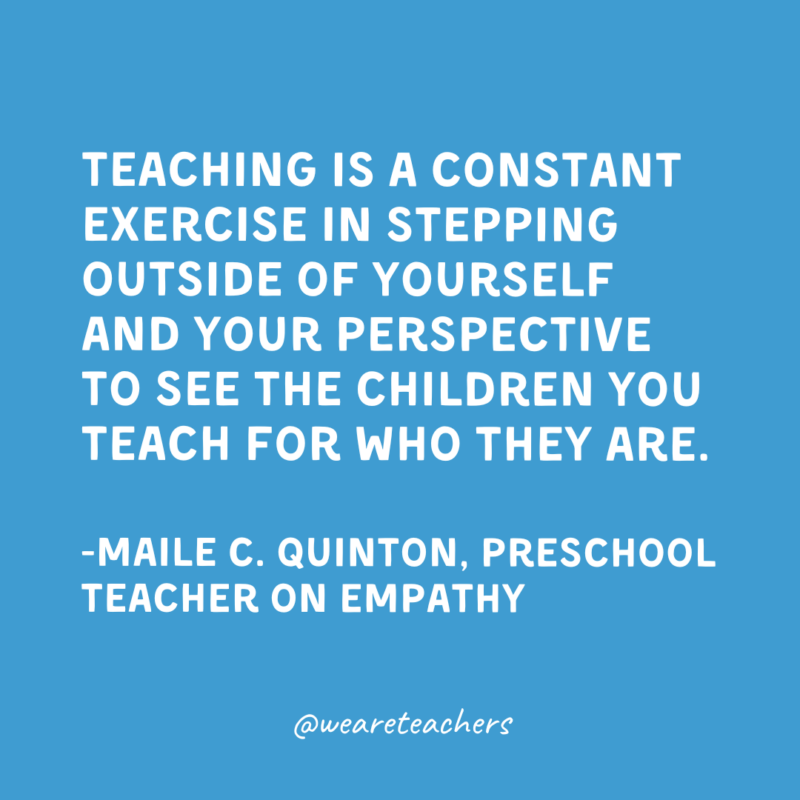
These two traits were a close second behind patience when we asked about the qualities of a good teacher. “They have to know you care before they can learn from you,” explains middle school teacher Samantha Wheeler. As a special ed teacher from New York notes: “You have to teach the child before you can teach the curriculum.”
“Empathy is a constant exercise in stepping outside of yourself and your perspective to see the children you teach for who they are,” notes Indiana preschool teacher Maile C. Quinton. “Contact talks. Get down on the same level as a child, listen to what they say, and emphasize their shared feelings by validating them. Don’t try to ‘silver lining’ everything—you can validate a situation, a moment, an emotion without condoning a behavior or a problem. Empathy isn’t sympathy.”
Flexibility and Adaptability
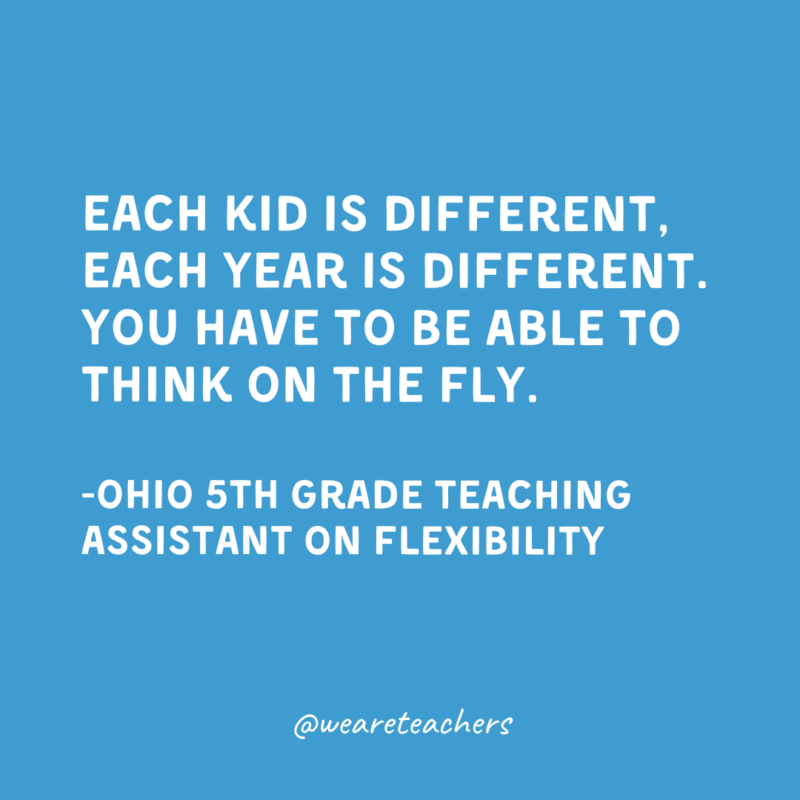
Being open-minded to change is critical in this field. So many of the educators we surveyed agree with this North Carolina ESL teacher: “There is nothing constant in teaching. Good teachers have to be able to adapt to the changing needs of students, to new administrators, new curricula, new colleagues, and new technology.”
“With so many different needs from students and parents, teachers need to be flexible to accommodate and meet students where they are at,” says elementary school counselor Lisa K., while high school English teacher Nicole P. adds, “There are often times where you need to think on your feet, so being flexible is important to go with the flow in different situations.”
Elementary special ed teacher Brianna Vuori sums it up this way: “We can only begin to predict what the future will hold and with that what we need to prepare students for, so adaptability is critical to being able to survive and thrive in this ever-changing profession.”
Passion
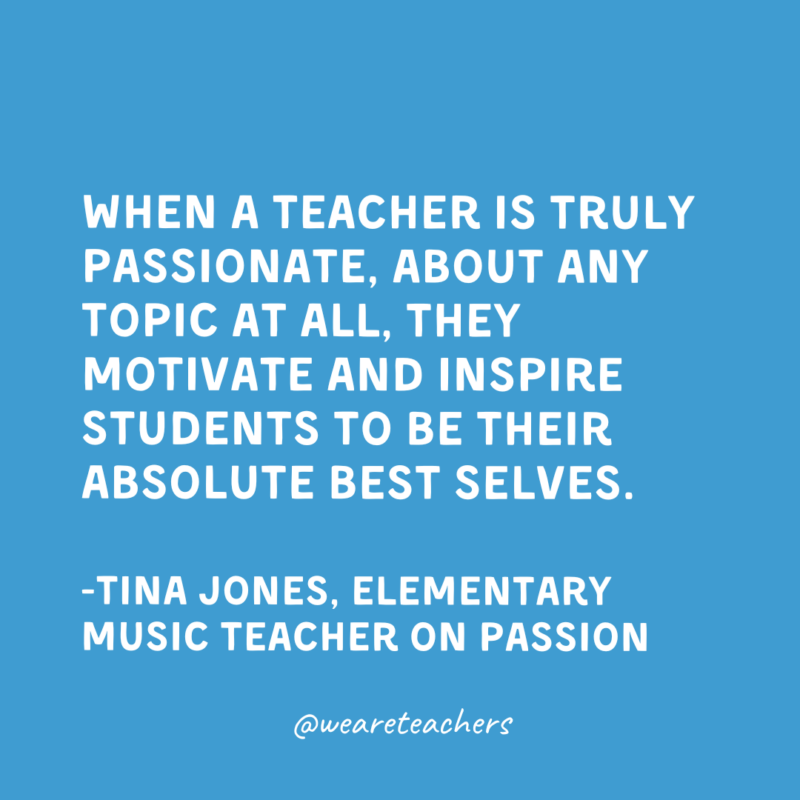
Teaching can be a tough gig, and you’ll need to be dedicated and passionate in order to thrive. “Passion is what drives us forward and what sees us through rough times,” emphasizes ELS department head Katerina T. “It is the driving force behind every lesson plan or decision we make and what lies at the foundation of life-changing relationships with our students.”
“Teachers that have passion will always find a way to meet the demands of the job,” says Florida teacher Jamie Cabaniss. “Teachers can lean on their passions when feeling frustrated and burnt out. Passions are what reignite us to get back in the classroom to teach our hearts out.”
Preschool teacher Christina H. couldn’t agree more. “You have to have a love and passion for what you are doing,” she declares. “Teaching isn’t just ‘teaching.’ It is also being a second mom (or dad), a counselor, a referee, a nurse, and so much more. To wear these many hats, you need to love what you are doing. You also need to love your students to help them succeed. Loving them on their best and worst days is what will make you successful.”
Kindness
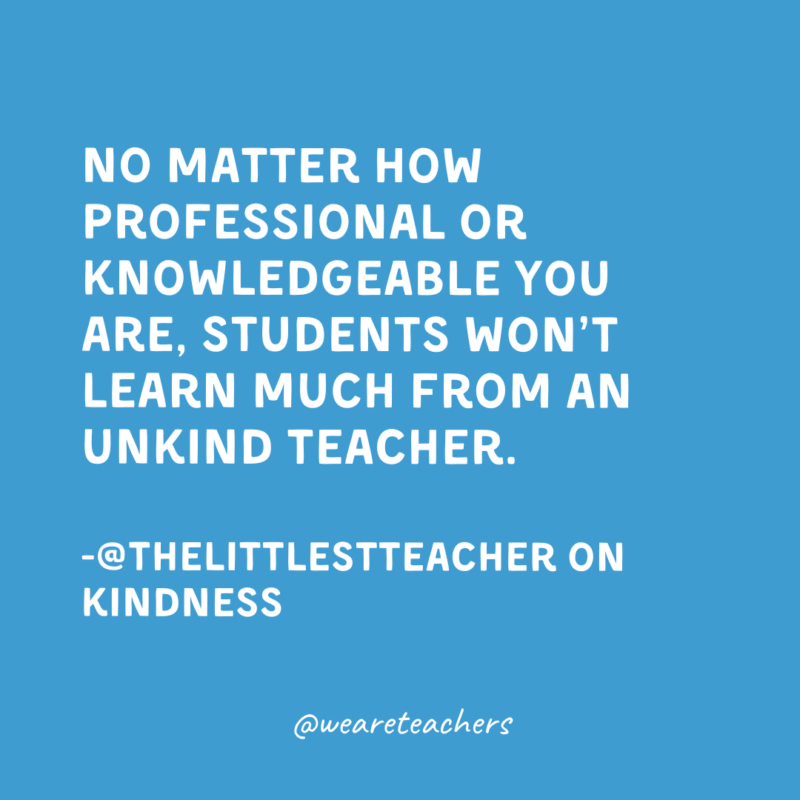
Over and over again, educators emphasized kindness as one of the most important qualities of a good teacher. “We are in the business of teaching human beings. We must teach them to be good people,” stresses Adam Peterson, Illinois music teacher and tutor.
Tina Jones agrees: “Teachers need to be kind, caring, compassionate, and understanding. In our world today, with kids getting so much information and misinformation via social media, children need examples of those qualities more than ever.”
Collaboration
“Good teachers need to be able to give ideas, ask for help, share, and communicate with coworkers and families,” advises one Washington 2nd grade teacher. “Be able to take suggestions, offer help, and not take things personally.”
Teachers regularly have to work collaboratively, and not just with their fellow colleagues and administrators. Developing strong, collaborative relationships with parents and families is vital. To succeed in this field, you need to learn to work well as part of a team.
Professionalism
It probably feels like professionalism should be a given in any job, but it’s one of the most important qualities of a good teacher because you need to gain and maintain the respect of students, families, and administration. “Some days are going to be frustrating, discouraging, and stressful,” warns an Ohio 7th grade science teacher, “but you need to remain professional by staying calm and encouraging and being a good mentor for your students.”
Sense of Humor
There’s no doubt about it, teachers do best when they have a sense of humor. “Laughing at yourself is a great relief, and laughing with children builds trust with them,” says Maile C. Quinton. Find ways to bring humor into your classroom, and you’ll find that students relax and learn a little more easily. (Plus, it’s much easier to deal with the small daily annoyances of teaching when you learn to laugh them off!)
Open-Mindedness
“Be open to learning from more- (and even less-) experienced teachers, and open to trying out new teaching and classroom management methods,” recommends middle school ELA teacher Abigail Perry.
“We are building relationships with a diverse student population,” notes Cheryl Rizzo, a middle school ELA teacher. “This can be a source of stress or create divide. However, with an open mind, it can create new opportunities or a chance to grow. Teachers are open-minded when they allow students to have a voice and take an active part in their education.”
Part of being open-minded means demonstrating a willingness to grow and a dedication to growth mindset. According to a literacy coach from North Carolina: “This job requires constant reflection, learning, and growth.”
Resilience
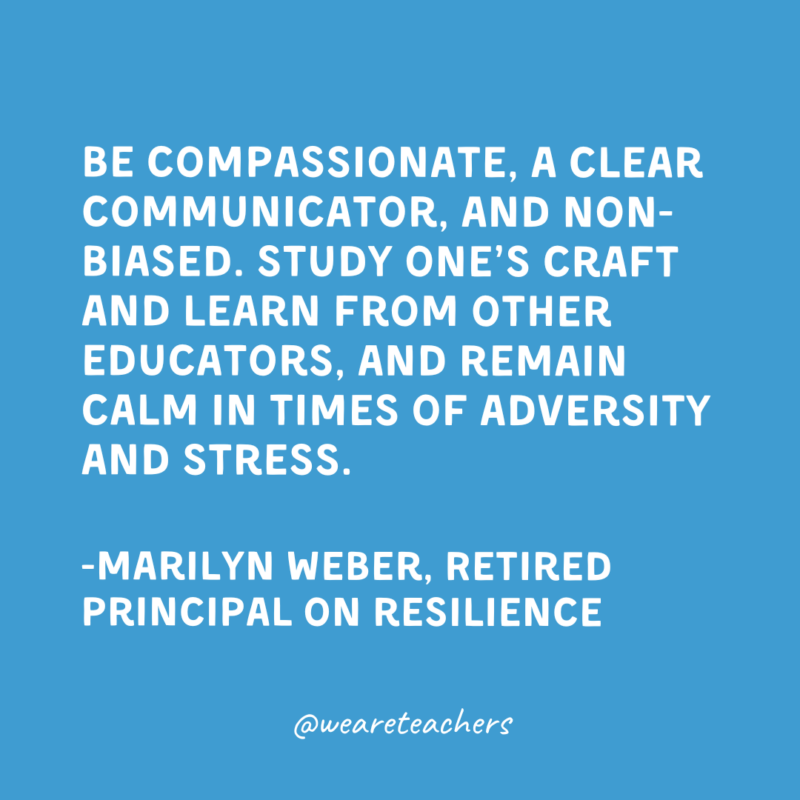
Marilyn Weber, a retired principal from Massachusetts, names this as the quality she looked for in a good teacher. “In order to navigate the world of education with all its related constituencies and responsibilities, an educator needs to be knowledgeable, flexible, an impeccable communicator, and should be able to withstand all the highs and lows of what comes their way and needs to be accomplished,” she states. She added that educators must be able to “do so without allowing any of that to shake their confidence and resolve in order to do what’s best for their students.”
That’s a tall order! Fortunately, Andrea Perry, a certified coach for educator well-being, has some advice. “Develop emotional intelligence. It’s critical for keeping our calm and being proactive, not reactive. This supports the teacher not only in serving their students well but also helps them remain joyfully in the profession as well.”
Qualities That School Administrators Look For in Teachers
We asked several of Instagram’s popular education administrators to share the teacher characteristics they prize most: Dr. Zac Bauermaster (@ZBauermaster), a Pennsylvania principal; Eboni B. (@bellscorner410), a Lead Teacher; and Principal Mo (@principal_mo), “The Friendly Neighborhood Principal.”
Check out what these school administrators had to say about the qualities they look for when hiring new teachers. Then follow them on Instagram for more wisdom and fun!
Families send us their best every day in schools, and everyone’s best looks different. One of the greatest challenges, and at the same time opportunities, is to meet every child who walks through our doors with our very best. Whether it is a 5-year-old kindergartner or an 18-year-old senior, each student is someone’s whole world. Recognizing that helps us approach our work with care, purpose, and hope, knowing that the effort we put in truly matters.
—Dr. Zac Bauermaster (@ZBauermaster)
Growth Mindset and Coachability
All three administrators put these qualities at the top of their lists.
“Growth mindset is essential,” Dr. Bauermaster declares. “It starts with a willingness to always be learning and growing. There is no such thing as failure because every challenge is an opportunity to learn. I know this begins with leadership, but with a growth mindset comes a willingness to take risks in the classroom. Being coachable is critical, and that requires trust between teachers, staff, and school leaders. Growth always costs something, but so does staying the same. The work in education is not easy, but it is worth it.”
“Coachable teachers are the ones who grow,” Principal Mo notes. “Education is constantly evolving, and the most effective educators are those who are open to feedback, willing to reflect, and committed to getting better for their students. Instead of getting stuck in challenges, the best teachers approach problems with curiosity and creativity. They’re always asking, ‘What can I do differently to meet this need?’”
Eboni B. agrees: “The best teachers are willing to grow and take criticism well. They adapt with the times and make adjustments to teach the various generations of students that come through the classroom. Students are ever changing and so should teachers. They must ‘stay young’ too and get with the times to best relate to students.”
Empathy and Compassion
“School should be a place where kids want to go, a place where teachers want to be, and a place that families trust and are proud to send their children,” Dr. Bauermaster believes. “Leading and teaching with empathy in our schools does not mean we will know everyone’s story, but it does mean recognizing that everyone we come in contact with has a story. That awareness should guide how we approach each day in education.”
He continues: “But empathy alone is not enough. We want to move into compassion. Compassion is empathy in action. We want teachers and staff to find ways to step into the gap for one another, meeting people right where they are. A positive school culture begins and ends with empathy and compassion built on connection and relationships. That does not mean it will be easy; in fact, it can make the work even harder. That is why it is so important to walk alongside one another and lead ourselves with empathy and compassion as well.”
Relationship-Driven and Collaborative
The best teachers don’t operate in isolation. They understand that their impact extends beyond their classroom, and they actively contribute to the success of the entire school community.
—Principal Mo (@principal_mo)
“Teachers must have a desire to build relationships with their students and other staff members,” stresses Eboni B. This is a quality Principal Mo also prioritizes: “The most successful teachers consistently build strong, authentic relationships with students and families. They keep families informed, collaborate with colleagues, and make their expectations clear for students. These teachers understand that trust is the foundation for everything else.”
Dr. Bauermaster values these qualities too. “Good teachers step in to support students and colleagues alike, finding creative ways to help others succeed and showing patience when challenges arise. Their classrooms are spaces of care and connection, where relationships are prioritized alongside academics. They listen and respond thoughtfully, creating an environment where students feel seen, valued, and supported. Every single one of them.”
Creativity
“Creativity matters because teaching is not one-size-fits-all,” Principal Mo explains. “Our students deserve experiences that engage them, challenge them, and make learning feel relevant. Creative teachers find ways to make that happen, even when resources are limited.”
Dedication
“Dedication is about consistency and commitment,” says Principal Mo. “This work is demanding, and our students need adults who show up fully, every day, not just when it’s convenient. Dedicated teachers push through challenges because they are anchored in purpose.”
Dr. Bauermaster sums it up: “What sets the best teachers apart is that these qualities are not isolated, but they shape the culture of their classrooms and influence the broader school community. Students notice, colleagues notice, and the overall environment becomes one where learning, encouragement, and growth are expected and celebrated. These teachers understand the work is not easy, but they approach it with purpose and positivity. Not a toxic positivity, but their energy, encouragement, and realistic optimism inspire both students and colleagues, making the challenges of education meaningful and worthwhile.”
More Qualities of a Good Teacher To Consider
These qualities of a good teacher didn’t make the top 10, but they’re definitely worthwhile attributes for every educator to cultivate:
Inclusive Mindset
“There is such a huge stigma against disabilities and it is often hushed away, which creates shame. All children are general education first and receive special education services second. Build a classroom community with respect by explaining differences to students and celebrating everyone’s strengths. True inclusivity helps all students grow, not just the students in a special education classroom. True inclusivity should help you as a teacher grow.” —Katie M., Functional Life Skills Teacher
Love for All Children
“A good teacher must truly like kids, even the naughty ones. Too often teachers only seem to like the ‘good’ kids or the ones from ‘good’ families. They attribute the student’s behavior to something personal or bad about them. Instead, those are the kids in whom we need to diligently look for the good.” —Kathryn Roe, retired educator and administrator
Curiosity and Love of Learning
Teaching students how to learn gives them valuable skills they’ll use their whole life long. The very best teachers not only have a deep love of learning new things, they work hard to instill that love in their students too.
Problem-Solving Skills
A teacher’s day is often filled with one challenge after another. Good teachers have strong problem-solving skills, knowing how to calmly evaluate the situation, explore possible solutions, and take smart actions to resolve issues.
Courage
We can’t lie—teaching can be a tough gig, one that requires bravery. It’s true that there are plenty of challenges, but those who have the courage to face them will reap incredible rewards.
Hopefulness
“Teaching is the most defiantly, rebelliously hopeful thing we can do in this world,” avers Andrea Michelle (@educatorandrea), Assistant Professor of Teaching and Learning at Indiana State University. If the state of the world has you down, consider becoming a teacher so you can be part of the changes you want to see.
Imagination
Being a teacher means thinking creatively and seeing the learning possibilities in everything around you. Educators need to be able to think on the fly, coming up with innovative new strategies and solutions to accommodate and support each student they encounter.
Reliability
This should probably go without saying, but you can’t be a good teacher if you don’t show up and do what you say you’ll do. Your students look to you for leadership and guidance, while your fellow educators will need your support, collaboration, and teamwork—consistently and reliably.
High Expectations
The best teachers reach for the stars, and they expect their students to do the same. This doesn’t mean setting absurdly unreachable goals, of course—it means always believing your students (and you!) can continue to grow and achieve great things!
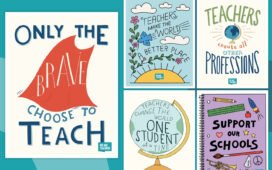
Don’t forget to grab your free inspirational posters for teachers!
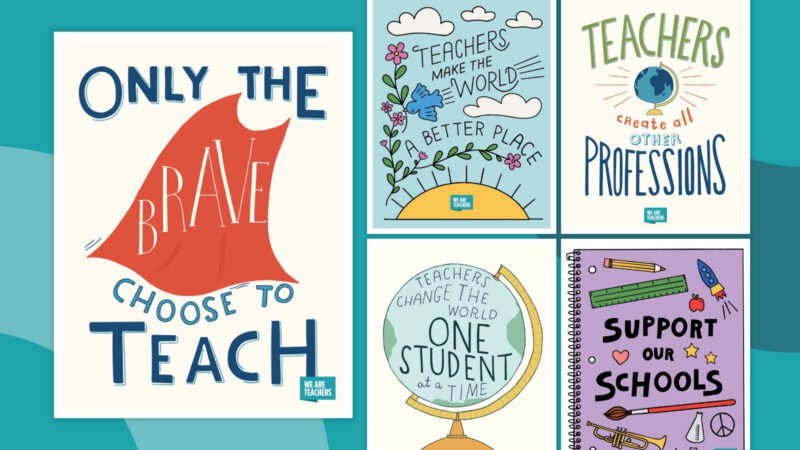
Download these free posters to inspire today’s teachers and encourage a new generation of educators! Just click the button below and fill out the form to get them.
What do you feel are the most important qualities of a good teacher? Come share your thoughts in the We Are Teachers HELPLINE group on Facebook.
Plus, The Complete Guide to Becoming a Teacher, From Choosing a College to Landing a Job.


Recent Comments