
 The New York State Department of Environmental Conservation (DEC) and Finger Lakes Land Trust (FLLT) today announced a perpetual conservation easement on 260 acres in Central New York as part of the state’s Water Quality Improvement Project (WQIP) program.
WQIP funds projects that directly improve water quality or habitat, promote flood risk reduction, restoration, and enhanced flood and climate resiliency, or protect a drinking water source. DEC’s sustained partnership with FLLT is expected to have lasting impacts on Cayuga Lake water quality and habitat.
FLLT received $921,000 from DEC’s WQIP grant program to protect multiple properties within the Cayuga Shallows area. The funding will allow FLLT to conserve properties with land cover including forests, wetlands, and open space that benefits source water protection.
The FLLT easement will establish riparian buffers to prevent potential pollutants from running off the land and into the drinking water source.
Hall Property
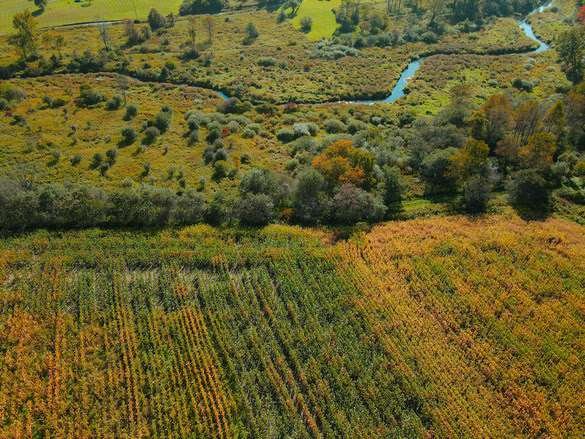
One of the properties protected through a conservation easement and using a portion of the WQIP grant funds is the 260-acre Hall property in the town of Summerhill, Cayuga County.
The property features 10,000 feet of frontage on Fall Creek, the source of Cornell University’s drinking water supply and largest tributary to Cayuga Lake. The easement will include a 120-acre buffer zone comprised of high-quality wetland on this section of Fall Creek that will be left in its natural state.
The property includes diverse upland forest, wetlands that include rare orchid species, and agricultural fields that will be left in production according to the terms of the easement.
This project is part of a broader effort by the FLLT to secure high-quality fish and wildlife habitat in and around Fall Creek’s headwaters. This area supports native brook trout and a portion of it is located within one of New York’s Important Bird Areas.
The Hall property is located in proximity to other permanently protected lands including Summerhill State Forest and the FLLT’s Dorothy McIlroy Bird Sanctuary, which is adjacent to Lake Como, the headwaters of Fall Creek.
Protection of the property helps secure Cornell University’s drinking water, which is drawn from Fall Creek, and also helps maintain municipal water supplies drawn from Cayuga Lake. FLLT is actively working on acquiring additional parcels in the area using the remaining grant funds in the Cayuga Lake watershed.
Conservation easements are voluntary legal agreements that permanently limit future land use in order to protect the land’s conservation value. Lands subject to conservation easements remain in private ownership, on local tax rolls, and available for traditional uses such as farming and hunting.
Photo of Fall Creek and Trail by Chris McAuliffe.







Recent Comments