
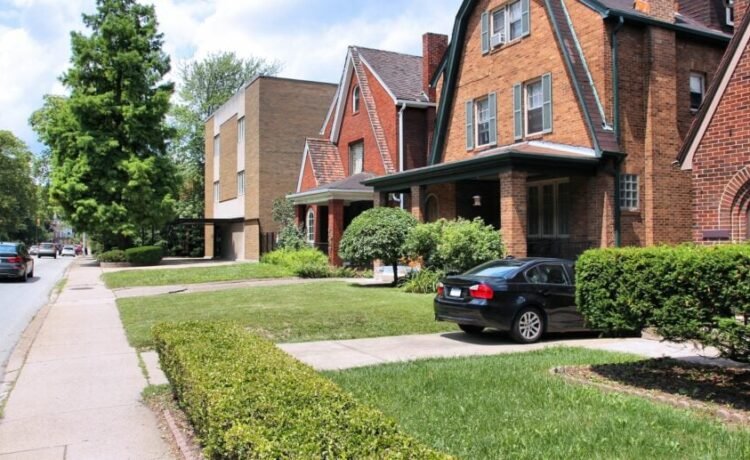
If home prices and interest rates are keeping you sidelined from investing, it’s worth looking outside your local market.
According to data from Realtor.com, six major metropolitan markets have median home prices below $300,000—and, crucially for investors, the numbers still work. The Rust Belt leads the way:
- Pittsburgh: Median listing price of $248,625
- Detroit: Median listing price of $248,900
- Cleveland: Median listing price of $262,225
- Buffalo: Median listing price of $264,750
- St. Louis: Median listing price of $285,738
- Birmingham: Median listing price of $299,650
These are not the only affordable cities in the U.S., as this article from last year shows, but as major metros, investing here makes sense given the demand for housing.
“Rust Belt cities have a real opportunity to market themselves as the antidote to coastal sticker shock,” Hannah Jones, senior economist at Realtor.com, said in the article. “Buyers can still afford something closer to their dream home in these markets, rather than settling for something less than ideal in a higher-cost metro.”
A Time of Limited Competition
Despite the lower-priced housing these markets offer, a February survey by the National Association of Home Builders showed 52% of U.S. households, or 70 million people, could not afford a $300,000 house, a stat that plays firmly into the hands of prospective landlords.
A big part of the issue is that would-be homeowners are being squeezed economically from all sides. Not only are interest rates working against them, but the overall cost of living is rising faster than their incomes.
Heather Long, chief economist at Navy Federal Credit Union, said in a note quoted in an April Yahoo! Finance article:
“Inflation is almost eating up the entirety of Americans’ wage gains already…That is painful. That means many Americans truly are under pressure financially and having to make tough decisions about what to buy and what to skip.”
With inflation rising due to the Iran war, interest rates or consumer prices won’t be coming down anytime soon. For investors who can liquidate funds, affordable Midwest markets offer great, low-cost options to buy deals with cash or buy with a large down payment and wait for the right time to refinance.
Cash Flow in Low-Cost Markets
The 1% rule is a benchmark ROI strategy used by investors: A $200K house generates $2K in rental income per month, or $24K annually. Once expenses—property taxes, insurance, maintenance reserves, and property management fees—estimated at around 50% of gross rents, are accounted for, an investor would retain about $12K in cash flow (excluding mortgage payments). With a 25% down payment and mortgage costs, the cash-on-cash return is at best break-even.
However, the option of accruing such properties with a relatively small down payment and a low price, compared to other cities, with the intention of refinancing at a later date, makes these markets places where mitigating risk is a viable option for many, especially when tax benefits and mortgage paydown are factored into the equation.
The Time Crunch
We are in a unique moment in history, with the confluence of economic headwinds, inventory constraints, building costs, inflation, and affordability creating a stagnant real estate market where prices are barely moving, but renters cannot afford to make the jump to homeownership. It won’t always be that way.
“Many homes on the market are lingering due to lack of buyer interest,” Ben Ayers, senior economist at Nationwide, told Reuters. “This speaks to the deep affordability issues for potential buyers, which have been exacerbated by the recent spike in mortgage rates. Until mortgage rates ease, most first-time buyers will continue to view homeownership as cost-prohibitive compared to renting.”
The continued malaise in homebuying is only bound to create a flood of buyers when the opportunity arises. “For first-time homebuyers, purchasing a home is not a snap decision,” Lawrence Yun, the National Association of Realtors’ chief economist, told Forbes. “Still, there is sizable pent-up demand that could be released into the market.”
It’s why investors cannot afford to time the market. Jumping in and locking down properties before the inevitable change in economic winds results in either lower interest rates or higher prices, despite the lack of immediate cash flow, is a cogent strategy for those who can afford it.
“More often, it seems the case that home prices generally keep rising, so the goalposts for amassing a down payment keep moving, and there’s no guarantee that tomorrow’s conditions will be all that much better in the aggregate than today’s,” Keith Gumbinger, vice president at online mortgage company HSH.com, said in the same Forbes article.
Tips for Investors Considering Sub-$300K Markets Now
Target properties below median prices
All investors want deals. However, a low-priced property can be a nightmare if it’s in the wrong neighborhood.
Investors need to do their research and target areas where properties are considerably below the median but not in a war zone. Be careful; unscrupulous wholesalers will tell you anything to make a sale.
Demand rents that exceed the 1% rule
With mortgage interest rates around 6.5%, you need a monthly rent of 1.2% or higher (i.e., $1,800 rent on a $150K property) to cover all expenses.
Increase your down payment to 30%-40% if you have the capital
If you cannot buy “all cash,” make a sizable down payment to offset negative cash flow when rents only meet the 1% rule.
Focus on specific neighborhoods, not entire cities
Out-of-town investors are often uninformed when investing in new cities. Focus on a specific neighborhood, and get to know the area block by block. Home in on properties that can generate the rents you need.
Run conservative numbers before investing
Higher interest rates mean this is not the time to play fast and loose with the numbers. Err on the side of caution; use current mortgage rates, the 50% rule for operating expenses, and account for 5%-8% vacancies. If the numbers don’t work, pass on the deal.
Look for small multifamily units
Duplexes and small multifamily units have better cash flow than single-family homes.
Start with one property, not a portfolio
Start with one house and get to know the market, landlord-tenant laws, code rules, and all the idiosyncrasies that make each market unique. Mistakes are expensive; don’t multiply them.
Have six to 12 months of reserves per property
Minimal cash flow means you cannot afford repairs or extended vacancies without reserves. It’s probably the No. 1 mistake small landlords make—not having enough capital to bail them out when things go awry, which they always do.
Final Thoughts
Proceed with extreme caution. Low-cost markets are the only types small landlords with limited cash on hand should be considering right now, but the price tag is not a reason to relax when underwriting deals.
The narrow margins make it imperative that each deal be examined meticulously, including selecting property managers and screening tenants. It’s a good time if you have the cash to invest, but a terrible time to make a poor decision.
Did you know that a BiggerPockets Pro membership comes with over $5,000 in potential annual savings through Pro Perks, including discounts on property management, banking, renovation supplies, and investor loans and insurance. Become a Pro today!






Recent Comments