
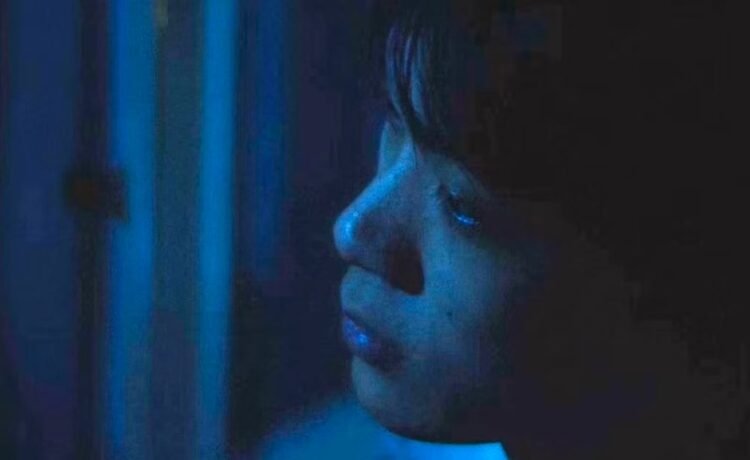

This is a film about the constant sense of being slightly out of step with where you are standing, rendered with remarkable restraint. State of Statelessness is an anthology comprising four tales by the Drung Collective, a group of filmmakers working within the Tibetan diaspora. Each story is shaped by the same unresolved grief – for a distant land occupied and unreachable, for identities fractured by borders. Though the film travels across continents, its accounts are bound by a shared longing for a land lost not to time, but to erasure.
Tsering Tashi Gyalthang’s Where the River Ends follows Pema, a young girl living in Vietnam with her Tibetan father, Tenzin. As he explains that the Mekong River begins in his homeland, a simple geography lesson becomes a fragile bridge between origin and inheritance. Sonam Tseten’s Bardo: In-Between reunites sisters Yangchen and Bhuti for the cremation of their mother in Tibet, only to reveal how years of separation have created rifts that grief alone cannot heal. The film’s greatest strength emerges in its attention to the most intimate traces of displacement – family rituals, the making and sharing of food, and places that offer shelter without ever truly becoming home.
Get more Little White Lies
The final stories unfold in Dharamshala, a Tibetan settlement in India and home to the Drung Collective. Tenzing Sonam and Ritu Sarin’s Little Cloud finds a disillusioned couple in the wake of their child’s death. Sonam prepares for a visit from his friend Jigdal, now living in America, while his wife Kesang regards the reunion with quiet unease. It is a sharp critique of the reverence often afforded to returnees by virtue of having emigrated. In Tenzin Tsetan Choklay’s At The End, The Rain Stops, a young man named Tenzin returns to sort through his late father’s belongings. Supported by a friend of his mother’s and her son Norbu, Tenzin’s return evokes the grief of a lost home, culture and identity – a counterpoint to the fantasy of departure in Little Cloud.
State of Statelessness excels in depicting exile not only as movement across borders, but as something lived from within them. The result is remarkably cohesive for a collection made by five different filmmakers. Each short film is unified by a subtle, patient beauty that favours natural light and unhurried compositions. Tibetan ritual music is woven throughout, grounding every story in a shared cultural and spiritual register. The performances are restrained, a modesty that allows these realities to feel lived rather than staged.
Moving between Tibetan, Vietnamese, Hindi and English, the film reflects lives shaped across languages and cultures. Statelessness is not defined in legal or political terms but rather as a liminal state of being – something that shapes everyday life without ever needing to be named. The film’s most devastating moment arrives in a simple exchange, when Tenzin asks Norbu, “Is someone who’s stateless like me allowed to dream?” The question is posed to us and left deliberately unanswered, its uncertainty mirroring the unresolved futures the film observes.
In a world where migration is often politicised as spectacle or statistic, State of Statelessness succeeds by insisting on something more understated. It’s a sincere and quietly moving film, if not one that lingers or astonishes. What it offers instead is careful attention to the ways exile is lived, inherited and endured, and to the strategies required to build a life within its constraints.






Recent Comments