
 Payment and incentives for enlistment in the American Revolutionary War, both in the Continental Line regiments and local militia units, were a problem from the beginning.
The Continental Congress did not have a hard specie (gold or silver coinage) source to pay soldiers, instead relying on paper money. That paper money, without any source of backing, soon became worthless. A method of rewarding soldiers for service had to be found.
One method involved one commodity that the state of New York had in abundance – land. All the more valuable as most of the enlisted men serving during the war were either land poor or had small holdings.
The New York Provincial Congress initially offered an enlistment bounty of 100 acres per soldier and, in 1781, increased it to 600 acres to boost enlistments.
 This land was to be primarily in Central New York, issued in what were called Military Tracts. They divided them into twenty-eight townships and named them after a classical literary hero (Cato, Homer, Pompey to name a few).
Not all were in Central New York however, the Warrensburgh Tract was on the east side of the Hudson River. The next problems to solve were two-fold, who was to get this acreage and how.
The land bounties were the main enticement to get men to enlist in the NY Line Regiments, which were attached to the Continental Army under General George Washington.
The second group would be under the guise of militia, but not regular militia. Regular militia companies were generally used in their home area; they rarely left their home areas, and almost never their home state.
Since the idea was to provide troops for the use of the army nationally, special levy companies were created. Regular militia company members were offered these land bounties if they volunteered to serve in these companies, which could be used outside the state.
These land grants were known as Bounty Rights, and some levy companies became known as Land Bounty Rights Companies.
A “right” was usually 500 acres and was proportioned by rank. Initially, a Colonel, Major or Lieutenant-Colonel was granted four rights or 2,000 acres; a Captain or Lieutenant was given three rights, a sergeant two, and corporals and privates one right (New York State added another 100 acres after 1781).
The Charlotte County Militia
The militia of Charlotte County played a vital role in trying to protect the area against British and Loyalist incursions. Three of the important places assigned to the militia were Fort Edward, Fort Anne, and Fort George.
These posts needed to be defended as they were the northern outposts for the colonial forces and as such were strategically vital to both British and American plans.
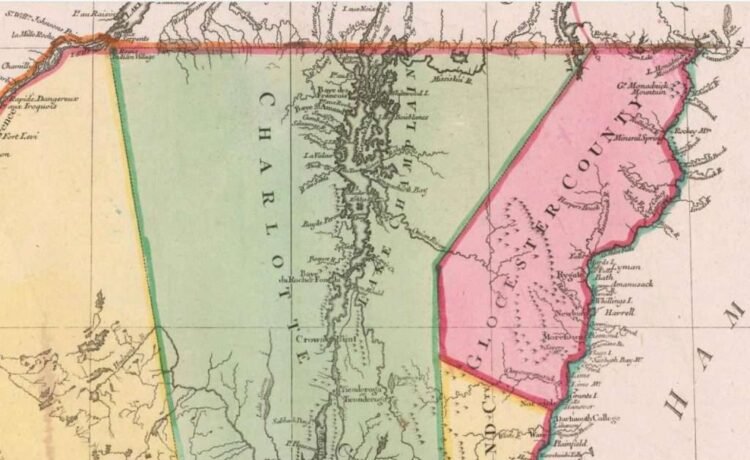
 When Charlotte County was formed from Albany County in 1774, some of the area that is now Vermont was claimed by New York and New Hampshire with New York going so far as to create two counties, Cumberland and Gloucester, out of the disputed territory.
In August 1775, a resolution was passed in the New York Provincial Congress for the militias of Charlotte, Cumberland, and Gloucester Counties to form the 6th Brigade, NY Line. Charlotte County included what would become Washington and Warren Counties in New York.
It was amended the following year with Charlotte County forming a dedicated Brigade, with two units, The Dorset Regiment and a Voluntary Associate Regiment.
That force was commanded by Captain Alexander McNitt (1726-1817), and Colonel John Williams (1752-1806) was appointed to command the Dorset Regiment. (Williams was dismissed from command in June of 1778 for defrauding the pay office. He was also removed as a County Judge.)
The Dorset Regiment was organized from men White Creek, Kingsbury, Argyle, Black Creek, Skenesborough, and Granville; the Charlotte County Voluntary Associates were drawn from all of Charlotte County.
These units were primarily formed to combat marauding Loyalists and Native Americans. They were used to good effect in turning the 22-mile route from Skenesborough (Whitehall) to Fort Edward into a morass by felling thousands of trees, burning bridges, and diverting streams to flood the military road to slow General John Burgoyne’s march to Saratoga in 1777.
In any event, those who served in levie regiments or line regiments were eligible for land grants after the war.
Land Bounties & Settlement
The way these Military Tracts were distributed was based on a lottery system. After the townships had been established, temporary patents were issued, and soldiers names were paired with the appropriate number of rights they had earned by rank.
While this land was granted, many soldiers sold their rights to land speculators, having no desire to settle on those lands. Others did settle, and many decided to come to the Charlotte County area, joining those who already were from the area, creating many new towns that were the results of the breakup of Charlotte County, first of Washington County in 1784, and Warren Country in 1813.
 One of the reasons that so many of these Military Tracts were in Central New York was the fact that up until the end of the Revolution in 1783, New York’s only owned land as far as Fort Stanwix in Oneida County.
Everything to the west was the territory of the Six Nations of the Iroquois, established by the decree of King George III in 1763, limiting the areas open to European settlement.
Only a few forts that had been established on Lake Ontario, Forts Niagara and Oswego being two, and were used primarily as trading posts with Indigenous people. These posts, which were also used to defend against attack from French Canada before and during the French and Indian War (1754-1763), were allowed to remain.
When some of the Iroquois sided with the British in the Revolution, this was the impetus to open their lands to settlement.
Thus, the settlements around Oneida Lake and the Finger Lakes took shape. Many of these towns used classical Greek and Roman names for the tracts, and many counties took the names of the Six Nation tribes that had lived there – Onondaga, Cayuga, Seneca, Oneida, to name a few.
Many local Revolutionary veterans settled in what is now Washington and Saratoga County before coming to Warren County.
The area also saw settlement of veterans and others from New England, as Connecticut, Rhode Island, and Massachusetts had limited lands available to give to these Bounty Rights regiments.
As a result of these developments as many as 74 veterans from out of state regiments, according to pension records, are buried in Warren County.
Queensbury Town Historian John Berry is Chair of the Warren County Commission for the 250th Anniversary of the American Revolution and Treasurer of the Warren County Historical Society.
A version of this essay first appeared in the Commission’s newsletter. You can subscribe to the newsletter here.
Read more about Warren County History.
Illustrations, from above: 1876 map showing part of the Warrensburgh Tract, south of the current village of Warrensburg (larger version); Map showing major military bounty land grants after the American Revolution; 1777 map showing what would become Vermont divided into four New York counties including Charlotte County (larger version); an a map showing the Proclamation Line of 1763.





Recent Comments