
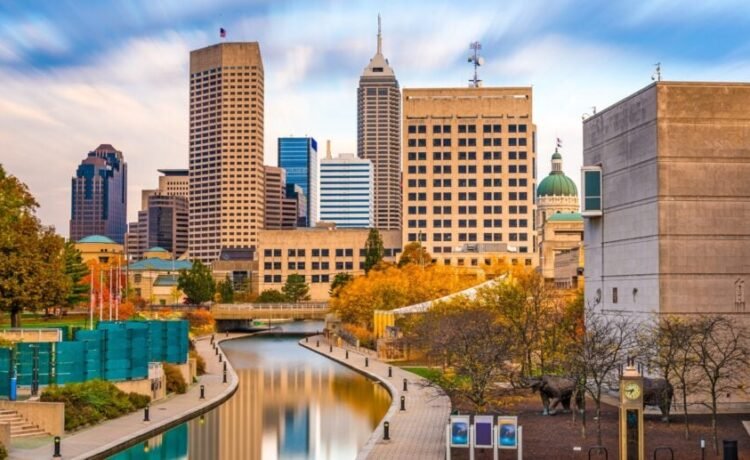
Indianapolis and the state in which it sits, Indiana, couldn’t be further apart when it comes to their real estate fortunes. For mom-and-pop landlords eyeing Indiana for future investments, the sharp divide between parts of the city and state is indicative of the modern-day market realities that need to be considered when underwriting deals.
Indianapolis: Zillow’s Top Buyer-Friendly Market
Indianapolis has been on investors’ radars for some time, culminating in Zillow ranking it as the most buyer-friendly market among the 50 largest U.S. metros for 2026. The listings giant cited a perfect storm of buyer favorability.
Orphe Divounguy, senior economist at Zillow, said of the list, which featured mainly Midwestern and Southern cities:
“Home shoppers have room to breathe in these buyer-friendly markets. Lower competition gives buyers more time to decide and wiggle room to negotiate, adding up to a less stressful shopping experience. Cooling prices today, paired with expected growth ahead, make for a good entry point for those who have been waiting for the right moment. For sellers, pricing strategically from the start becomes that much more important when buyers hold the power.”
Affordability Is a Key Driver
“People are gravitating toward this area due to the market affordability,” Laura Turner, a broker and owner of F.C. Tucker Laura Turner Realty Group, told local news outlet WRTV. ”Nationally, they may be spending 50% to 60% of their income [on their mortgage]; here, it’s 30% or less of their income.”
“Companies are going to be looking at this area to say we want to locate headquarters to Indianapolis,” Turner continued. “Because of the affordable housing, because this is a destination that people are wanting to raise their families in.”
For smaller investors looking to augment their incomes with additional cash flow, Indianapolis works because entry-level prices and cap rates make turning a profit or at least breaking even a real possibility, even as interest rates flutter around 6%. However, Indianapolis also serves as a cautionary tale for what investors need to watch for when scouting markets.
Regional Indianapolis: A Tale of Two—or More—Cities
Metro Indianapolis, like Pittsburgh and Detroit and other older Midwestern cities, functions as a regional system rather than a single city. Commuting patterns and housing patterns mean that neighboring regions are often influenced by one another.
Stats show that growth across all regional areas does not happen at the same pace, and generally, regional growth, where residents can live and work, has grown much faster than city growth in the downtown areas.
The same is true of Indiana as a whole. Recent metro growth in suburban neighborhoods in central Indiana has not been matched by growth in the denser city centers, which have suffered.
According to Indianahub.org, the state’s growth has spread out into:
- Logistics corridors
- Suburban office nodes
- Life sciences clusters
- Industrial parks
However, in the city center, signs of urban decline are evident. According to Axios, the Indianapolis metro area grew by 2.2% between 2020 and 2023, making up half of the gains in Indiana’s population.
Indiana’s Foreclosure Problem Uncovered
According to real estate analytics and data platform ATTOM, Indianapolis ranked near the top of national foreclosure rates with roughly one filing for every 1,249 housing units in February. Another Indiana city, Evansville, recorded one for every 1,316 units, giving it a top-five foreclosure berth alongside the state’s capital.
Indiana’s dive into foreclosure despair hasn’t been sudden. Last year’s ATTOM foreclosure reports showed one filing for every 302 housing units, signaling a multiyear blip, comprising homeowners who, amid job losses, inflation, and rising interest rates, simply don’t have the money to pay their mortgages.
How Exactly Can Indianapolis Be the “Best” and “Worst” at the Same Time?
If Indianapolis were a comic book character, it would be the Joker, wearing two expressions at the same time. But how does a mild-mannered Midwestern city manage to have such an extreme split personality?
It’s because we are not comparing apples with apples. The Zillow report focuses on conditions facing would-be buyers today—mortgage affordability, competition levels from other buyers, and expected appreciation. ATTOM, on the other hand, focuses on borrower distress among existing owners. Also, ATTOM’s figures account for households that fell behind on payments months or even years earlier, reflecting economic conditions over a long period, some stemming from the forbearance conditions put in place after the pandemic.
The Idiosyncrasies of the Indianapolis Market
Indianapolis is a unique market in many ways because it is many things at once. Regarding its foreclosure ranking, the city had a high number of “zombie foreclosures,” according to ATTOM data: 6.5% of foreclosures stemming from financial mishaps years earlier, often in the form of vacant or distressed houses.
“ATTOM’s data doesn’t pinpoint the local nuances behind why certain metros stand out, but in parts of the Midwest, it likely reflects a mix of older housing stock, slower demand in some neighborhoods, and ownership or equity situations that make distressed owners more likely to walk away early,” Rob Barber, CEO of ATTOM, told Realtor.com. “Those conditions can increase the chances that a foreclosure becomes a zombie, even though overall zombie rates remain low nationally.”
Investors Are Flipping Foreclosures Into Rentals
Additionally, because of Indianapolis’s unique regional layout, many disparate areas—some thriving, others struggling—are included in its overall reported numbers, creating a somewhat confusing picture.
While the investor heat has been turned up on Indianapolis for a while, with out-of-towners rushing in to rehab and rent, many locals feel this has only contributed to the real instability, taking homes away from local owner-occupants.
“Far too often, when these homes end up going into foreclosure, they end up being purchased by out-of-state investors, who then flip them into expensive rentals,” Amy Nelson, executive director of the Fair Housing Center of Central Indiana, told Indiana Public Media (IPM).
Final Thoughts: How Out-of-Town Investors Should View Indiana
Overall, Indiana’s foreclosure numbers are not off the scale and reflect normalization after years of housing instability rather than a crash. In ATTOM’s national release, CEO Barber emphasized that even with year-over-year increases, “overall foreclosure levels remain well below historic norms.”
Realtor.com noted that foreclosures in Indianapolis and other Midwestern towns actually represent an opportunity for new investors. However, as with any investment, due diligence is required, especially with an out-of-state investment where you cannot just jump in your car to check on your rental. That means meticulous tenant screening, hiring the right property manager, and doing your homework on which neighborhood you are investing in.
In Rust Belt Midwestern cities like Indianapolis and Pittsburgh, neighborhoods can change not only from region to region but also from block to block. FHCCI’s review of Marion County pinpointed specific neighborhoods such as Crown Hill, Near Northwest-Riverside, Maywood, Near Southside, and Martindale Brightwood as having the highest foreclosure rates, with the far Eastside also flagged for heavy out-of-state investor activity. Homes in these neighborhoods will need to be examined block by block. It’s also probably best to examine alternative neighborhoods to stave off competition.
It’s important not to believe all the investor hype about Indianapolis, which would have you think that, amid the deluge of new residents, jobs, and affordable housing, you can throw a dart anywhere on the city map and make money. Mortgage rates, employment, and tenants’ profiles are only part of the picture.
“It is rising escrow costs, for instance,” FHCCI’s Amy Nelson told WBOI News. “Although your mortgage payment very often hasn’t changed much, it’s the other costs that have, and that can be home insurance rates, which have been escalating, and utility costs and property taxes, all of which can have a significant impact.”






Recent Comments