
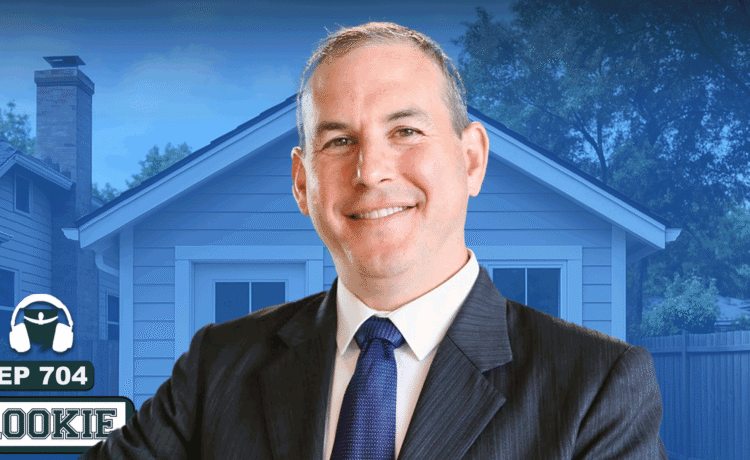
You don’t need hundreds of rental units to design the life you want. Today’s guest is busy traveling the world and only wants a handful of rental properties that can pay him while he sleeps. Since he’s unable to put roots down in any one market, he’s built reliable teams that keep everything running smoothly. If he can do it, YOU can too!
Welcome back to the Real Estate Rookie podcast! Nearly 20 years ago, David Epstein became an “accidental” landlord, despite having a mountain of law school debt and very little knowledge about real estate. His first property? A small New York co-op that he was forced to rent out after being sent overseas. By growing his network, he was able to keep the property occupied and managed from thousands of miles away.
This opened David’s eyes to the possibilities of real estate investing, but rather than scaling his real estate portfolio rapidly, David has taken a more strategic approach—picking strong long-term markets and choosing his properties carefully. Today, he owns three rentals, and as he nears retirement, he hopes to have five or six cash-flowing properties to help fund his lifestyle. Tune in to learn exactly how he plans to do it!
Ashley Kehr:
He took out a mountain of law school debt, about a 440 square foot apartment he could barely rent out, and then his government shipped him overseas before he could do anything with it. Today’s guest turned that accidental start into a multi-property US portfolio, managed remotely from the US embassies around the world, including right now in Vienna, Austria.
Tony Robinson:
And what’s wild is that the skills he uses to analyze foreign governments, well, he’s used them to build his buy box. And we’ll get into all of that, the diplomacy, the debt, the 12-year kind of hiatus, and the tactical playbook for investing when you can never visit your market.
Ashley Kehr:
This is The Real Estate Rookie Podcast. I’m Ashley Kerr.
Tony Robinson:
And I’m Tony J. Robinson. And with that, let’s give a big, warm welcome to Dave. Dave, thank you for joining us on the podcast today.
David Epstein:
Super happy to be here. Really appreciate the opportunity. Thanks.
Ashley Kehr:
Now, before we get into any details and further into your portfolio, just give us a scorecard. How many doors, how many years since you started really getting serious about investing in real estate? And you’re calling in from Austria today. How did you get there?
David Epstein:
So right now, we’re sitting actually only on three doors. We previously had four. We recently sold one back in 2024, and we’re now in the process of reacquiring a fourth property as we try to rebuild the portfolio towards our end state goals. So how we got here and how we got serious really started back in 2017 after I had had, as you mentioned, a 12-year hiatus. I was an accidental landlord at first, which is what probably led me to bigger pockets, led me to thinking about real estate, but life, career, things like that got in the way. And then from 2017 to 2019, I got my second property. 2023, I did a cash out refi, and then I bought the fourth property. And then as I mentioned, in 2024, we sold that fourth and we’re looking to pivot to use that money into a new fourth property as we go back into growth stage.
Tony Robinson:
Talk about long distance investing, and we’ll get into that here as we go through your story. But Dave, I mean, I guess take us back to 2005. You’re fresh out of law school. As we know, law school is a very expensive place to go, and you decide to buy a 444 square foot co-op in New York. So first, what is a co-op for those that don’t know? And then what was the logic and what did you think you were going to get when you stepped into that first deal?
David Epstein:
So for most people who don’t know what a co-op is, I know Ashley invests in New York, so there might be co-ops near your market, but the short answer for most real estate investors is a co-op is a mistake. But the fact of the matter is, you basically are buying shares in the corporation that owns the property that then gives you the right to live in a unit. There’s a board of directors, there’s an interview to buy. When you eventually get the right to rent out, which you usually can’t do before, say, five years of owner occupancy and so forth, the potential tenants go before a board. Also, it’s really quite cumbersome. But because I bought it thinking I would live there, start my career as a lawyer, and there would be no problem, I saw no problem. It turned out to be quite a problem because within about two years, I was joining the foreign service as a US diplomat, getting sent to my first overseas assignment, and I had to choose between selling it or figuring out a solution.
And as you mentioned, I had a lot of debt. So any decision had a potential significant financial consequence.
Tony Robinson:
Dave, just one follow-up because I’ve never heard of a co-op before. I’m in California. I don’t know if we have those here, but I guess what is the benefit to a co-op versus just simply renting a space out or trying to buy like your own 440 four square foot apartment? Yeah, like a condo.
David Epstein:
I think for a lot of people, there is a lower price point because of the sort of onerous restrictions that exist on it. So because you don’t own the property, you’re limited in what you can do with it. For some people though, that also means because there’s a higher vetting process, there’s more hands-on management from this board that have to be comprised of people who live in the building. There’s usually a really good maintenance schedule that takes place, whether it’s just taking care of the facilities, the grounds or things like that. I mean, things tend to work. And so what for me was a very low price point in 2005, about $125,000 might have been closer to 200, 250 for a nearly identical property that was a condo. So there are advantages for people who want to make that, again, their primary residence, but if you’re going the investment route, it’s really not the way to go.
Tony Robinson:
Was it easier, Dave, to get approved for this? I mean, because I’m assuming you’re coming out of law school, you probably have a lot of student debt behind you. Just like ballpark, how much debt did you have coming out of law school?
David Epstein:
Probably about $125,000 in debt coming out of law school, three years of law school. And part of that is they’ll just let you sign anything and give you any amount of money to attend law school. And when you’re in your early 20s, you say, “Sounds great. What could be the problem? I’m going to become a lawyer. I’m going to become a multimillionaire and everything will be great. So sign on the dotted line.” But buying this property, it wasn’t that difficult. First of all, it was 2005. They were basically checking for heart rates to give out mortgages at the time. And the good thing for me was I had a very, very low risk tolerance, partly because of all this debt and partly just my own personality. So I didn’t go for an arm, which probably would’ve killed me as the bubble burst in 2008, people were losing their shirts and such.
So I had a fixed rate mortgage and I put 20% down. Because I had my degree and I had a job as an attorney, they were willing to sign over. But again, it wasn’t a big chunk of cash and it wasn’t a big purchase price. And so it worked out until, as again, it didn’t really work out so well.
Ashley Kehr:
So you got that call and you’re going to, what was that, Central America and you now realize that you have a problem. So what specifically did you do to get around this rule that you have to occupy this property as your primary residence?
David Epstein:
Yeah, I was lucky because maybe this was a sort of foreshadowing to the skills I would learn as a diplomat, but I developed a very good relationship with the building management company. And we looked at the documentation, it benefited also that I was a lawyer and we looked at the documentation. And as long as a family member moved in, there wasn’t going to be a violation of me trying to rent out as a non-owner occupier. So I convinced my sister to move in. I said, “Listen, you need a place to stay. I can give you probably the best possible rent you could get for an apartment of this size. You’re two blocks away from the train station right into downtown Midtown Manhattan and you’re working in the area that we grew up in, so it’s perfect. You have everything you need.” So she agreed and it was perfect for her for a couple of years.
And just right around the five-year mark, she moved in with her now husband and that’s kind of how I really became a landlord because I then had to figure out, do I sell or do I rent?
Ashley Kehr:
So during that timeframe, it was a family member that was staying there. So it was kind of like an exception to get around the rule. Yeah. So now that you’ve hit this five-year mark, you have these options available to rent it and to sell. What kind of information or data did you look at to help you make that decision and what did you choose?
David Epstein:
Well, so part of it was now that we’re five years past the purchase, we’re in the midst of the housing bubble burst, right? It’s now 2010. Selling it was probably not a good idea. I was going to take a massive, massive hit. But what I did know was the location was great. I mean, one of the reasons my sister was willing to live there was a few blocks away from a highway, a couple of shops nearby, as I mentioned, two blocks away from a train station right into Manhattan. And so I thought, listen, I think I can rent this out. I think someone will at least cover my mortgage and be happy to live there. Even though it’s a studio, I’ll probably have turnover, but I did the numbers on the back of the envelope. I didn’t have the benefit of BiggerPockets or anyone really to talk to, but the numbers seemed to work.
And we got someone in there and they covered it and they went through the board process and they approved them. And so I said, “Listen, I’ll do this for a year and see what happens,” because I was in an assignment overseas. It would’ve just been too difficult to do anything else.
Tony Robinson:
So can you just discuss for the listeners, Dave, what was it like to maybe own this property that you couldn’t actively manage?
David Epstein:
So as I said, I owned it in an area that I was from. I grew up in this same town. And so I did have a little bit of hands-on help. I mean, my father could answer a phone call here or there, but again, it was about relationship building. I spoke to the super of the building, the members of the board, the doorman of the building, all the people that were really the lifeblood of how the building operated, and they were willing to keep in touch with me and help me out. If I reached out to them and said, “Listen, the tenant had this question or this issue arose between you and the tenant. I can help assuage these problems.” And again, it was all relationship building. And so it wasn’t formal property management and it wasn’t self-managed because like I said, my dad could show up and make a quick Home Depot run and get them a new smoke detector or something like that, but they weren’t doing anything.
So it was again about building these relationships and they were willing to help me out. And I’m still grateful to them to this day, even though I’ve sold the property and I don’t maintain that relationship in any formal way, but it really was about relationships.
Ashley Kehr:
Now that accidental hold taught you something powerful and eventually helped set you up and put you down a rabbit hole that just completely changed how you thought about building wealth. So when we come back, we’ll talk about the 12-year gap between that first property and your second, and that’s the exact moment that bigger pockets flip the switch. We’ll be right back. Okay. So David, you bought that first property in 2005. Your next one wasn’t until 2017. That’s 12 years. For a lot of our listeners, people sitting on the sidelines right now feeling like life just keeps getting in the way. I really want to understand what that stretch actually felt like for you.
David Epstein:
Yeah. So I will say the first year or so of that stretch didn’t really feel like that much of a distraction or a deferred action because as I said, I was an accidental landlord and I barely kind of scraped through becoming a formal landlord by design at that five-year mark. So the first couple of years, I was really focused on my career. I mean, I left El Salvador. I was then going to Jerusalem. I was in Israel, and that’s where I met my wife. And what happened was that’s when I discovered BiggerPockets or sometime in that timeframe, 2011, 12, I don’t know when you guys kicked off, but somehow I discovered BiggerPockets. And I don’t know why I discovered it. I don’t know what I was searching for that day. There wasn’t as much of a in- your-face algorithmic ad push that existed. So I found you, I’m grateful for it.
And it started getting me thinking, I have this property, it’s working out. I’m now married and I’ve managed to now turn over two tenants, two generations of tenants, and it’s still working out. It’s still paying for itself.
And so I started doing as much research as I could. And the first thing you always hear on BiggerPockets is analysis paralysis. And I have, as I said, a very, very low risk tolerance. And so I just started trying to come up with formulas and ideas that I could be comfortable with. But again, buying a property from far away, in my case, not even traveling to the market to take a look, walk the streets, and then buy it from far away. It was literally, that was not an option. So I just started putting together what I considered to be made up metrics, and I tried to come up with some idea of what made the most sense to me. And I came up with a couple of markets based on some conversations I heard on the board, some ideas I heard on the boards, whether it was millennium population or Fortune 1000 company headquarters, all these different metrics, just to get something that made sense to me.
And I came up with a couple of markets and then a lot of turnkey operators started coming online as well that were a lot easier to use remotely instead of just in your own market. And so my wife and I, at that time then, we had two kids and we said, “Listen, we have money put aside. We’ve kind of been talking about this for a few years. Let’s take the plunge.” And one of the markets that we decided on literally was about cost of entry between two markets we were really leaning towards. One of them was Jacksonville, Florida, and it had a lower entry point at the time, about 110, 120,000 was your average three bed, two bath property. And we went for a turnkey and it was an absolutely fantastic opportunity for us balancing the distance and the demands on my time with a family and my job to look for this option.
Now, it’s not going to cash flow as much as some rundown place that I add value to, but it was a wonderful option for a person in my circumstances. And it’s, again, thanks to BiggerPockets giving me these ideas and how to get confident with making a decision.
Tony Robinson:
And for our listeners that aren’t familiar with the phrase turnkey, a turnkey provider is essentially someone who, in a lot of situations, they’re buying something that’s in need of a value add like needs renovation, they’re buying the property, renovating it, placing a tenant into that property, and then they’re selling the fully renovated, fully leased property to another investor. And to Dave’s point, oftentimes you are losing some of the margin on those deals. What you lose in margin you make up for in convenience, peace of mind, and the potential speed at which you can find these deals. So there’s a give and take there, but for someone who’s on a different continent, there’s probably a lot of value in having something that can do that for you. But Dave, you describe yourself as someone who analyzes foreign governments for a living, identifying patterns, making judgment calls when maybe you don’t always have all of the information.
How did you apply that professional skillset to building your kind of buy box for real estate investing?
David Epstein:
Yeah. So I mean, every single day I have to make decisions that are based on very, very incomplete information. Either I don’t have access to the information or someone doesn’t want to give me the information. I mean, we’re dealing with geopolitics. There are countries that want to do things and have motivations that they want to keep things close to the vest. And so I think one of the ways you can think about it is trying to look at the climate rather than the weather. The weather is a daily occurrence. It’s a snapshot in the now, whereas the climate is about certain trends, certain data, certain pieces of information that while you always hear past performance is not future guarantee of outcome, but you can certainly look at an environment and you can derive or at least guess some things about where it’s going. And so as I mentioned, I just started coming up with these metrics, hearing different chatter on the BiggerPockets message boards and such.
And so like I said, I was looking at things that I thought just made perfect sense to me. So one of the criteria was proximity to military presence. I said that’s a constant turnover, but it’s also a constant reliable market of people coming who are reliable tenants as well. I mean, they’re subject to the universal code of military justice, right? They can’t just trash your place and run away.
There’s the reality that with that comes secondary economic benefits, just supermarkets and school supplies and things when they bring their families and so forth. I was looking at millennial population trends. I was looking at Fortune 1000 company headquarters because I figured those don’t close every time the wind blows. So again, I was looking at it, what I think of as more climactically rather than the daily weather forecast. And then I picked a few markets. And then the other thing is I said to myself, I’m married. I have two kids. Now I have three kids, but at the time two kids, I said, three bedroom, two bath is sort of the standard fare in housing when you look at it. And I am giving some new consideration to that, but overall, that is a reliable strategy that others have used. So again, you take these different data points, you take the information that people are willing to give you like on the BiggerPockets boards and you draw a picture for yourself.
And then of course you have to take action based on whatever picture you’ve drawn for yourself.
Ashley Kehr:
David, what market did you end up deciding on for this second property?
David Epstein:
So this was Jacksonville, Florida, and we’ve been very, very happy with this property. In fact, the tenant that’s there since 2017 is still there.
Ashley Kehr:
No turnover. That’s great.
David Epstein:
Zero turnover, zero turnover. And she and her family have been wonderful. She’s been very communicative through the property management company I have, lets me know about things that she would like to have done to improve the property. They’re always reasonable and I think that helps maintain the value of my investment. And so I think it’s a really good relationship.
Ashley Kehr:
And now when you found the turnkey provider, were they someone that was specific to that area or were they kind of more all over the place and they helped you pick that market?
David Epstein:
So they, at the time, they were focused on a handful of markets. So it was the Jacksonville area, Orlando area, I want to say one or two of the markets in Tennessee, North Carolina, but they were Southeast US and they hit a couple of markets there. And so I also felt confident with that because they were clearly kind of focused in on an area of the country. They also had information about the companies that were currently managing the properties. And I was able to pick up the phone and call that management company and ask them a lot of questions, which I took from your message boards.
Ashley Kehr:
Do you have any other tips or advice for our rookie listeners on vetting a turnkey company? We talk about vetting property managers, agents, things like that. But what about a turnkey company? You said you liked that they were very specific to one area. That was a good sign. What are some other green flags that you see for a turnkey company?
David Epstein:
Yeah. I mean, well, first of all, I feel like I went in this direction out of necessity, partly. So I don’t want to say that it’s for everybody. I would certainly do it again though, especially with this company that I used. I felt comfortable with it. I think one of the things was I was also able to talk to people from the turnkey company. I mean, it wasn’t just some marketplace where you’re just clicking on things online or sending emails. I was able to get on the phone and talk to people. And again, using the BiggerPockets Message board, I had ideas of some questions to ask. I mean, I’m always trying to learn more. I’d probably go back in time and ask 20 other questions. Fortunately, it worked out for us, but just being able to connect human to human, right? I still think that even in the age of the internet and everything, we’re having this conversation from however many thousands of miles away.
Human to human relationships is still critical, I think, to being able to make judgment calls and make good decisions. And so having those relationships.
Tony Robinson:
Dave, one thing that you mentioned that I just want to circle back to is the metaphor of weather versus climate. And I’ve never quite heard it described that way, but it is such an apt way to describe how you can make certain decisions is to not get so fixated on what’s happening today, but to sometimes look at longer time horizons. And I know for a fact that where a lot of rookies get overwhelmed is in the dreaded analysis paralysis. We don’t live today in an age where we have a lack of information. If anything, there’s an overabundance of information. That’s usually what drives people to not take action. So I think the question along with that concept of weather versus climate is that within that, sometimes there are a lot of data points. How do you not get so caught up in trying to find the next data point and the next data point and the next data point and just getting to a point where you can actually make a decision?
David Epstein:
Well, first of all, a lack of time to be able to do that. I mean, I would love to be able to do some of the things that you hear on either your podcast or the more general BiggerPockets Real Estate Investing podcast and dig down into crime statistics or literally look at every property and get on Google Maps and walk the street if I can. But I just don’t have that time. And so you talk about the buy box a lot in bigger pockets, and I think part of it is not just saying, “Oh, I want a three bed, two bath, this is the maximum price. I’d like this size lot or this proximity to a school.” But just saying, “This is the amount of information that I want, whatever it is, and I need no more information.” Now, that doesn’t mean the next day you’re going to make an offer or the next day you’re going to close a deal because you might have to make 20, 30 offers and do the math on 20, 30 properties.
I’m also, I am not a good math guy, so I’m doing very rough math on mortgage insurance, taxes. I’m looking at maybe Zillow, Redfin for 10 different monthly rental listings, and I’m just looking at what makes sense. Again, I’m very risk averse, so I’m rounding down a lot on the income, I’m rounding up a lot on the cost, and I’m just making sure that that at least kind of hits that delta that I need.
Tony Robinson:
Yeah. Dave, you said something insightful is that you identify what you actually need to make a decision and then nothing more than that. But I think that’s where I want to drill down. How do you decide where to draw that line? And I think so many people, the line just kind of gets pushed out every single time they get a new piece of information, they realize there’s something else that they don’t know, and that the line just kind of moves further down. So how do you, both as a real estate investor and even just like in the work that you do for the government, how do you decide where to draw that line?
David Epstein:
Well, I mean, again, you make a point here is that it does get back a little bit to my work. I mean, sometimes you just have to stop and you just have to say, “This is the information that I have and it has a real significant value.” And I can share that in the case of sharing it back with Washington DC, sharing it with my supervisors, when is it worthwhile to share this information and why would they need any more at this moment? And the same thing with real estate. To know that a property in this area or properties in this area that are three bed, two bath or whatever the situation is, go for this amount of money and this is the rent and here’s what the insurance and here’s what the mortgage rate would be. And again, building in a cushion of conservative estimations, you just say, “This is enough information.” I mean, because as you and others in the podcast say all the time, it is a question of math, right?
I mean, you shouldn’t fall in love with a property, maybe not even with a market unless you really know the market and you’re more in love with those dynamics in the market, but it should be enough when the numbers work. And if you have enough information for the numbers to work, you should be able to stop. You don’t need to know, “Oh, it has a really beautiful bush in the front yard that might be fun to decorate on Christmas.” That’s irrelevant to buying the property and knowing that the numbers will work and a family will be happy to live there and might stay, so reducing your turnover, et cetera, et cetera.
Tony Robinson:
And Dave, I appreciate you walking us through that. And I know I’m harping on this a lot, but the reason I do is because I know that this is where so many people get stuck before ever even buying their first deal. And just to compliment what you’ve shared, I think what I want all of our rookies to walk away with is that there is a distinction between comfort and confidence in a decision. And what a lot of rookies wait for is comfort when in reality, what they should be searching for is a certain degree of confidence in a decision. It is if you’re doing anything of substance, anything that’s new, anything that’s pushing you outside of your normal boundaries, by definition, it means you’re stepping outside of your comfort zone. So it is physically impossible to be doing something new, doing something of substance, doing something that’s pushing you to grow while also being comfortable.
So if we wait for that comfort to arrive, we never get to a point where we can make a decision, but if we instead accept that we have to be a little bit uncomfortable and instead look for a certain degree of confidence in our decisions, that’s how we actually move forward. And Dave, I mean, again, doing this from, I don’t even know where Vienna is at on a map, but the fact that you’re doing it from there and you’re buying real estate, I think is a testament to your ability to do that. So Dave, you’ve got your framework, you got your first intentional deal, and then life delivers another opportunity, a diplomatic assignment to Colorado Springs, which is a place I do know, which is actually one of your target markets. So when we come back, we’re going inside his full remote investor playbook, how he manages properties from embassy housing in Vienna and what any long distance investor can steal from his system.
All right, we’re back here with Dave. Now, Dave, you’re opposed to Colorado Springs, a market you’d already been analyzing, and I want you to walk us into that moment. You’re living in a city that you’ve been researching as an investor, and you have a two-year window, and I want to know what you did with it. So you actually bought in Colorado Springs while you were stationed there, and you’ve built out your portfolio from postings in multiple countries. Again, right now, today you’re managing from Vienna. What does a typical week look like as a property owner?
David Epstein:
What does a typical week look like as a property owner? I mean, thankfully due to some amazing property management, it is very, very hands off. Now, like everything, you take a hit on the backend because you’re paying for that level of service. Again, I met my property manager in Colorado Springs through the BiggerPockets message boards. I went out, I met with a few property managers in the area, sort of interviewed them, and I had come in with some ideas and some numbers that I thought I understood well, and I was sort of testing them and asking them to give me some ideas when I showed them just some properties and just some very basic details. And this one guy was able to, almost down to the dollar, was able to tell me, “This is what the mortgage will be. This is probably what the rent will be in a year from now when you leave,” and so forth and so on.
And I just felt incredibly confident with this individual. He was himself a property owner, an investor, but also running this property management company. And this was another example of luck because, as you said, Colorado Springs was one of the other markets we were looking at. It had the businesses, it had the millennials, it had the military location, beauty, I mean, just unimaginable beauty in the Colorado Springs area. So it had tourism. And I was very lucky because we found an amazing realtor. She started taking us around. I had to start my job. My wife started looking at properties. My wife called me up one day and said, “I think I found something.” I said, “To be honest with you, I’m about to run into a meeting. I don’t have time. If you believe in it, I believe in you. Go sign some paperwork and go do it.
” And we lived there for two years with our kids and we absolutely loved it. My kids still talk about how much they love that house. It was also where we spent COVID, so we got to know the house very, very well. And it really made us very confident in the Colorado Springs market. And we refinanced it down to 2.15 during the pandemic. So it’s also become a really strong cashflow property that helps us sort of build our capital and buttress when we have a lull in some of our other properties.
Tony Robinson:
Dave, did you say 2.15?
David Epstein:
Yeah, but unfortunately, a DOD friend of mine got 1.99 through a VA loan and he beat me and I was furious about it. It was the same week. It was the same week. I was furious.
Tony Robinson:
I think you might hold the record right now for lowest interest rate we’ve heard on the podcast. I mean, you’re episode 704. So we’ve had 703 other stories before yours, and I don’t think I’ve heard anyone get to a 2.15. Ash, do you know anyone?
Ashley Kehr:
God, never paid that off.
David Epstein:
No, I’ll never refinance it and I will never pay it off.
Tony Robinson:
Yeah. We’ll let that ride forever.
Ashley Kehr:
Well, David, you talked about how key it is to have a property manager and one you can rely on, but were there any mistakes that you made from the beginning when you decided to be your asset manager remotely?
David Epstein:
Well, I mean, I mentioned my wife and thank God for her because I tend to not get emotional about a property, but I tend to get a little excited about completing a task and maybe not doing all of the analysis that I should do once I’ve decided on something and started down that path. So I might be looking at 10 or 12 properties, but once I start into the conversation, maybe earnest money or something like that, then I tend to kind of become a little bit fixated and she is certainly a balance there. And I think one of the mistakes I made, maybe at least twice now, is Really jumping into a deal and then not continuing to do analysis and checking numbers and checking the process once I had shot off the starting gun. And I think that it’s not so much falling in love with the property, but it’s sort of that sunk cost fallacy where I say, “Well, I’m in.
I’m in. And so maybe I can make it work or maybe this conversation I’m having with this person isn’t as bad as I think it is. ” Now again, it’s worked out, but I think that my wife has done some of that course correcting for me.
Tony Robinson:
Yeah. And I invest with my wife as well, and I think there’s always a good balance there. And what I found is that a lot of times what makes two people work as a husband and wife also kind of lends itself to being business partners because in the same way that we compliment each other in our marriage, we find ourselves complimenting each other that way in our business as well. And it’s just kind of cool to see that dynamic play out. I guess just separately, just because I’m curious on this piece now, we get a lot of questions from rookies about how do I get my spouse on board with investing in real estate? And usually that conversation is, “Hey, honey, there’s a house 10 minutes away that I think might be a good deal for us.” And even that’s kind of like an uphill battle, but you were talking about doing this from a different continent with a young family.
What was that conversation like for you, Dave, to get her on board with the idea of building this real estate portfolio?
David Epstein:
I guess part of it helped from the fact that I owned this co-op in New York before we met and got married. And so there was a little bit of a proof of concept. But I mean, my wife is incredibly smart. I mean, business savvy. I mean, she understands numbers and stuff like that. And so part of it was, I was able to show her the math when we looked at the turnkey. I said, “Here’s the amount of money we have. Here’s the amount of money it will cost.” We’re not in 2008, nine again. So worst case scenario is the person moves out, it’s empty for a while, we just don’t see it as working. We sell it, we lose a few bucks, but that worked out. And then when we were in Colorado, the math was simple to say, “If we rent for two years, it’ll cost us this amount of money, but this market is good.
It’s something we previously actually talked about, so a bit of serendipity there. And here’s the numbers even after two years in terms of mortgage pay down, possible appreciation, stuff like that. ” So I said, “It’s just numbers again. It just all comes down to numbers.” And then once that proof of concept happened and when we had this property manager we loved, that’s when we bought the second property in Colorado while we were actually at the time in Belgium. So we refinanced the property in Jacksonville, pulled out some money, not down to 2.15, but we refinanced it and pulled out some money and used that to buy the second property in Colorado. So it’s a town called Fountain. It’s right down I- 25. It’s about maybe 20 minutes south of Colorado Springs. Same property manager, excellent experience, and we’re really happy with that too.
Tony Robinson:
Yeah. So it all starts to stack. And I think that’s the cool part of investing in real estate is that oftentimes property one can help you buy a property two, and properties one and two help you buy properties three, and it all starts to kind of snowball from there. But Dave, I mean, you’re living in Vienna, you’re raising three kids, managing a career that sends you literally around the world. What does the next chapter of your portfolio look like? And I think more importantly, what does financial freedom mean to someone who’s kind of already living? You’re living abroad, you’re traveling, you’re living in Europe on a government salary. What does that look like for you?
David Epstein:
Well, so the first thing it looks like is to stop traveling. I want to give my kids stability. So my number one, what do they say? Moving and public speaking are like the two most stressful things. You’d rather be in the casket than giving the eulogy. So all I do is move and speak publicly. All right. So I would love to stop that. Not the public speaking. I enjoy that. But the moving for my kids’ sake, they’re now 12, 11, and seven, so they’ve had to leave friends and it does now affect them. It’s hard for us, no matter what being part of an embassy community or otherwise, to plug and play and have a social life instantly. My wife, who has a degree in marine biology, I’ve now brought her to three different postings in the mountains, so she hasn’t really been able to pursue that.
And so we would like to find a way to have what we call a forever home and find a place for us and still pursue real estate investing. So we’re now looking, like I said, to repivot to the growth phase and buy a fourth property. We’d like to try to do about maybe one property every two years. Again, I’m risk averse and there’s a lot of other things on my plate. And then I’m working with a partner now to launch a nonprofit and we’d like to have some financial independence on our own after I leave the State Department at some point where I can focus on that without having to really take a cut in lifestyle. I won’t necessarily be living in Vienna, but without taking a big cut and lifestyle and being able to provide the things for my kids and my wife and things like that.
So I figure if we can get to five or six properties by the time I retire, which is not so far off, then we would have a significant cash flow. Then I’d have a pension. I have a government version of a 401k and a second chapter, a second career that would really be the bulk of my salary because I can’t actually stop. I can’t stop working. I just want to move to something else that has a little bit of more physical stability.
Ashley Kehr:
Well, David, thank you so much for joining us today. We really appreciated you taking the time. I know it’s late at night there, so thank you so much for joining us. Where can people reach out to you and find out more information?
David Epstein:
Well, I do have a BiggerPockets profile. Unfortunately, my activity ebbs and flows. I’m also on LinkedIn. I would love to talk to folks who are interested in the Florida market, who are interested in the Colorado Springs market, want to ask questions, want to give me advice, or even young people who are interested in careers in the state department. I mean, I would be happy to talk to people about stuff like that because I think it’s really a wonderful way to provide service to your country for folks who think that that might be an angle for them versus other options.
Ashley Kehr:
What about any ski tips for? Well I’m terrible. My wife and I are
David Epstein:
Terrible. My wife and I are terrible at
Ashley Kehr:
Skiing. No ski tips.
David Epstein:
We’re terrible at skiing. We go once in a while for the kids, but we’re absolutely awful at it.
Ashley Kehr:
My kids have a worldwide bucket list of places they want to snowboard and stuff. And I mean, they’re like, “Oh, Japan, we want to go there. Austria,” like all these crazy places they want to go.
David Epstein:
Can I plug Bulgaria? It is an amazing country, exceedingly friendly people and very, very affordable luxury. It is one of our favorite places in the world. We go back and visit quite frequently.
Ashley Kehr:
My dad owns a business and he only has a couple employees and two of them are originally from Bulgaria and they go back there several times a year. Ask them about the skiing. Yeah, so interesting. I’ll have to talk to them more. Well, David, thank you so much for joining us and everyone else, thank you so much for listening to this episode of Real Estate Rookie. I’m Ashley. He’s Tony. I’ll see you guys on the next episode.
Help us reach new listeners on iTunes by leaving us a rating and review! It takes just 30 seconds and instructions can be found here. Thanks! We really appreciate it!
Interested in learning more about today’s sponsors or becoming a BiggerPockets partner yourself? Email [email protected].






Recent Comments