
LinkedIn has continued to quietly develop its new brand kit feature, which enables marketers to set their core brand colors and fonts, which LinkedIn’s system will then use in artificial intelligence generations of future promotions and content.
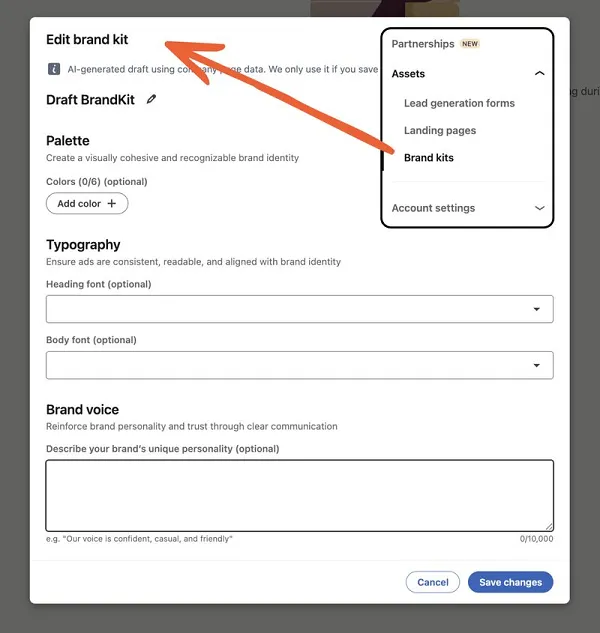
As shown in this example, posted by LinkedIn user Anthony Blatner, LinkedIn’s brand kit, which is currently only available to selected users, enables marketers to set an official brand color palette, font preferences, and even describe a brand voice. LinkedIn’s system will then be able to use these options as reference points for future recommendations.
As explained by LinkedIn: “Brand kit in Campaign Manager allows you to set your brand’s core assets such as color palette, fonts, and brand voice to help your ads stay consistently aligned with your brand. When you open brand kits for the first time, LinkedIn automatically assembles your brand voice from your existing LinkedIn presence including past content and your Company Page.”
So businesses can establish a core brand identity for the platform within this framework, and LinkedIn will build a brand identity for them based on existing posts from their company page.
“Brand kits can save you time and reduce off‑brand mistakes by ensuring AI-drafted ads and assets are on‑brand without manual rework,” LinkedIn said.
Providing more specific guidance to LinkedIn’s AI creation tools to power custom ads and content is a good option. It could also be helpful in terms of providing recommendations within set parameters as to how marketers can improve their content in line with their established guidelines.
It could serve as a handy reminder within the creation process, while also turning out more relevant concepts as a starting point in LinkedIn’s evolving AI systems.
Though the risk, of course, is that people end up relying too heavily on tools like this, and letting AI systems do all the work for them. In many cases, those tools probably can do a large amount of the work, but left unchecked, AI is still fallible and can produce damaging results that may end up hurting brand reputation.
This is the balance social platforms are now trying to address. On LinkedIn specifically, the platform recently announced new measures to crack down on AI-generated content in the feed. However, LinkedIn also offers users a range of options to use AI in order to create and refine their updates in-stream.
So on one hand, LinkedIn is telling users not to post AI-generated junk, but on the other, it’s also saying, “press this button here to generate postable AI junk.”
This is the dichotomy of the AI shift. Social platforms and AI developers want to push people to use more AI, yet more AI use ends up turning people off, and the influx of AI slop is making people less trusting, less interested and ultimately less engaged in apps.
The true value of the latest wave of AI tools is in assistance, and in providing prompts and guidance to help people improve their work. But the tools can also be used to do the whole job instead. Since a lot of people will choose the easier option, the end result is that AI tools are being overused to pump out unchecked, unclarified junk that is of little value, and could be harmful, in terms of misinformation, hallucinations and the like.
Providing proactive guidance for AI tools seems like a good way to help address this, though overreliance on such is going to become a much bigger challenge.






Recent Comments