
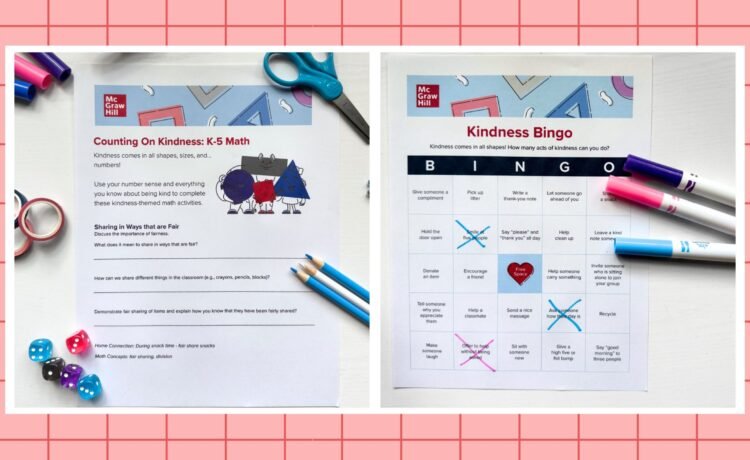
Bringing more kindness into your classroom doesn’t have to mean more planning. These free, low-prep Kindness Comes in All Shapes activities fit easily into your day while helping students build empathy, reflection, and connection. From quick routines to classroom systems you can build over time, each one helps turn everyday moments into habits that last.
Start with these seven ideas (all available to download here) and explore even more ready-to-use kindness resources across the site. You’ll find specific resources for elementary, middle school, and high school.
1. Spread kindness by playing bingo
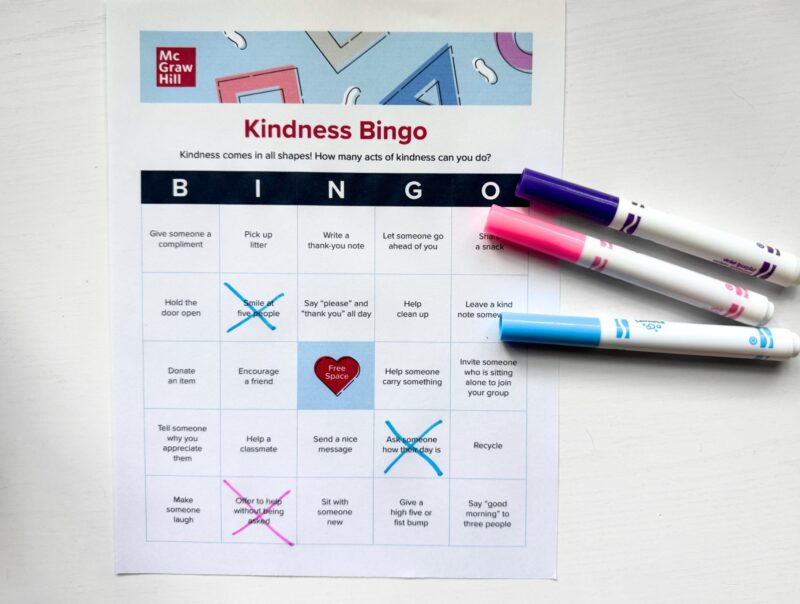
Who doesn’t love bingo? With a kindness twist, this classic game turns everyday actions—like giving a compliment, helping a classmate, or inviting someone to join a group—into intentional habits students can practice throughout the week.
In your classroom:
Give students a bingo board and let them complete acts of kindness in any order. As they go, they mark their progress—working toward a row, column, or even a full bingo board over time.
Extension activity:
Use completed bingo boards as a springboard for reflection. Have students share which acts felt easiest, which made the biggest impact, or which ones they want to keep doing.
2. Build writing skills with letters of kindness
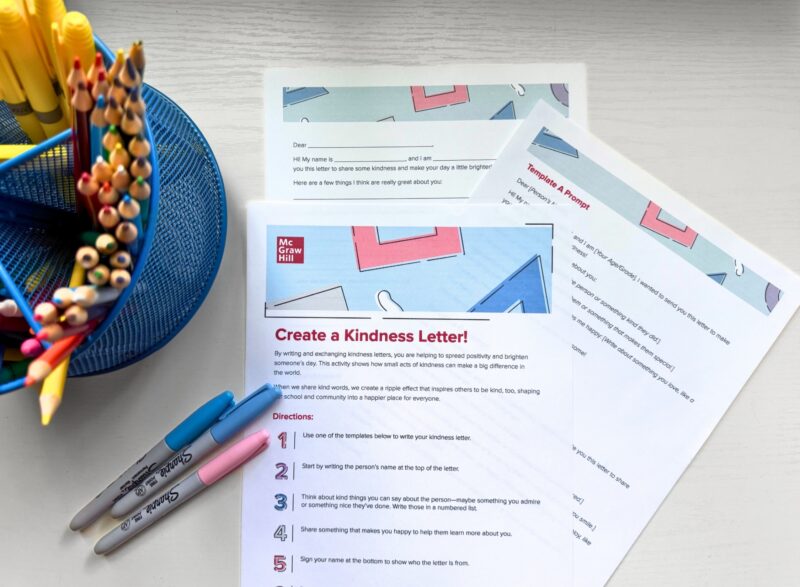
Kindness letters give students a structured way to practice gratitude while building real writing skills. With simple prompts—like naming specific traits, sharing examples, and adding a personal connection—students learn how to express appreciation in meaningful ways.
In your classroom:
Use the template to guide students step-by-step by starting with the recipient’s name, listing a few things they admire, and adding a personal message about what makes them happy. This structure helps students move beyond generic compliments.
Extension activity:
Make it part of an ongoing routine. Whether it’s a weekly “kindness letter” moment or a class goal to recognize different people over time, students begin to see how small messages can create a ripple effect across the classroom and school community.
3. Encourage reflection with kindness journals
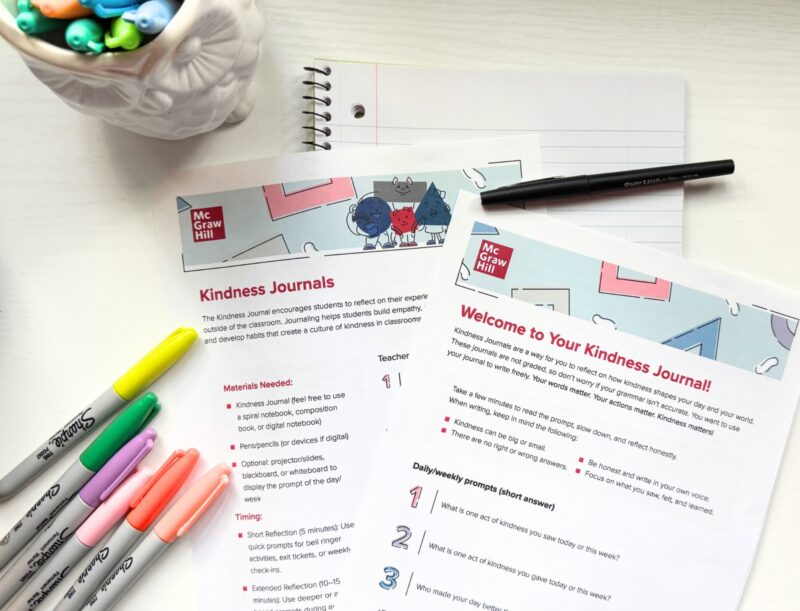
A kindness journal gives students dedicated time to reflect on their experiences, recording what they’ve seen, done, and felt. With short prompts and optional deeper reflections, journaling helps students slow down, build empathy, and recognize how kindness shows up in their daily lives.
In your classroom:
Use quick prompts as a bell ringer, exit ticket, or weekly check-in. Students can respond briefly about something kind they saw, did, or experienced. Keep it low-pressure and focused on real-life moments.
Extension activity:
Add in deeper or action-based prompts over time. Students might reflect on a challenging situation or try to work on building habits over time.
4. Practice empathy with Kindness Scenario Cards
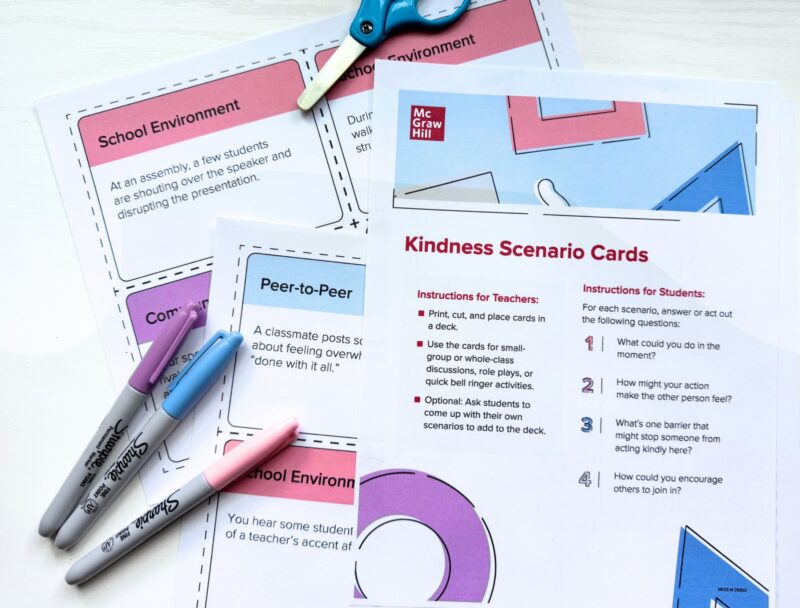
Kindness Scenario Cards help students think through real-life situations before they happen. Each scenario guides students to consider what they would do, how others might feel, and what could make acting kind easier (or harder) in the moment.
In your classroom:
Use a Kindness Scenario Card as a quick discussion starter during morning meeting, a bell ringer, or an exit activity. Students can talk through possible responses in pairs or small groups before sharing ideas as a class.
Extension activity:
Build this into a regular routine by revisiting scenarios over time or having students create their own. This helps them practice not just what kindness looks like but how to act on it, even in uncomfortable or challenging situations.
5. Celebrate good deeds with a kindness newsletter
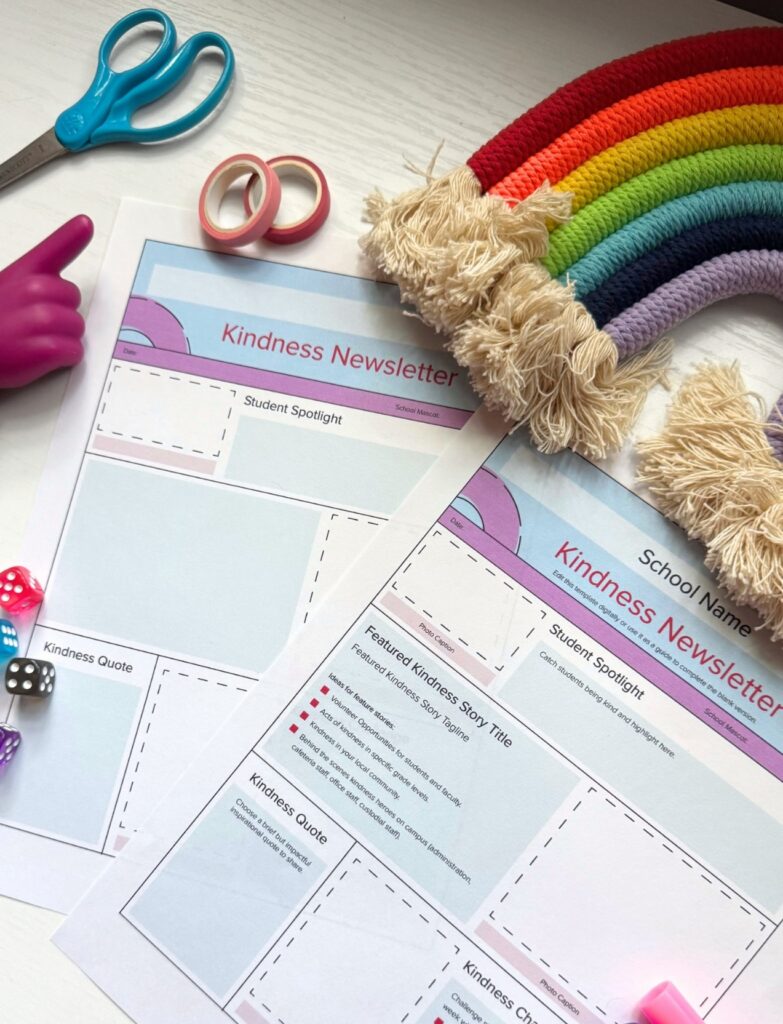
A kindness newsletter template makes it easy to turn everyday moments into something visible and shared. With built-in sections like student spotlights, kindness challenges, and featured stories, it gives students a clear way to notice, collect, and celebrate acts of kindness.
In your classroom:
Use the template as a simple system for gathering content. Assign rotating roles so students are responsible for noticing and contributing examples of kindness throughout the week.
Extension activity:
If students get excited about it, expand beyond your classroom. A small group or “kindness crew” can take ownership of compiling stories, highlighting different grade levels or staff members, and sharing the newsletter with a wider audience.
6. Make kindness count with kindness math
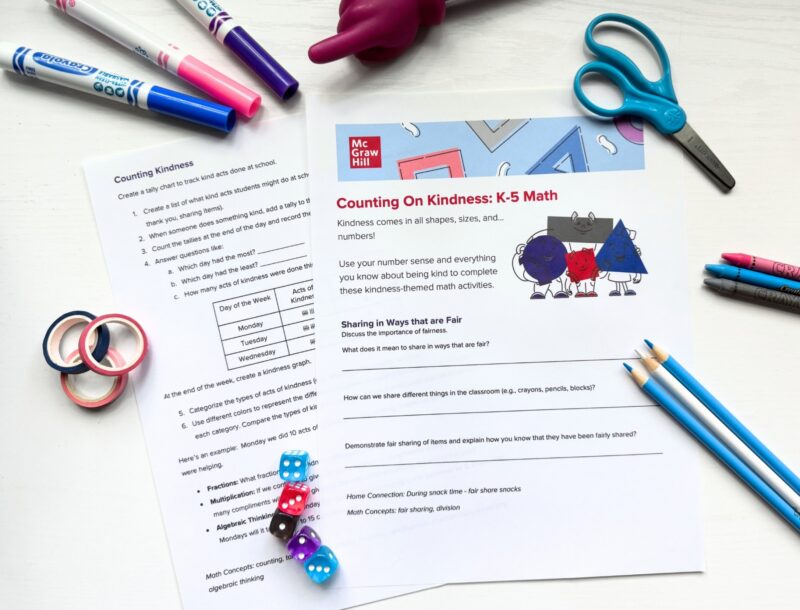
Kindness has a great opportunity to show up in math. Activities like tally charts, surveys, and even “kindness budgets” help students see how small actions add up over time—and turn everyday moments into meaningful data.
In your classroom:
Start by tracking acts of kindness together. Younger students can use tally charts to count daily acts, while older students can run simple surveys or record patterns they notice across the week.
Extension activity:
Use the data to deepen learning. Have students graph results, compare categories, or look for trends. You can even extend into questions like how kindness changes over time or what types of actions happen most often.
7. Keep kindness moving with Pay It Forward Cards
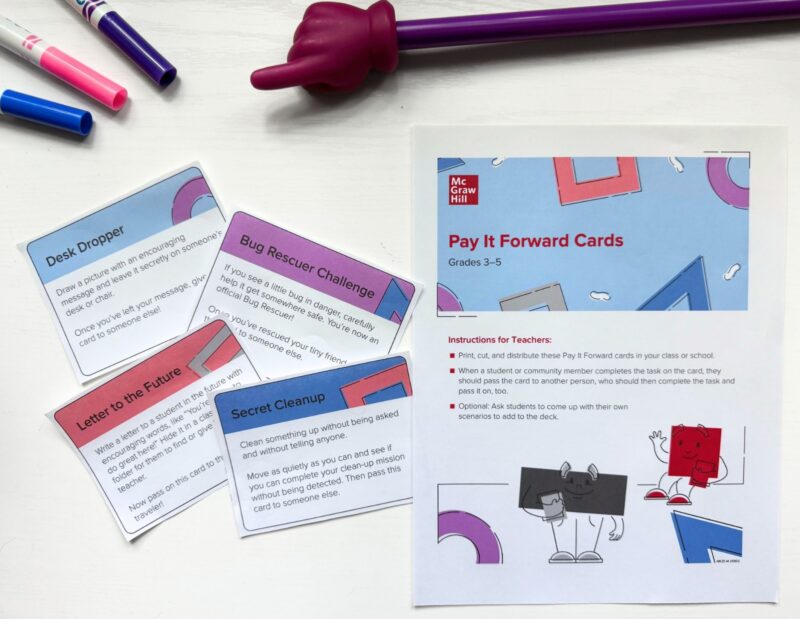
Pay It Forward Cards turn small acts of kindness into a ripple effect. Each card includes a simple challenge—like offering a compliment, helping someone out, or reaching out to someone new. Once completed, you pass it along for the next person to do.
In your classroom:
Introduce the cards and let them circulate naturally throughout the day or week. This is a great way to connect students with similar actions without needing a lot of structure or tracking.
Extension activity:
Invite students to create their own cards to add to the deck or reflect on how the actions changed someone’s day. You can also challenge the class to see how far a single card travels.



Recent Comments