
It seems oddly fitting that David Hockney’s death should coincide with a heatwave. After all, nobody can evoke the languorous feeling of summer quite like the Yorkshire-born painter, who passed away earlier this month. This unique sensibility is particularly apparent in Hockney’s iconic LA paintings, which he produced at an enviable rate throughout the 1960s. To stand in front of one of these huge, cerulean canvases is to be transported to another world: one of swimming pools and sliding doors; blue skies and bare bottoms; tan lines and tight-fitting shirts. You can almost smell the chlorine, and feel the hot tiles under your feet.
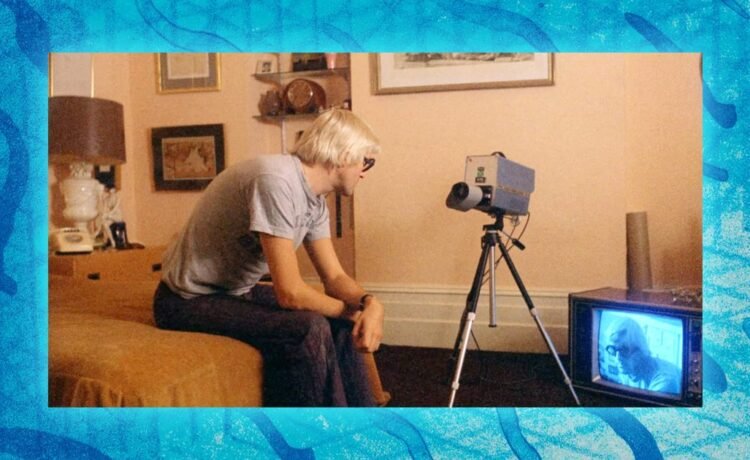
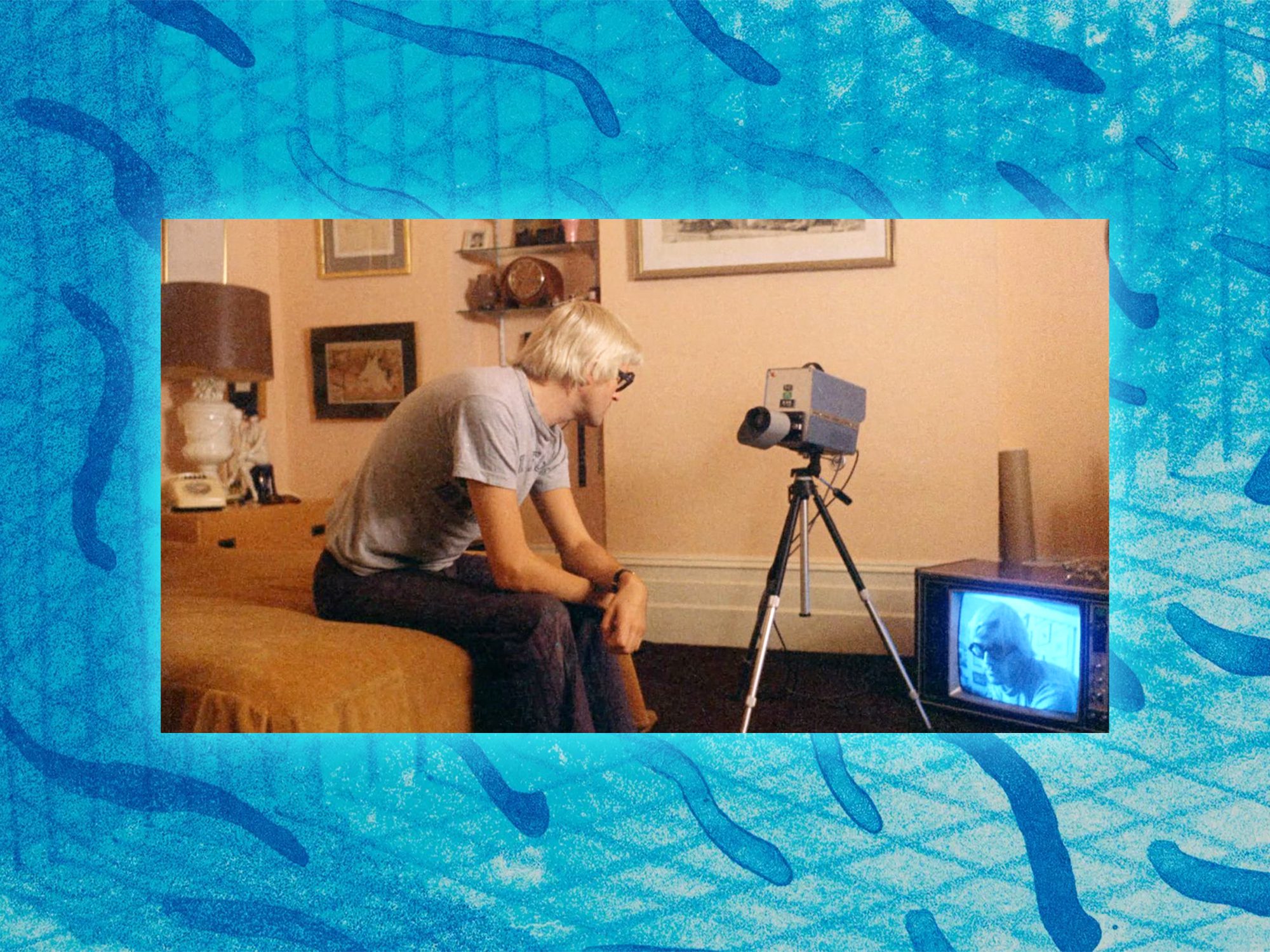
It is this same sun-bleached fantasy which the director Jack Hazan attempts to recreate at several moments throughout A Bigger Splash, a documentary which borrows its name from one of Hockney’s most famous paintings. The film follows the young painter over the course of three years – from 1971 to 1973 – depicting his struggle to find inspiration after a devastating separation from his model and muse, Peter Schlesinger. Revisiting the film today, Hazan’s knack for composing beautiful cinematic images is still abundantly clear. What is even more striking is the ways in which the director interrogates the cult of Hockney’s celebrity, foregrounding the tensions that exist between the artist’s personality and his public image and, in the process, producing one of the earliest permutations of modern reality TV, decades before the rise of personality-driven media built around the commodification of everyday life.
Get more Little White Lies
On the one hand, Hazan’s gaze is unflinching: exploiting a range of verité techniques in order to offer audiences a glimpse into the quotidian reality of celebrity life. The sequences which he records within Hockney’s private studio, for instance, are mesmerising in their patient observation of the artist’s process. Hazan is also granted unfettered access to the artist’s private home – at one point even joining Hockney in the shower. Yet the film’s most daring scene features footage of Schlesinger having sex with another man. It’s a sequence that is particularly bold considering that homosexuality in the UK had only been decriminalised only five years earlier. However, it also seems to have been a step too far for Hockney, who flew into a rage at an early screening, and reportedly threatened to pay £20,000 for control of the negatives.
Whilst the raw intimacy of A Bigger Splash may have scandalised even Hockney himself, to describe it as an unmediated version of reality feels somewhat reductive. It is a film that is far stranger, and more subversive than that. Like his American counterpart, Andy Warhol, Hockney often treated his public image as an extension of his art; his bow-ties and bleach blonde hair serving as a costume to hide his own sense of being an outsider. Hazan’s film purports to offer an unvarnished ‘portrait of the artist,’ but it challenges this cool exterior. Instead – much like contemporary shows such as Keeping Up With the Kardashians or Selling Sunset – Hazan seems keen to indulge the artist’s self-mythology, treating him like a character who is not quite real.
It is clear that many of the scenes follow a roughly pre-agreed script (commonly known in the reality TV world as ‘soft scripting’) with individuals playing fictional versions of themselves. Even when we see Hockney reflecting on heartbreak with one of his girlfriends, both characters seem to be flirting with the camera, censoring themselves accordingly. The result of such self-consciously staged conversation is something far more unstable than reality. Indeed, it is almost as if we, the viewers, have been immersed in one of Hockney’s paintings, where everyone seems at once familiar and completely unreal.





Recent Comments