
At 22, I went to work for a hard money lender doing purchase-rehab loans. I bought my first rental property at 24, which kicked off a decade of active real estate investing before I accepted how badly I’d bungled my early investments and unloaded all of them.
By my late 30s, I’d wiped the slate clean. My early losses and later wins offset one another, and I did end up starting over from scratch. After that, I managed to go from nothing to $1 million in under seven years despite a modest household income.
This is all to say this isn’t just a theoretical exercise for me. So, knowing everything I know today after 23 years in real estate, how would I start over today?
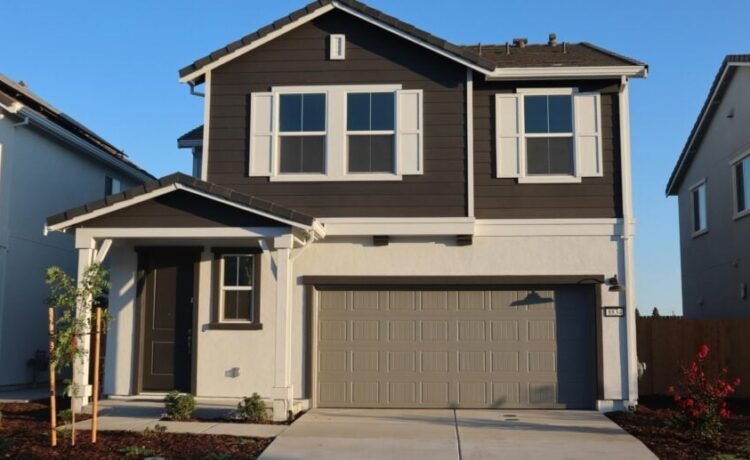
I’d House Hack for “Free Housing”
When I bought my first home, I rented out the other bedroom to a housemate I met on Craigslist. To this day, she and her now-husband are two of my closest friends. At one point, we spent a week in northern Italy together.
Granted, I was in my early 30s at the time and single. Today, I’m married with a daughter—and I’m still looking at buying a two-unit home to house hack.
If you can knock out your housing payment by having renters pay your entire mortgage, you can supercharge your savings rate. And that means building wealth extraordinarily fast.
I know, because I spent 10 years living overseas with free housing, which helped us invest huge amounts each month even with a middling household income.
Plus, house hacking gives you a first taste of rental investing and landlording. I discovered that I hated the constant hassles with contractors, tenants, property managers, the permit office, city inspectors, tax assessors, and lenders. But I refused to learn any lessons the easy way and had to learn them the hard way.
Hopefully, you can do better than I did in that regard.
I’d Start Passive, Not Active
Active investing requires dozens of micro-skill sets. A few include:
- Finding deeply discounted off-market deals (that’s actually a major skill set; nothing “micro” about it)
- Building a financing toolkit of different lenders and credit types
- Screening and managing contractors (who are notoriously difficult to work with)
- Screening and managing tenants (ditto)
- Screening and managing property managers
- Navigating the local permitting process and inspections
Skills aside, it cost a massive amount of my time. Owning rentals is a side hustle, and I spent too much of my nights and weekends putzing around with properties.
Oh, and it comes with more liability than novice investors realize: legal liability from lawsuits (I was sued twice as a landlord, and it really, really sucked), as well as debt liability when you sign a personal guarantee.
Do you know what’s much easier? Evaluating passive real estate investments—and then wiring the money and calling it a day.
Still, it raises the question: Where do you find passive real estate deals (especially as a non-accredited investor), and how do you vet them?
I’d Plug Into an Existing Community of Investors
Investing might feel like a solo sport, but it doesn’t have to be.
I invest alongside a co-investing club, putting in relatively small amounts ($2,500+) in a new deal every month. The club gets together once or twice a month on a group video call where we all grill the operator together with questions, then boot them off the call for an internal discussion of the deal’s risks and upsides.
We all get the benefit of each other’s knowledge and experience, vetting the deal together. That makes it easy for even novice investors to make intelligent, informed decisions.
It also helps to leverage communities like BiggerPockets. Before investing with a new operator, I run a search on the BiggerPockets forums to see what other investors have said about them.
Real estate investing gets much easier when you approach it as a team sport.
I’d Practice Dollar-Cost Averaging
When most people start investing in real estate, they park $50,000 – $100,000 in each new investment. For active investors, that’s the down payment, closing costs, initial repairs, and so forth. For passive investors, that’s the minimum investment.
That makes it really hard to invest consistently, which is why I don’t do that anymore.
Instead, I invest $2,500 or more each month in new deals as a form of dollar-cost averaging. Just as I invest monthly in stocks, I invest monthly in real estate.
It helps me avoid the losing game of trying to time the market. This, by the way, is far more tempting when you invest $50K-$100K at a time.
When you invest through a co-investing club, you go in on investments together, so each person can invest small amounts. Collectively, we might invest $400K-$800K at a pop, but each member only puts up a few thousand (or more if they want).
I have a diversified portfolio spread across dozens of cities and states and many operators and property types. I can only do that because I invest small amounts every month.
I’d Get Strategic About Taxes
Some of my investments come with the same tax benefits as active investments. Better in fact, because the operator usually does a cost segregation study to give me a huge write-off in Year 1.
Other investments come with no tax benefits, such as secured notes. But they pay such a high income yield that I don’t mind—I just offset them with the tax-friendly investments.
As investments sell and hit me with high tax bills, I’d use the lazy 1031 exchange strategy to offset them and keep kicking the can down the road. It’s super simple and doesn’t require any of the hassles like qualified intermediaries or rigid timelines. All I have to do is invest in a new equity investment in the same calendar year.
You can also do plenty of creative strategies with your IRA or 401(k), especially with Roth accounts.
If I Wanted to Start a Real Estate Business
Most people just want to add real estate to their investment portfolio without starting a side hustle or business around it. But what about investors who do want to make a business out of real estate investing? I’d consider two paths: cosponsoring deals or combining wholesaling and rental investing.
When you cosponsor deals, you get a cut of the returns in exchange for helping to raise capital among your friends, family, and followers. It’s a great way to get your foot in the door to becoming a real estate syndicator yourself and get some deals on your track record (even though you didn’t actually run them).
Alternatively, you could wholesale fixer-uppers to active investors. Some of those deals you could keep for yourself, renovating them and keeping them as rentals (the BRRRR strategy). The wholesaling business creates monthly revenue while you gradually build a portfolio of income properties.
Why Today’s Market Looks More Appealing Than Most
I stand by what I said about dollar-cost averaging and not timing the market. That said, it’s still worth observing the current market cycle.
Analysts such as BiggerPockets’ Dave Meyer see deals getting better for investors, as the shift toward a buyers’ market continues. That’s great news for both active and passive investors.
Multifamily values crashed 25%-30% in late 2022 and early 2023. The recovery has started but remains early enough that there’s plenty of room to run.
And when inflation surges (like it’s doing right now), real assets outperform everything else. Real assets have intrinsic value, so people simply adjust what they’re willing to pay even as the value of the currency changes.
You don’t need to plop down $50,000 for a down payment or minimum investment. You can get started with a few thousand dollars if you invest alongside a co-investing club and gradually build your empire. I now own an interest in over 5,000 units across the country, but I don’t have to lift a finger for any of them.
That’s how I’ve been investing for the last eight years since I started over in my late 30s. And it’s how I keep investing every month to build a machine that generates income on its own.






Recent Comments