
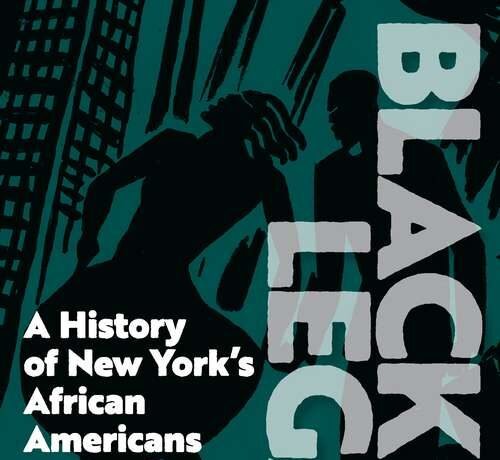
 William Loren Katz’s Black Legacy: A History of New York’s African Americans (Seven Stories Press edition, 2026) unveils the Black history of New York from 1609 to the present, for readers 12 and up.
A newly issued and revised edition includes a new intro and last chapter with insights on modern-day movements like Black Lives Matter, plus 50+ historical maps, illustrations, and photos. The book is considered essential for educators, libraries, and teens.
From the arrival of the first enslaved Africans in New Amsterdam in 1609 to the Harlem Renaissance to the impact of #BLM, here is a concise and newly updated history of Black Americans in New York.
Teacher and historian William Loren Katz’s original edition was committed to documenting and uplifting the stories of Black Americans’ courage and creativity, resilience and rebellion, especially for younger readers. Katz passed away in 2019.
A new introduction by award-winning journalist Herb Boyd gives context to Katz’s “full tableau of Black accomplishments and aspirations,” and a new chapter by historian (and regular New York Almanack contributor) Alan Singer and social studies teacher Imani Hinson brings the book up to the present day, considering the changing economic, cultural and political influences on Black New Yorkers.
Black Legacy includes Black politicians and poets, abolitionists and athletes and activists, and the first Black children to attend public schools; Sojourner Truth, Paul Robeson, W.E.B. DuBois, Frederick Douglass, Marcus Garvey, Malcolm X, the Black Panthers, and others who fought for Black freedom; Shirley Chisholm, Madame C.J. Walker, NY’s first Black mayor David Dinkins and many other businesspeople and politicians who brought dignity through their work toward equality; and the Black history of Seneca Village and Weeksville, the Savoy and Cotton clubs of the Jazz Age, Harlem Hospital where Martin Luther King Jr. nearly died, the African burial site at Trinity Church, and so much more.
Rather than laying out a straightforward sequence of events, Katz deftly weaves the city’s most recognizable figures into a dense self-referential history, illustrating how Black icons like Al Sharpton and Lorraine Hansberry engaged with their predecessors before making their own contributions to the culture.
William Loren Katz (1927-2019) was born in Brooklyn and grew up in Greenwich Village in a progressive family dedicated to social justice. After serving in WWII and attending college on the GI Bill, he became a teacher in New York for many years.
The author of more than 40 books, many for younger readers, he documented the often overlooked contributions of black and indigenous people through history.
Through his scholarship and educational outreach, he helped to refashion social studies curriculums across the country, encouraging the histories of minorities and women to be part of American history courses rather than siloed into their own fields of study.
Book Purchases made through this Amazon link support the New York Almanack’s mission to report new publications relevant to New York State.
Read more about Black History in New York State.






Recent Comments