
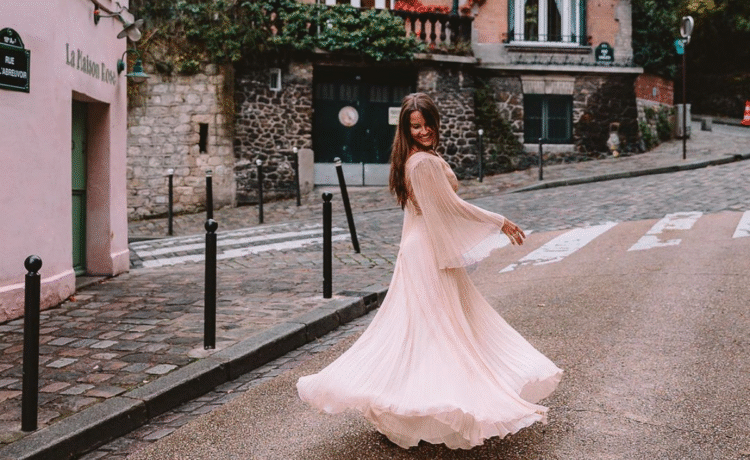
You scored a beautiful vintage (or vintage-inspired) dress…but when you try to style it, the look slides from “old Hollywood” to “old costume trunk.” Too many pearls, too literal shoes, a headband and gloves and a boa? Your mirror begs for mercy.
Choose one iconic era reference and edit everything else. If your dress is already doing fringe, beading, a wide skirt, or a mod A-line, your accessories should punctuate, not compete. Keep metals consistent, go modern on one major piece (shoes or bag), and let hair and makeup echo your chosen era just enough.
The result? An effortless starlet energy that photographs like a dream, feels comfortable all night, and reads timeless in person. (Bonus: a single pop of red—bag, heel, or lip—has a measurable “wow” factor in studies, so use it strategically.)
Accessories That Whisper “Hollywood,” Not “Costume”
There’s a fine line between dressing like a starlet and looking like you raided the prop closet. The difference is restraint. Hollywood glamour is not easy. You need to put together a perfect puzzle: edited eyebrows, a perfect hem, pearls that sit exactly where they should. When you accessorize a vintage dress, look for the details that made the originals iconic, then pare them down to one or two decisive gestures.
Ask yourself three quick questions in the mirror:
-
What moment do I want to create: shimmer, polish, or graphic impact?
-
Which accessory is the loudest: jewelry, shoes, or hair?
-
If I removed one piece, would the outfit look even better?
If the answer to #3 is yes, take it off. Coco was right.
The 1920s: Shimmy, But Keep It Sleek
Flapper style was designed to move. Fringe, beading, and drop waists weren’t just decoration; they were choreography. When you wear a ’20s-inspired dress today, the instinct is to pile on the pearls and a feather headband. Resist. Choose one star element and make sure it’s refined. A thin beaded band worn low on the forehead feels authentic without turning you into a Charleston extra. One extra-long string of pearls, casually knotted at the sternum, brings vertical elegance that counterbalances a straight silhouette.
Shoes matter here. A modern T-strap with clean lines honors the era without shouting about it. Skip heavy platforms; they fight against the lightness of fringe. Hair can nod to finger waves without needing a full Marcel set: a deep side part, hair smoothed behind one ear with a jeweled clip, and you’re in business. For makeup, think luminous skin and a soft satin lip. Let the dress do the dancing; your accessories should simply keep time.
The 1950s: Hourglass, Elevated
The ’50s is where accessories become architecture. Gloves, structured clutches, cat-eye sunglasses… Each piece is deliberate, clean, and ladylike without ever feeling fussy. A tea-length fit-and-flare loves a glove the way a sonnet loves a rhyme. Wrist length for daytime, opera length for formal: try both with your dress and see where the hem and sleeve land before you decide.
Pearls in this decade are less about quantity and more about placement. A single strand sitting just at the collarbone is beautiful with a bateau or scoop neckline.
Shoes? Slingbacks were practically invented for this moment. A pointed slingback will elongate the leg under a full skirt without competing for attention. If you’re outdoors pre-event, a cat-eye is peak movie-poster energy and has the added benefit of making you feel mysterious.
Hair should be polished: either a smooth chignon at the nape or soft pin-curls brushed into waves.
The 1960s: Graphic, Clever, Unfussy
Mod accessories prove you can be playful and sophisticated at the same time. Winged liner is the headliner here; once your eyes are doing the talking, the rest of the look follows.
If your dress is a simple column in a strong, flat color, let your eyeliner and earrings be the punctuation. Choose either bold hoops or discs: not both earrings and a statement necklace. Keep lips to a comfortable rose or nude. Hair can also go either way: a polished pony with a little height, or a shiny, precise bob.
’60s accessorizing plays brilliantly with modern pieces. A contemporary metallic mini bag or a sleek patent pump bridges past and present in a single step.
Jewelry: Shine Without a Shout
Jewelry is the fastest way to steer your vintage dress toward “starlet.” The trick is to match the scale of the piece to the canvas you’re working with. If your hair is up, long earrings create a glamorous line along the neck; if your neckline is already ornate: lace, beading, illusion. Skip a necklace and let the fabric be the jewelry. Sweetheart necklines love pearls or a delicate collar that sits just above the edge of the dress; bateau necklines look exquisite with no necklace at all and a focus on ears and a bracelet.
Don’t sleep on brooches. A vintage brooch at the shoulder of a simple sheath is a masterclass in quiet glamour. You can also pin one at the waist of a wrap dress to anchor the overlap and add just a wink of sparkle. As for rings, a single cocktail ring is more cinematic than five competing solitaires.

Shoes: Choose the Mood, Then the Height
Shoes are mood setters. A peep-toe reads playful and suits 1950s tea-length dresses and 1930s bias-cut gowns; slingbacks say refined and pair well with everything from fit-and-flare to sheath; satin pumps are the universal evening workhorse. If your dress is mini or above the knee, a shorter heel (or a block heel) keeps the look flirty and comfortable. For midi and tea-length, a pointed toe extends the line of the leg. With a floor-length gown, prioritize stability: you’ll mostly see the shoe when you walk, so a clean, simple silhouette in a complimentary tone is perfect.
Comfort is not the enemy of glamour. Do the hallway test, the stair test, and the “I’m late” speed-walk test in your full outfit. If your stride gets choppy or your knees lock, drop half an inch or switch to a sturdier base. Gel pads at the ball of the foot are tiny miracles.
Color can be a stealth accessory. A red shoe with a black column gown is a plot twist; a silver sandal with a champagne dress is stardust. If the dress is already embellished, choose a neutral metallic and let the texture sing.
Hair & Makeup: The Frame for the Painting
Old Hollywood faces weren’t overdone; they were finished. That’s the goal. Start with skin that looks like skin: glow where the light hits naturally, a touch of powder where you need staying power. If you lean into a bold red lip, soften the eyes to eyeliner and mascara. If the eyes are dramatic (a classic wing, a soft smoky wash), let the lips stay sheer and kissable. This see-saw of emphasis keeps the look intentional rather than heavy.
Hair should echo your neckline. Off-shoulder and sweetheart dresses adore updos because they reveal the collarbones—the most elegant jewelry you own for free. High necklines and halters benefit from hair up or tucked to one side, so the architecture can shine. For 1920s and 1930s moods, brushed finger waves or a smooth side part with a jeweled comb reads authentic without feeling like cosplay. For 1950s romance, soft waves or a low chignon are unbeatable. For 1960s clarity, a sleek pony or precise bob is your power move.
Hair accessories are the cherry on top, not the whole sundae.
Keep It Fresh: Vintage, Through a Modern Lens
If you remember nothing else: let one piece take the spotlight. A fringed flapper dress doesn’t need chandelier earrings, stacked bracelets, a headband, and a feathered bag. Choose the headband and keep the rest sleek, or choose the earrings and skip the headband altogether. The same goes for a sequin column: if the dress is basically wearing jewelry, keep your actual jewelry minimal and allow the fabric to catch the light.
Blend old and new on purpose. Pair a 1950s silhouette with a contemporary stiletto or a clear vinyl sandal for a little time-warp fun. Add vintage earrings to a minimalist black slip and you suddenly look like the cool heir to an old studio fortune. Match your metals to the dress hardware so nothing looks accidental. And whenever you’re in doubt, edit. The starlet look isn’t loud; it’s precise.
Color is also your friend. If a classic red lip feels too bold, try a deep berry or a soft rose. If your dress is pastel, let gold jewelry and warm skin take center stage; if your dress is stark and graphic, silver and crystal will keep the mood crisp. A single colorful clutch: emerald, cobalt, fuchsia: can do more for your outfit than three pieces of extra jewelry ever could.
Finally, think about scale. Petite frames can be overwhelmed by giant clutches and chandelier earrings; statuesque frames can handle bolder shapes and longer lines. Try everything on together: dress, shoes, bag, jewelry, hair accessory, then step back from the mirror. Your eye should travel smoothly from head to toe. If it gets stuck somewhere (usually at the one thing that’s “too much”), swap that piece for something cleaner.
Your Close-Up Awaits
Hollywood glamour isn’t about having a closet full of antiques; it’s about editing. Choose one era to echo, pick a single leading accessory, and let everything else support the scene. Keep metals consistent, scale appropriate, and color strategic. Most of all, wear the look like it’s second nature.
Ready to build your starlet toolkit? Explore dresses and finishing touches at NewYorkDress: from fringe that actually moves to clutches with just the right glint. We’ll bring the glamour; you bring the entrance.


Recent Comments