
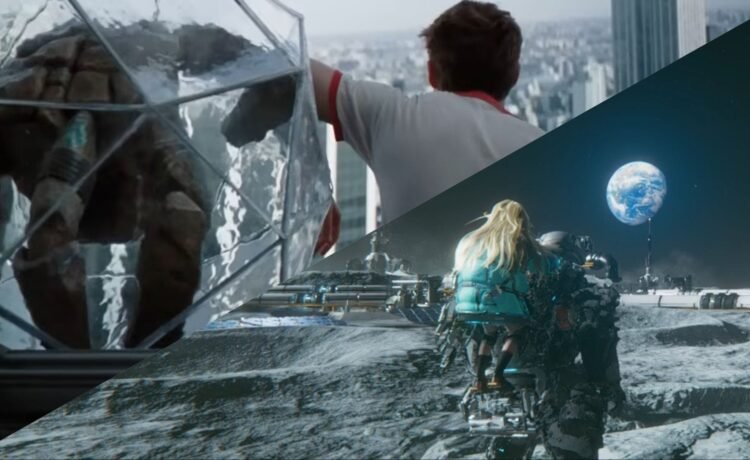

If you are a lover of space exploration, movies, and video games, the past month or so has been one of the most exciting times in recent history for us. Humanity once again reached the moon (even if not setting foot on it this time) with the Artemis II mission. Project Hail Mary showed space, an unlikely friendship, and the many facets of humanity. And, finally, Pragmata put you on the moon, allowed you to strike a beautiful bond with an android, navigate the far reaches of scientific advancement, and be nostalgic about life on Earth.
That two of these are fictional products and only had real-life stakes and goals is not lost on me. And thus, in the article, I will speak more on the similarities and cultural relevancies of the movie and the video, while harking back to certain public segments of the Artemis II mission.
But all three show humanity’s deep interest and love towards all things space, alien, and Earth. And, once you pick on these connecting lines, you realise why Project Hail Mary and Pragmata have become such major hits, and why NASA’s Artemis II launch video has more than two million views on YouTube.
Project Hail Mary and Pragmata show humanity’s deep interest in space and what it possibly means to be human
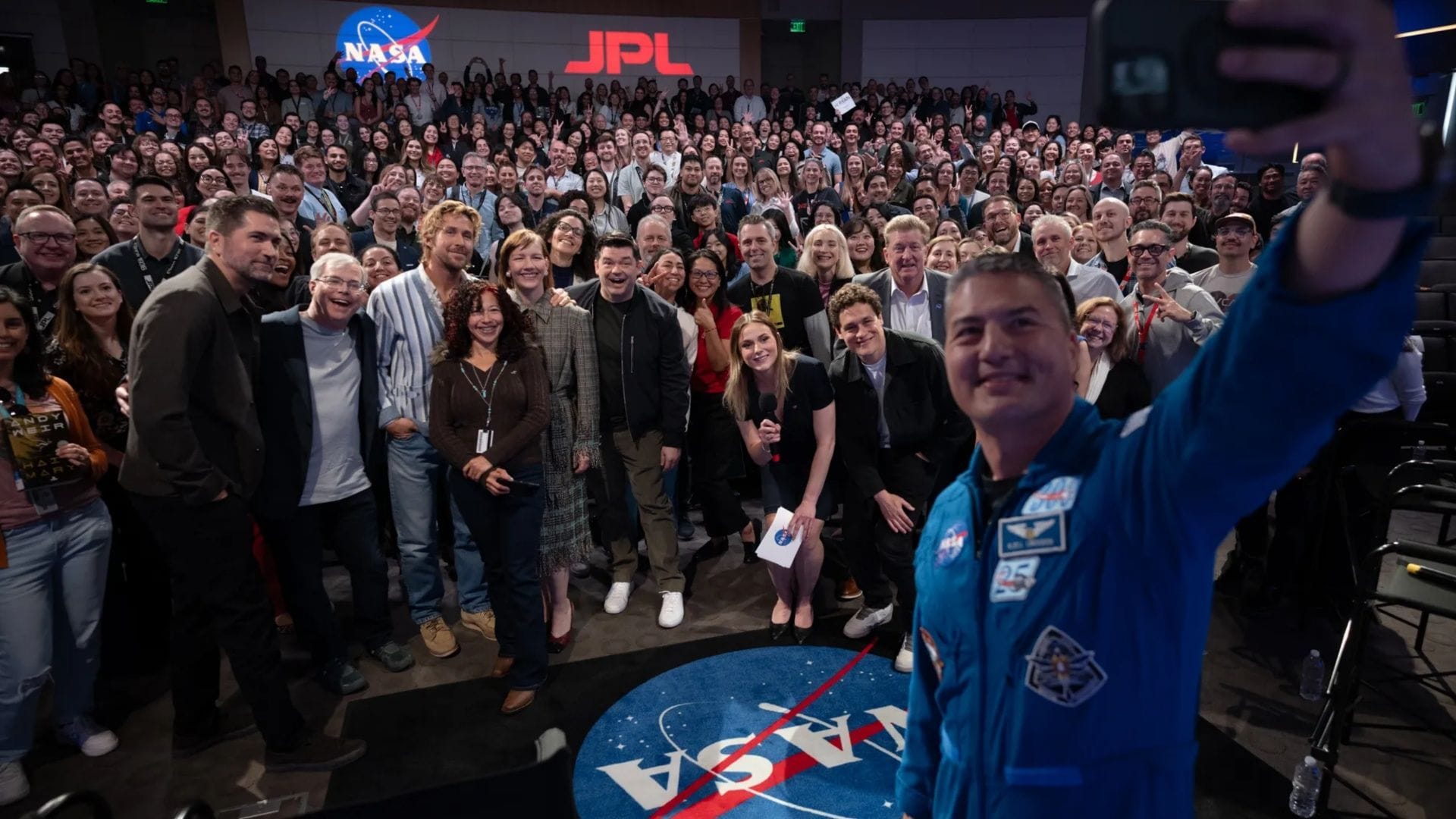
Before I dive into exploring the themes of the movie and the game, let’s do a quick recap. The Artemis II mission was the first crewed lunar mission in over 50 years, taking place between April 1 and April 11, 2026. It flew around the moon and also set the record for the farthest humans have been from Earth.
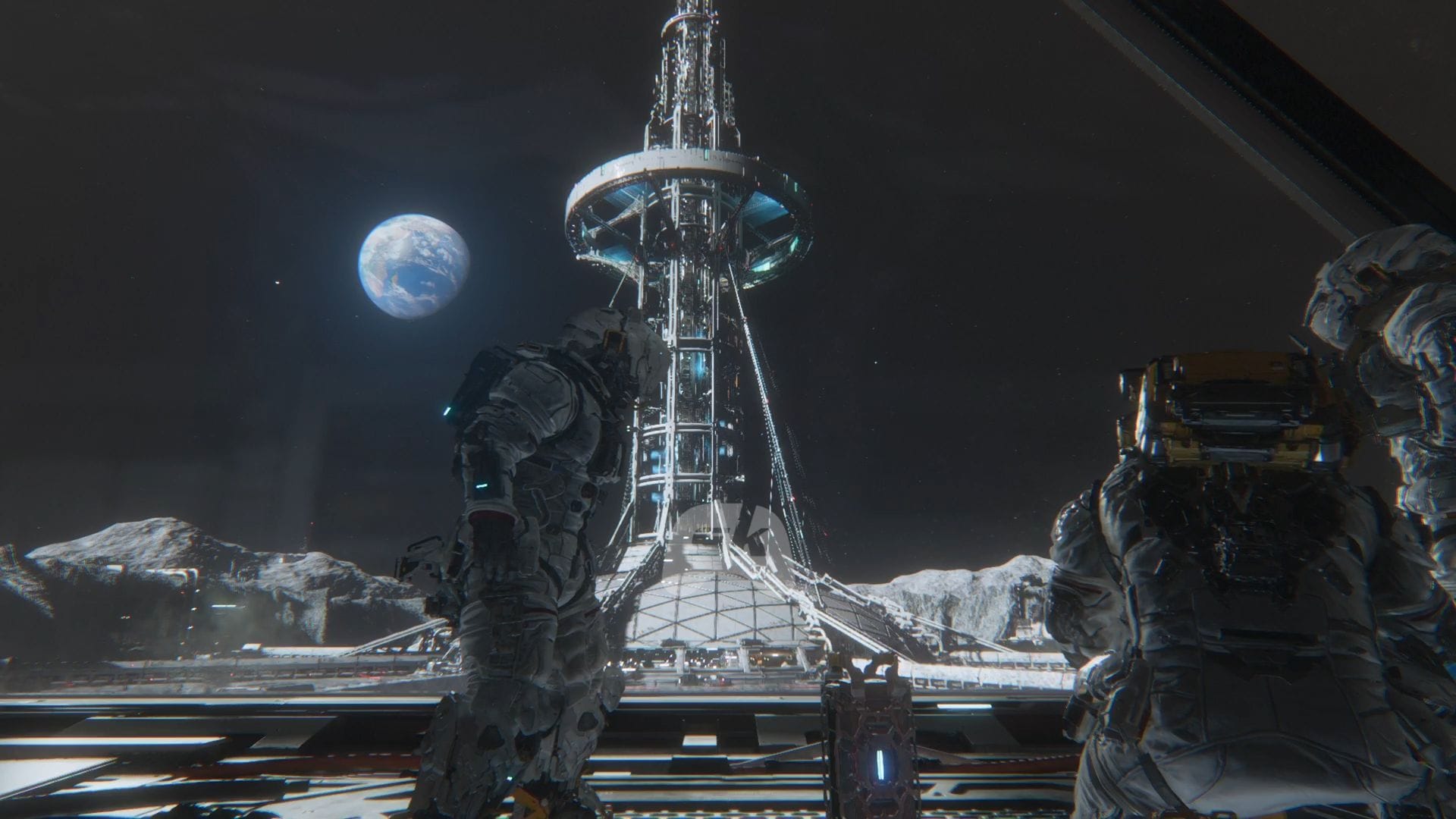
The Project Hail Mary movie is based on Andy Weir’s book of the same name, where a school teacher/biologist and an alien that he names “Rocky” do science to save their respective planets. Finally, Pragmata pits a dual hacking-and-shooting combat mechanic with the human Hugh doing the shooting part while the child-like android Diana covers the hacking part. All that happens in a Lunar Research Base with no living humans left and a rampaging AI controlling everything.
I acknowledge these are very truncated gists, but they should be enough to start us on this discussion.
Only when you go far do you understand the near
There is a childish poignancy in this sentiment: that you have to go far away from something to start appreciating what it was, with a sense of nostos, or longing for a return, pervading that thought process. For any journey into space, this return is not even guaranteed. A million different things can go wrong. All of it makes this look back from afar more potent.
One of the most loved pictures from the Artemis II mission is of a crew member looking through a windowpane at Earth, Carl Sagan’s Pale Blue Dot shining in all its might and glory. Sitting on Earth, we only seem to see cities, borders, countries, and every bit of the micro that govern and dictate our everyday life (as we should to survive). But, once in a while, stepping back and looking at it from the macro perspective allows us to see what it all really is: a giant sphere of rock and water amidst other chunks of rock and different matter suspended in a sea of nothingness.
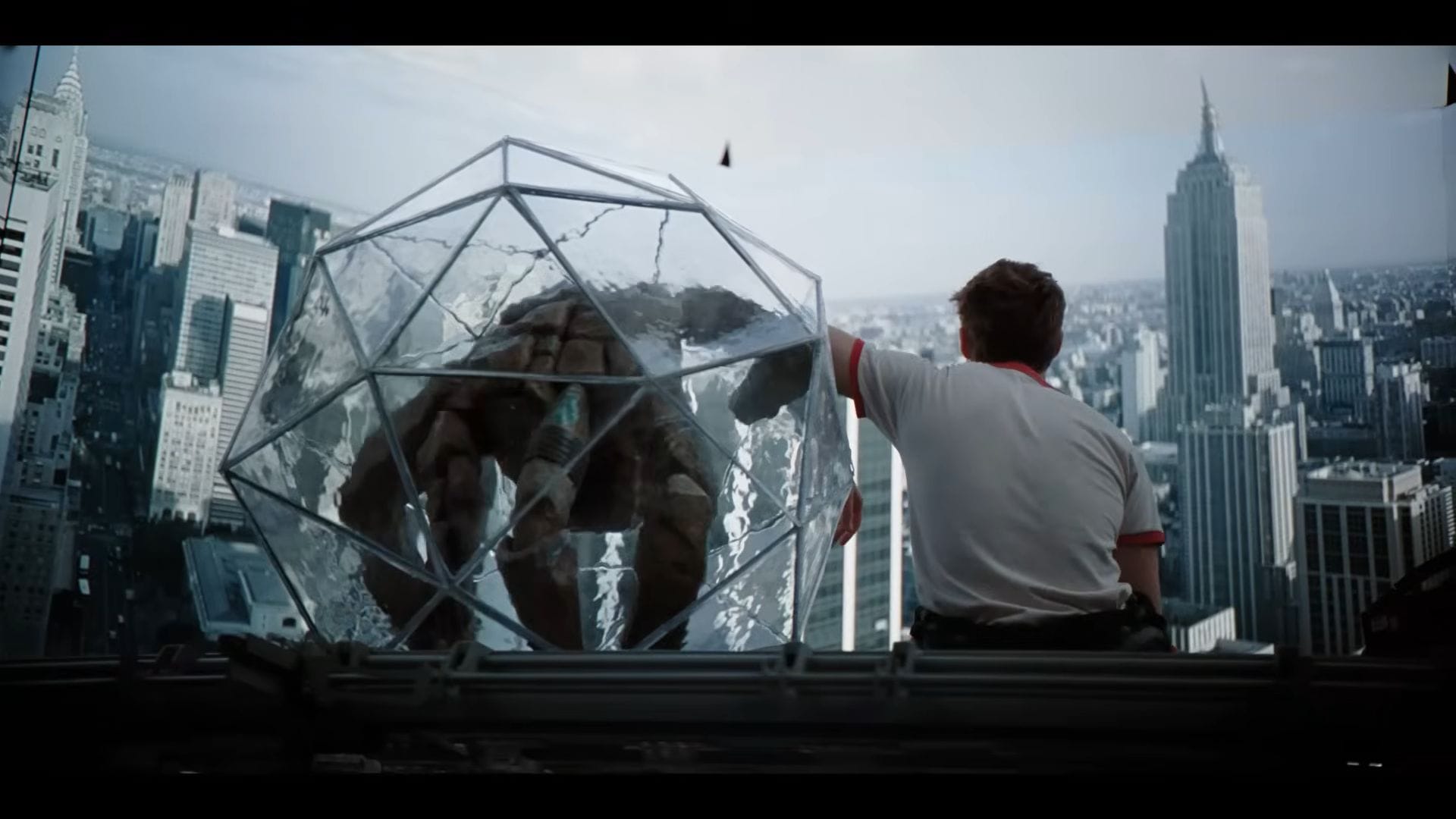
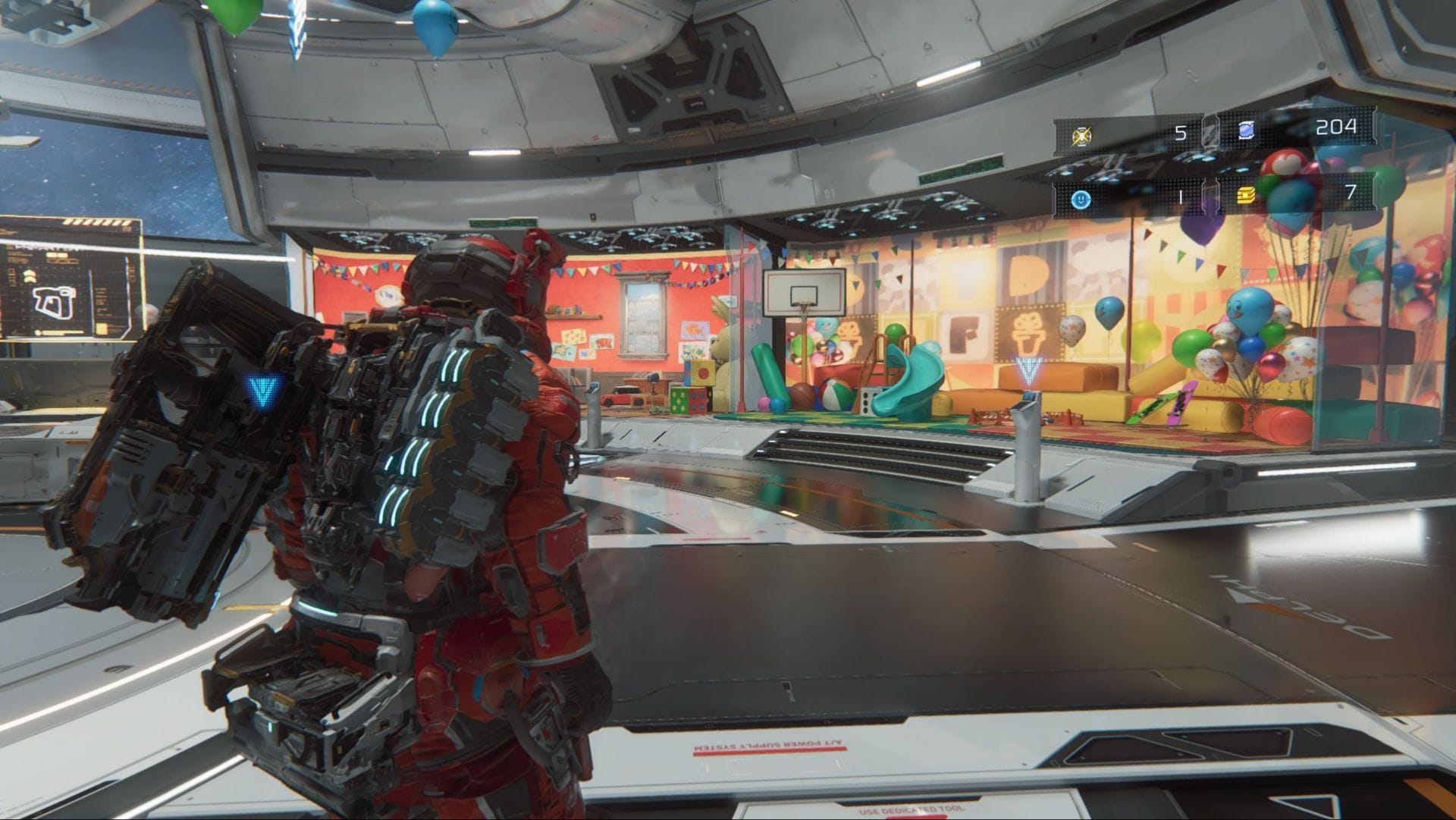
The familiarity and longing are created in Project Hail Mary and Pragmata through the means of recorded videos and holographic memories. In the former, this is a spherical projection room where Grace, the teacher/biologist, and Rocky, the spider-like, five-legged, alien from the planet Erid, would sit and watch various videos of Earth. In the latter, you collect Read Earth Memories (REMs) that can be given to Diana and printed in the Shelter, where Diana will interact with those with awe and curiosity.
Both these recorded videos and holo memories focus on Earth’s natural wonders and the everyday lives of humans. There is an irony prevalent here: when we create pocket memories of humanity and Earth, we focus on the mundane everyday joy and natural wonders, whereas a large portion of our very short history on this planet has been filled with and driven by greed and violence. Voyager 1’s Golden Record is a prime example of the same.
In Project Hail Mary, we are looking at the beach, the ocean, and the fireworks. In Pragmata’s REMs feature everything from a child’s perspective: a child’s playroom, a child’s tent in the forest, and a child’s sandcastle at the beach. The game’s Lunar Research Station scientists print these holo memories and more to try to satisfy the longing they feel for the familiarity of Earth.
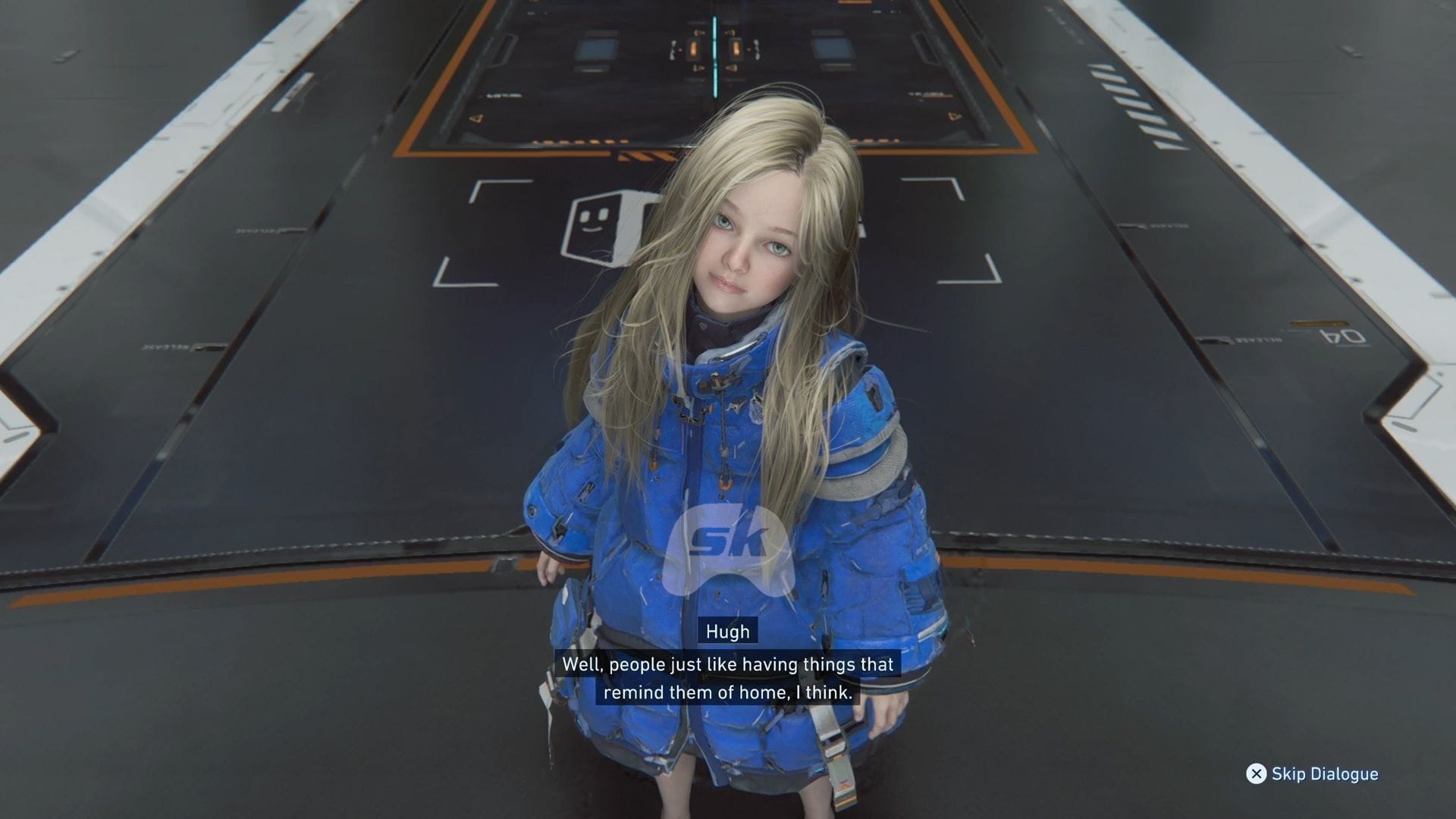
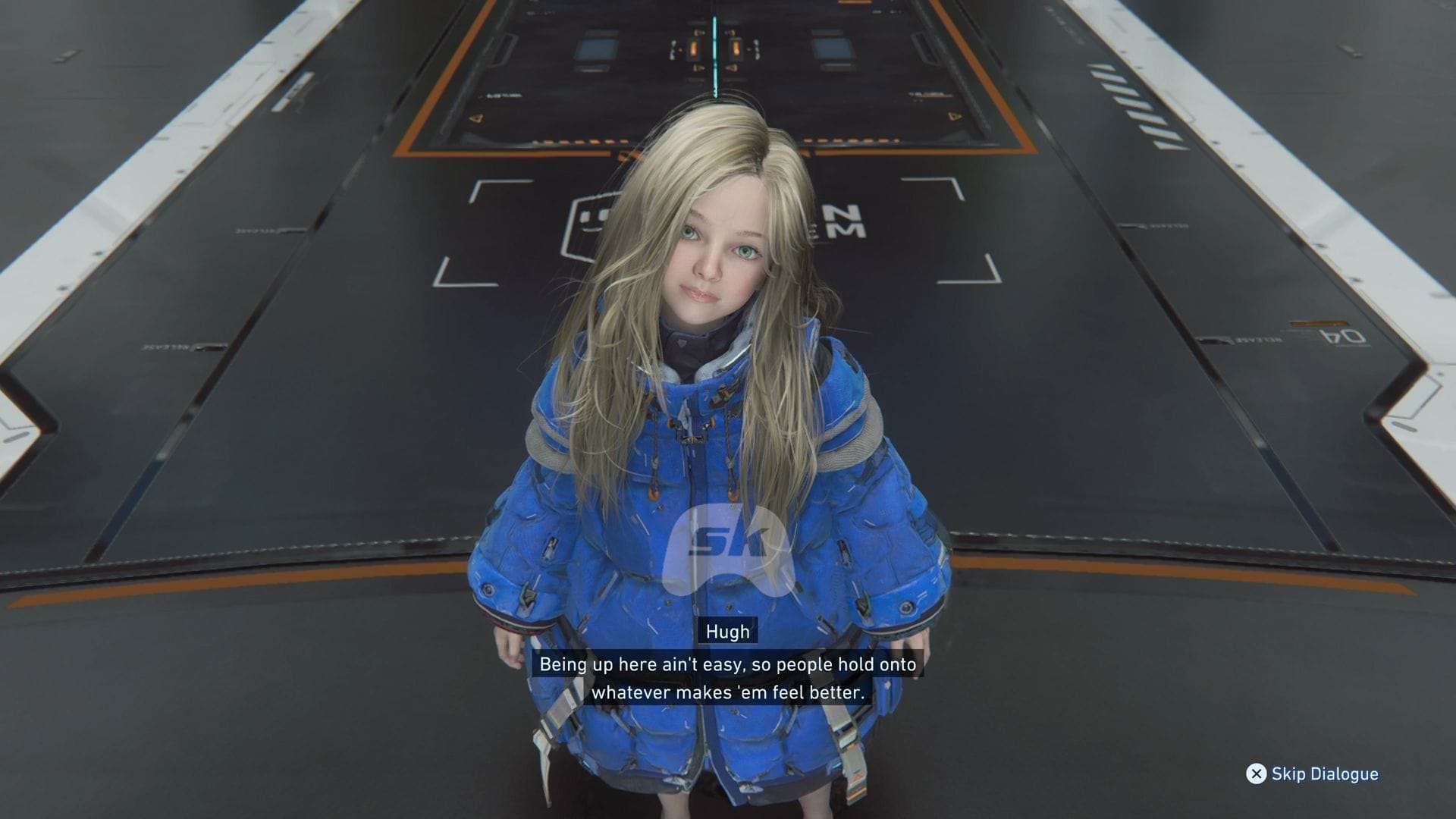
The distance from Earth has evoked within both Grace and the humans of Pragmata the lack in their surroundings of what made Earth feel home. And both try to recreate it in their space to the best of their abilities. In Pragmata, one of the scientists created a 1:1 copy of how they remember their father’s study room to be, kept it hidden from others, and stayed in their reminiscing about what their relationship was like.
While all these are designed to satisfy the needs of the in-media characters, we all know that they are meant to evoke feelings within the viewer and the consumer. But the clever trick here is the lens through which you are meant to watch this. In Project Hail Mary, you see it through Grace’s longing for home and Rocky’s curiosity about what humans are like. In Pragmata, you see it through scientists that misses home and Diana, who is completely unaware of what human habits and Earth are like.
This lens allows you to create enough separation between the product and the viewers to ensure that the message does not come off as merely preachy. The developers can bring out the same kind of curiosity you had upon seeing the sea for the first time or feeling the sands underneath your feet through Diana and Rocky: the phenomenology of experiencing.
You are neither told nor forced to remember. Instead, you relate to these two as they figure out those scenarios, as you have done earlier in your life.
Diana and Rocky: Is curiosity always childish?
Diana is an android created for the sole purpose of experimentation. She is modelled to like the creator’s, Dr. Higgins’s, child, Daisy, who was dying. Dr. Higgins wished to experiment with various compounds on Diana to figure out a cure for Daisy. Once the android did not serve her purpose, he chose to wipe her memory and shelve her. If this sounds interesting, check out our Pragmata ending explained guide to learn more.
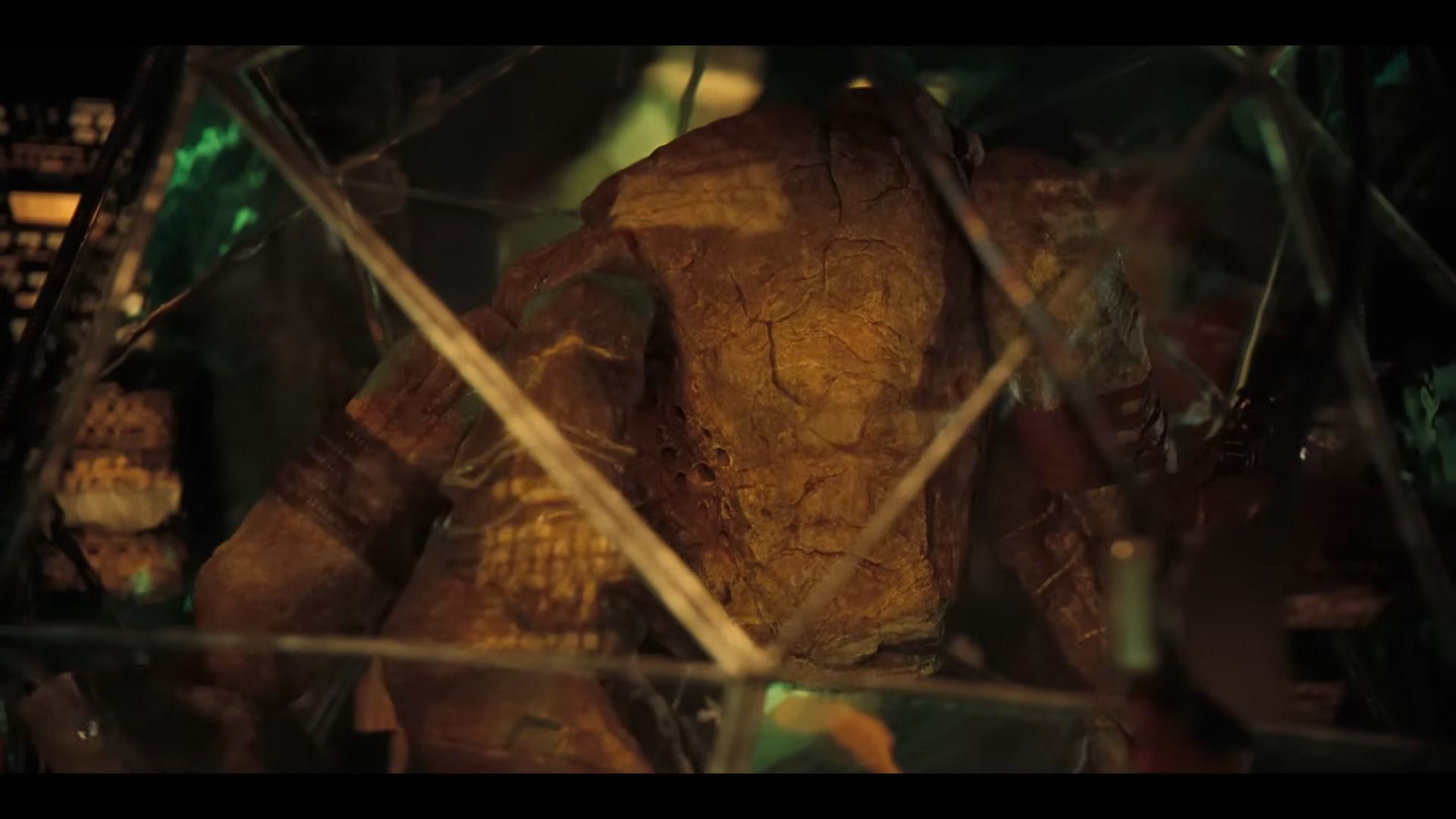

Rocky is an Eridian that Grace meets as he approaches the Tau Ceti star. Both Grace and Rocky’s solar systems are infected by an organism called the Astrophage, which is slowly eating these systems’ stars. Rocky and Grace were tasked by their respective planets to hopefully find a cure and get back in time to save them.
By the time Grace meets Rocky, the latter has been stranded alone in the Tau Cenati system for 46 years, having watched his fellow crew members die inexplicably. They decide to cooperate to find something to kill Astrophage so that they can go back and save their planets.
When Hugh meets Diana, the latter is busy saving the former after a severe lunarquake had left Hugh badly damaged. Diana then proceeds to help Hugh take down an aggressive robot by hacking and exposings it weak points. From thereon, she spends most of the in-game time on Hugh’s back, helping him hack robots, doors, and the like.
Diana and Rocky are both seen as child-like characters, although the explicit reasons are different in each case. One looks and acts like a human child, while the other is significantly older than the human he is in contact with, but acts in certain cases just as a human child would. Furthermore, both are given names by their human counterparts, even though they do have their own names.
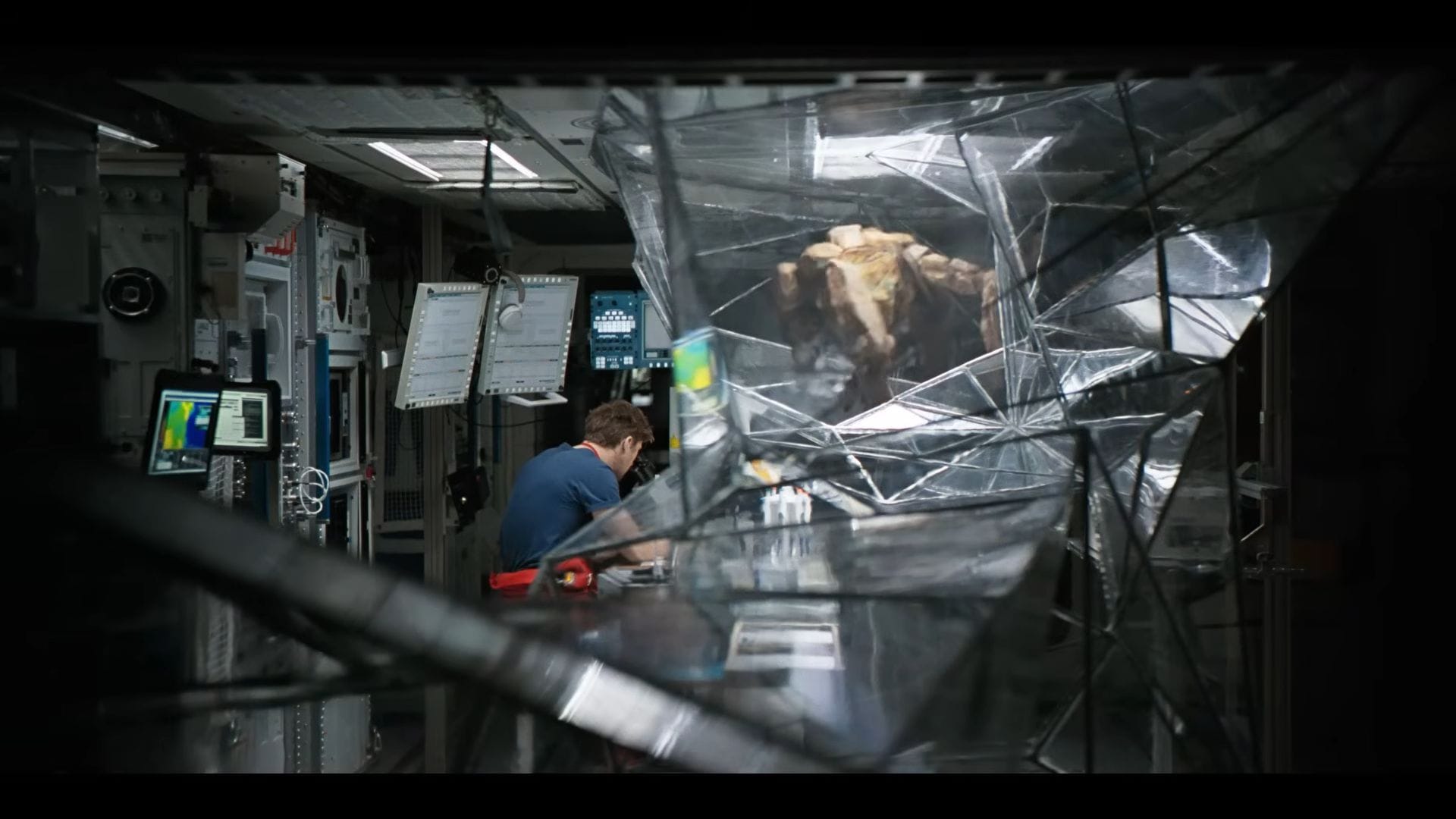
In the endearing scene where Rocky moves into Grace’s ship and decides to set up shop there. Rocky is able to see through walls, has super hearing, and no sense of boundaries. As Grace remarks, personal space is at a “premium”. The scene shows Grace stopping Rocky and talking about the need for boundaries. The latter pauses for a second before barrelling off to find the bedroom.

Diana is in a state of ever-awe as she finds out about what humans do in their everyday lives and the natural beauty of the flora and fauna of Earth. In one of these moments, Hugh tells Diana of the habit of sitting together and eating. Diana remarks that humans must have terrible energy management if they need to sit and eat so many times during the day. Hugh tells her to look not only at the act of consuming food but also at the communal habit of sitting together and telling each other stories over food.
Project Hail Mary and Pragmata’s depiction of curiosity through Diana and Rocky also makes me wonder whether curiosity (and the excitement that comes through figuring out something you are curious about) is always inherently child-like. When I was in China in January 2026 for work, I visited a bookstore in Hangzhou, where I was excitedly stamping postcards I bought with unique art stamps. One of my colleagues there noticed me doing that and remarked how excited and happy I looked at this simple, almost mundane act: a childish wonder. For me, it was searching for and finding these souvenirs that I could create with my own hands.
Curiosity is probably always on the side of being child-like because of what we, as adults, have defined child-like to be. If you keep asking why, if you keep tinkering with things, if you push back against the decorum and etiquette of a system that you do not understand, and if you are gleefully happy when you come across something new, even though wonderfully mundane, the adult world is quick to point at the childishness pulsating in your nature. Yet, evolution in any discipline would not happen without the petulant, refusing-to-accpet-a-non-answer-to-why, badgering curiosity.
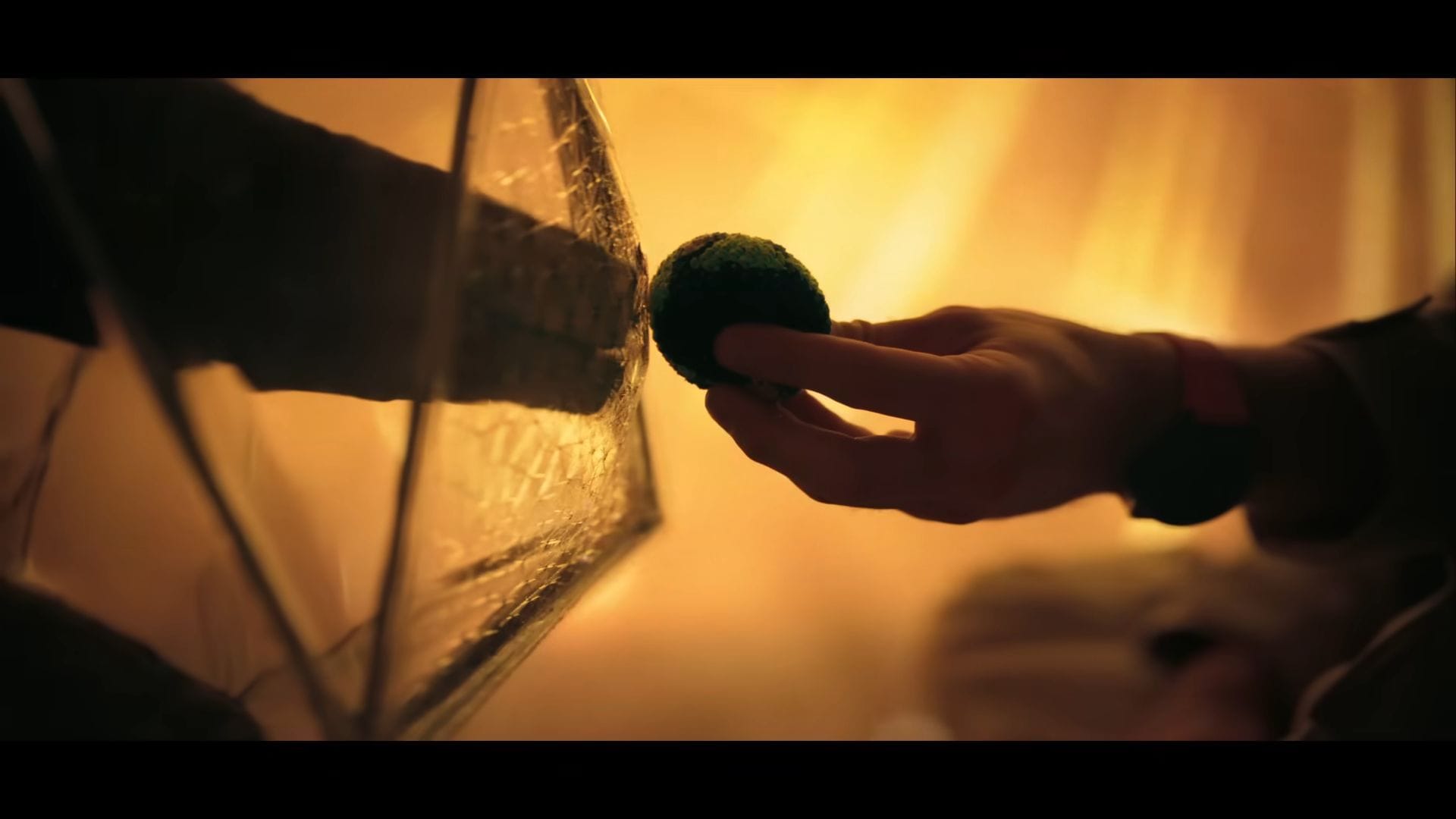
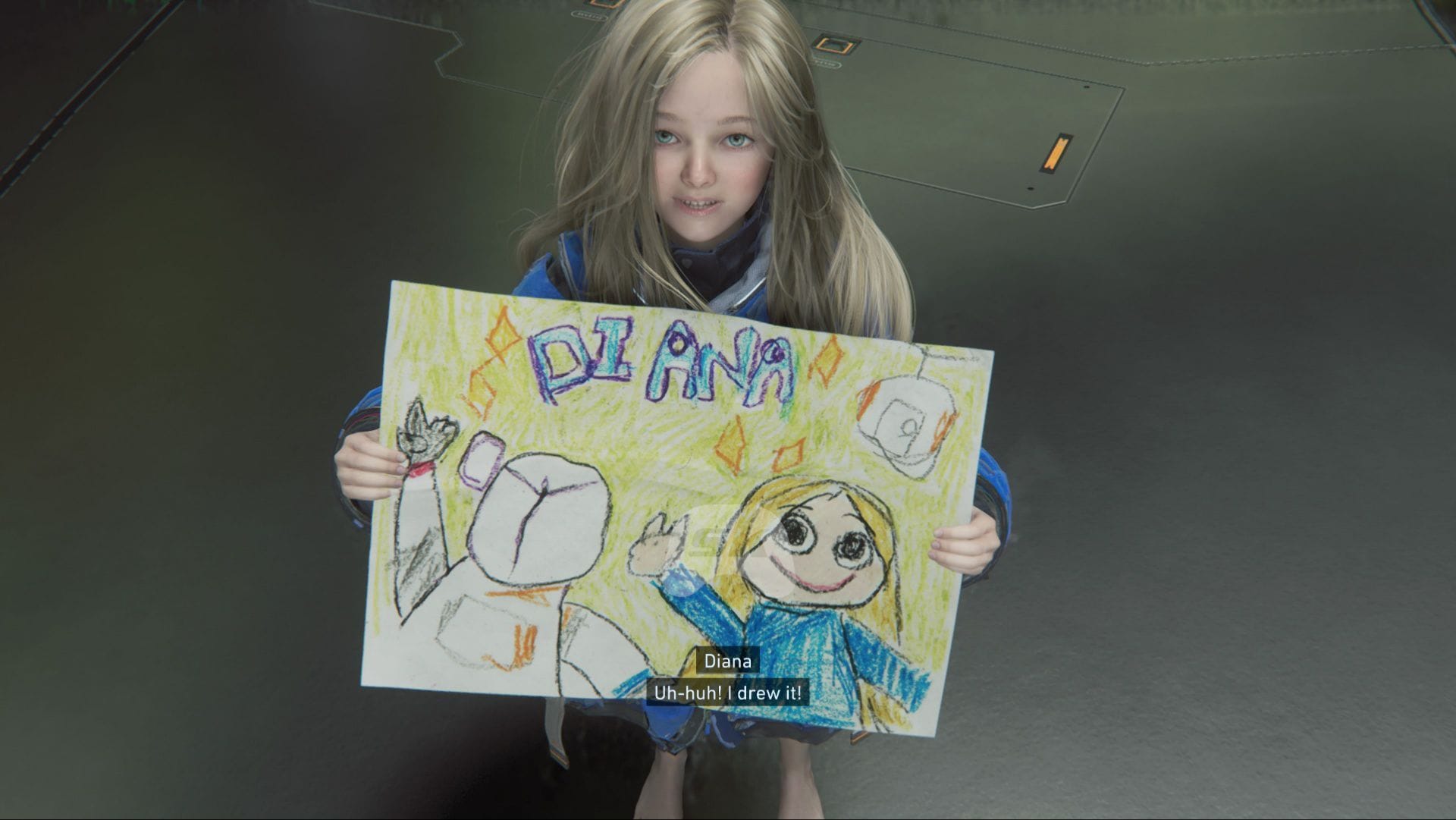
Now, we know that such a curiosity cannot be sustained or nurtured once you cross into the adult world. You are no longer a child and thus cannot be afforded the same semblance of patience anymore. And, thus, when we see characters like Diana and Rocky in the media we consume, we live through them the potentials of child-like curiosity, discovery, and wonder that we once had and have now stifled (like a glorious campfire snuffed out the next morning).
Diana and Rocky are aliens. One is an android made to look like a human child. The other is a creature from another planet. Seeing a human adult act in this exact way would not have had the same impact. But while the distance in the lens is necessary, you need to relate to it, too. Pragmata and Project Hail Mary anthropomorphise them to make them relatable, but they do so in a way that brings out a motley mixture of feelings in the viewers.
The beach
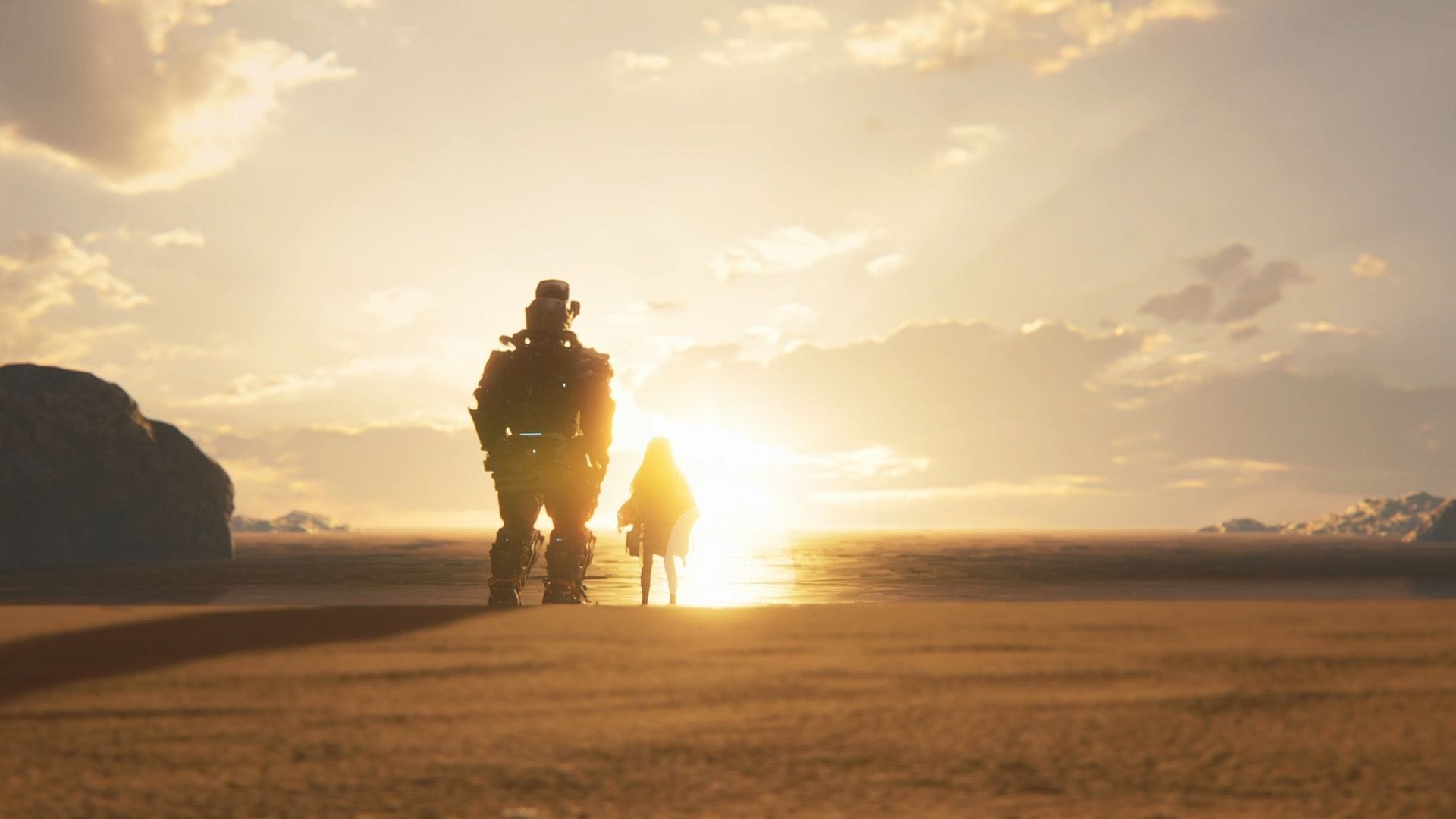
The beach and the sea play an important role in both Project Hail Mary and Pragmata. In the movie, Grace showed Rocky a video of the beach and the sea, asking Rocky to imagine the waves on its feet. At the end, Rocky and the Eridians built Grace a simulated Earth setting on their planet: a beach, a sea, and a house. Rocky would come visit Grace every day, with one of the scenes in the movie being of them sitting at the beach and looking at the sea. Rocky mentioned that Eridians were ready to stock Grace’s ship for his journey back to Earth. Grace replied that he would like to think about it for some time. Grace asked him to think for a long time.
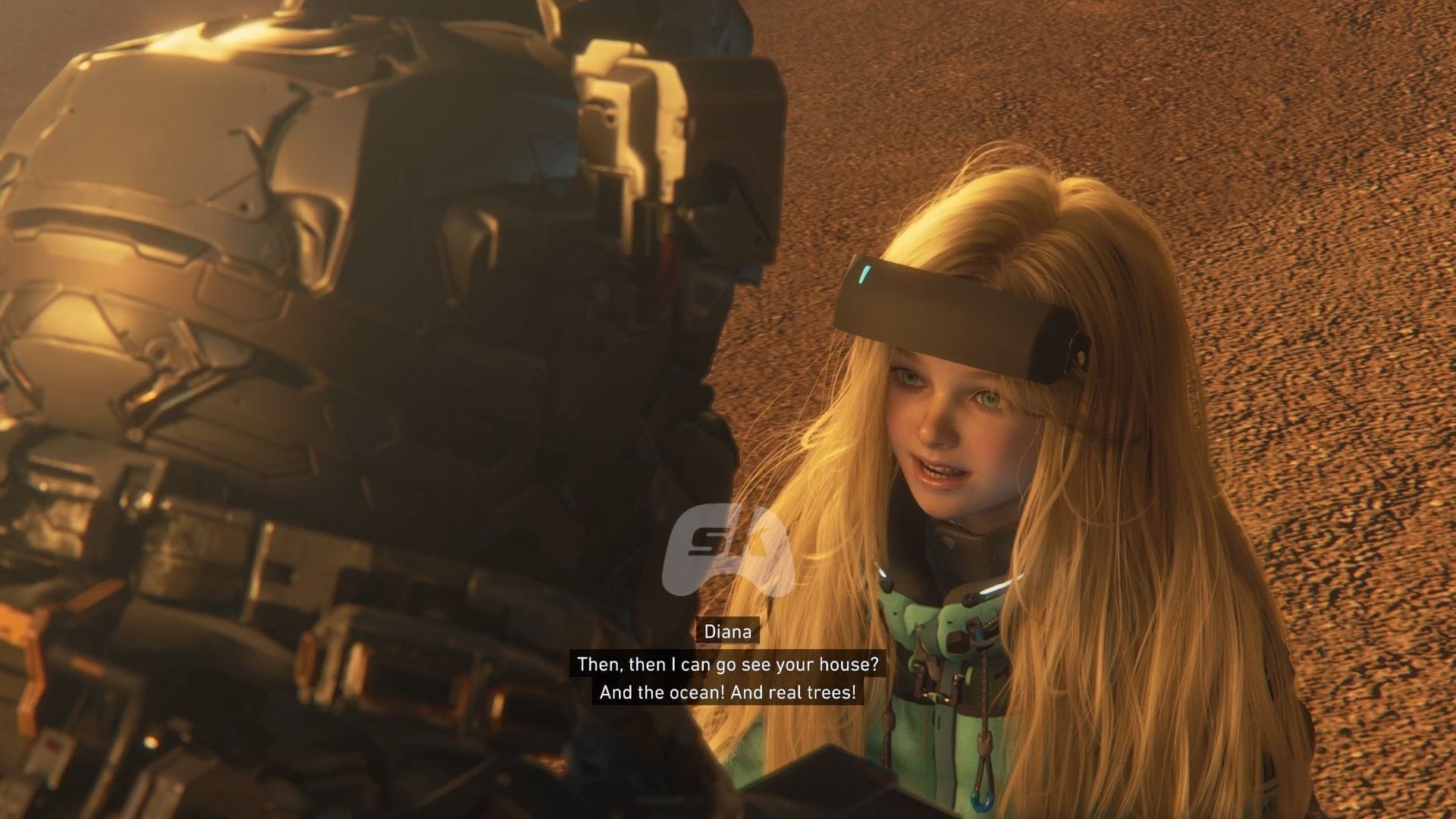
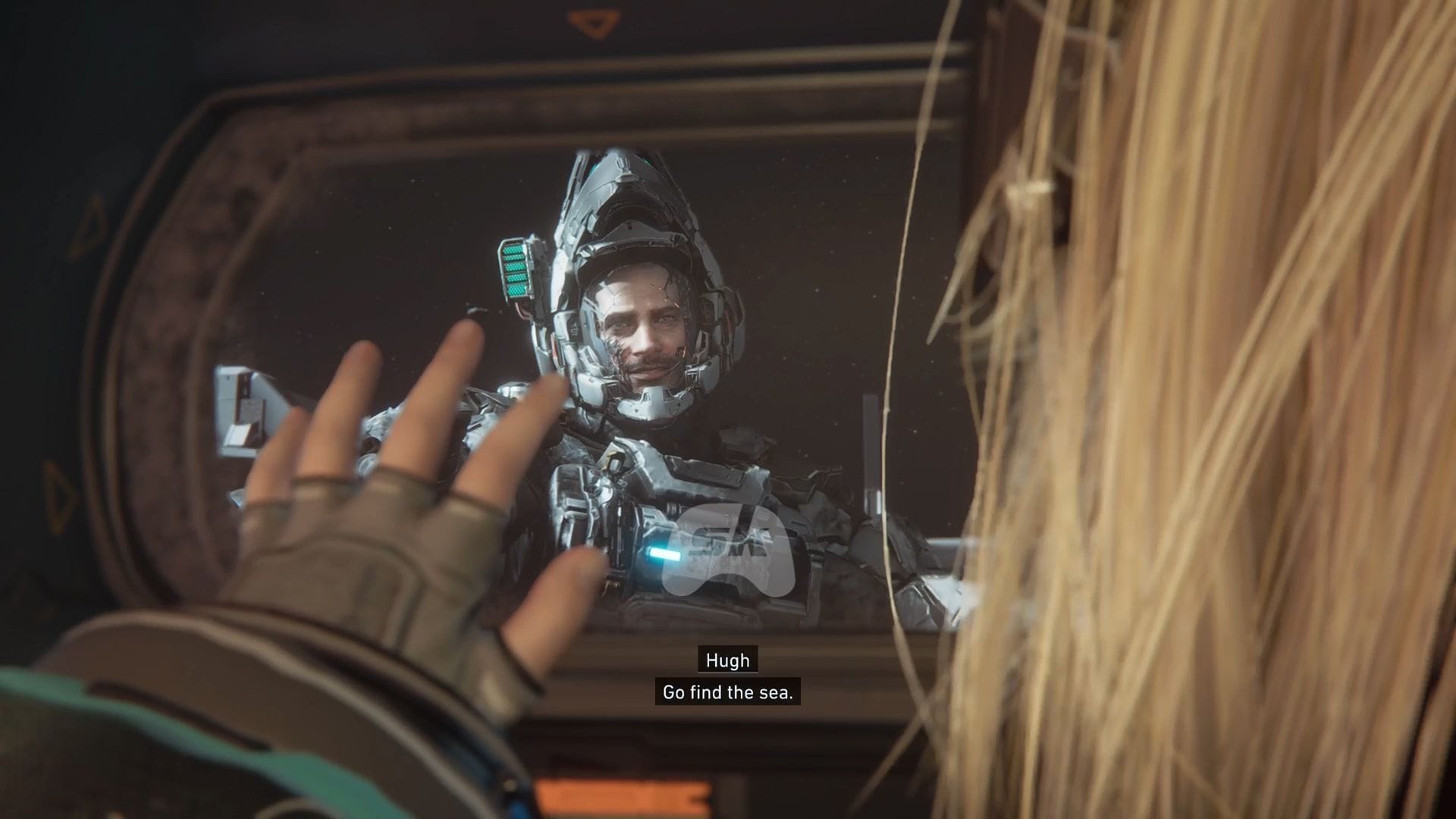
In Pragmata, Diana and Hugh came across the beach and the sea against the setting sun in the Terra Dome. Hugh told Diana about his experiences at the beach back on Earth and his house that had a view of the sea. Diana finally claimed that she wished to go back to Earth with him. The final words Hugh told Diana before the latter left for Earth were to “go find the sea”. The post-credits scene showed Diana walking on the beach against a setting sun on Earth alone. But why the beach?
A beach is probably the only time humans can see the horizon unimpeded by any structure. It is a place of chaos and leisure, where the static land meets the ever-moving sea, where you get to see the day end and begin. It is cyclical in its approach: one wave comes, and then it goes, and then another comes, and then it goes. The cycle continues, never to stop nor to end.
The beach as a liminal space is not only a reflection of human knowledge and its experiences but also that of outer space (as I had cheekily called it earlier, “sea of nothingness). The static beach is all we know: resolute and firm. The sea is what we do not know, what we cannot contain, what we wish to master, and forever struggle to fully do so. The unknown repeatedly pervades the known, and we sit at this border to make sense of it, often, knowingly, in vain.
But leaving the philosophy aside (if such a travesty was ever really possible), consider what the beach means in a familial setting: people going and having a beach day, building sandcastles, bathing in the sea, basking in the sun, and listening to the waves roar and crash. The beach allows you a taste of the untameable immenseness of the sea in a format that you can approach and enjoy. The sea embodies the terrifying, imposing facets of nature itself, just like space.
And this is where both Project Hail Mary and Pragmata choose to return, and decidedly so. The beach is the familial setting for the meeting between the human and the alien character. One where they potentially feel the sand beneath their feet and the waves crashing against their skin, and watch the sun set or rise.
Humanity, memory, and sacrifice
One of the most poignant moments of the Artemis II mission was when those aboard the ship decided to name a newly discovered lunar crater after mission Commander Reid Wiseman’s late wife. After the message, the crew is seen to be hugging each other (if you have not yet watched the video, I do implore you to do so). One of the many Instagram posts that appeared afterwards wrote:
“Today, four humans traveled farther from Earth than ever before in history… And the first thing they did was cry over a woman they loved.”
You can almost hear Brand’s philosophically-laden proclamation of love being the one thing that humans are capable of perceiving “that transcends dimensions of time and space” from Interstellar (2014) (I could not really talk so much about space and human bonds without having at least one mention of this movie). My monologue is not focused on love, per se, but rather that the farther we seem to go, one of the only things that ring true are the bonds that living beings share with each other.
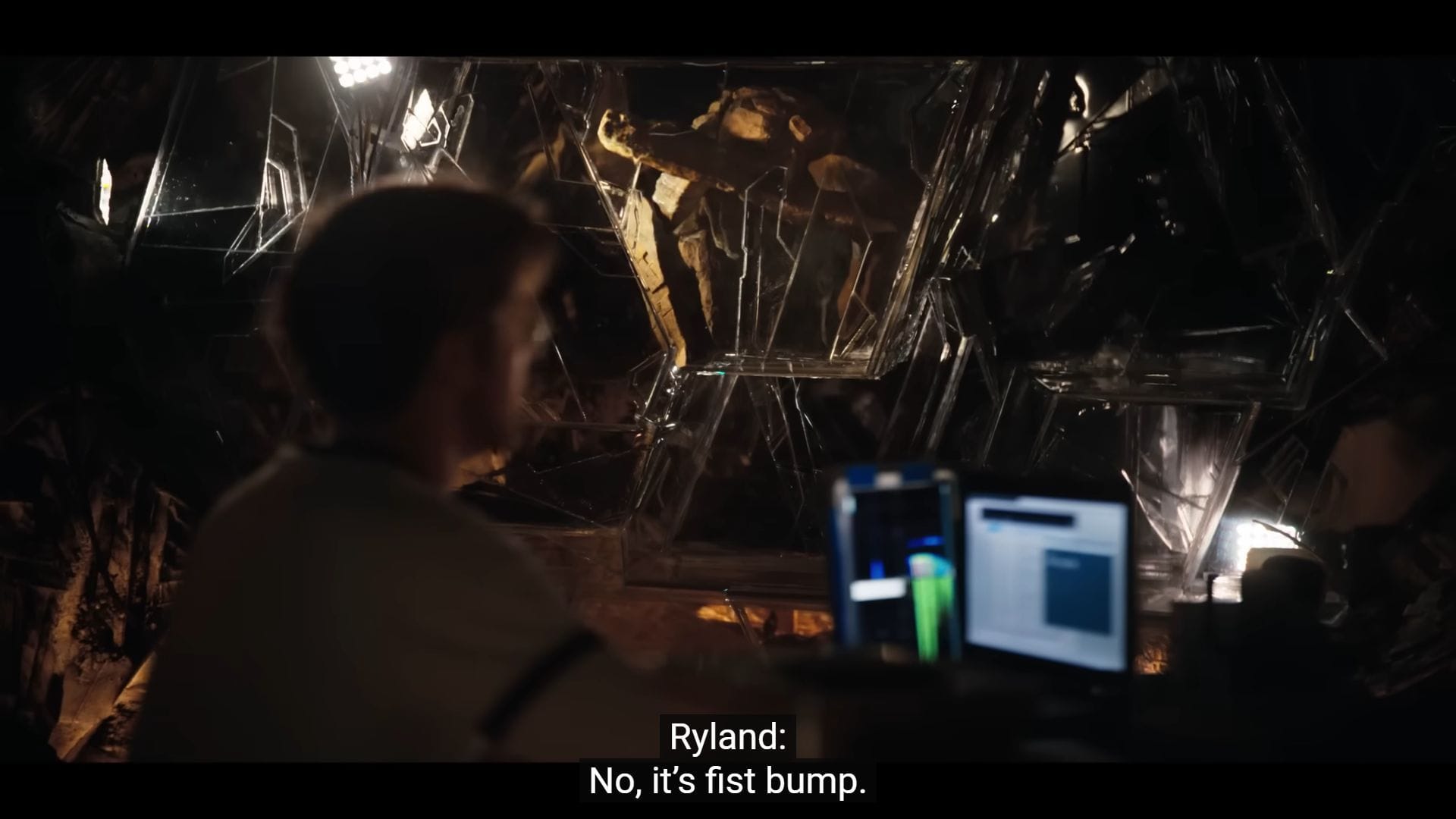

Grace and Rocky’s and Hugh and Diana’s bonds are the cynosure of their respective media products. Neither Project Hail Mary nor Pragmata would be what they are if the creators had not put together these relationships filled to the brim with love, care, pathos, and all sorts of other messy nuances that make human relationships what they are.
Rocky chose to sacrifice six years so that Grace could go back to Earth, when the latter had no fuel for the return trip and would have died after they discovered how to defeat the Astrophage. Grace sacrificed his return to Earth to go back and save Rocky, who he knew would be alone, stranded, and dying a slow, painful death.

Diana chose to sacrifice herself, coming in between a Dead Lunafilament spike hurled at Hugh, and almost died for it. Hugh sacrificed himself and his chance to return to Earth as he was already infected by Dead Lunafilament and, instead, ensured that Diana got to go back and experience the moments they talked about.
Rocky and Grace championed the notion of friendship. One would sacrifice for the other without any thought or worry. Hugh and Diana embodied the relationship of a father and a daughter. The parent would do anything to ensure the child survives (“Once you’re a parent, you’re the ghost of your children’s future,” as Cooper aptly puts it in Interstellar).
At a time when the whole world seems to be in one major turmoil or another, it takes humanity to put humans out into space far from Earth to remind us what we have on this planet and with each other (be it with what we saw in the Artemis II mission or the fictional stories of Project Hail Mary and Pragmata). Both the movie and the game pit humans in front of great knowledge and scientific advancements, but also show them carefully, painstakingly weaving the memories they have of Earth and longing for their companionship.
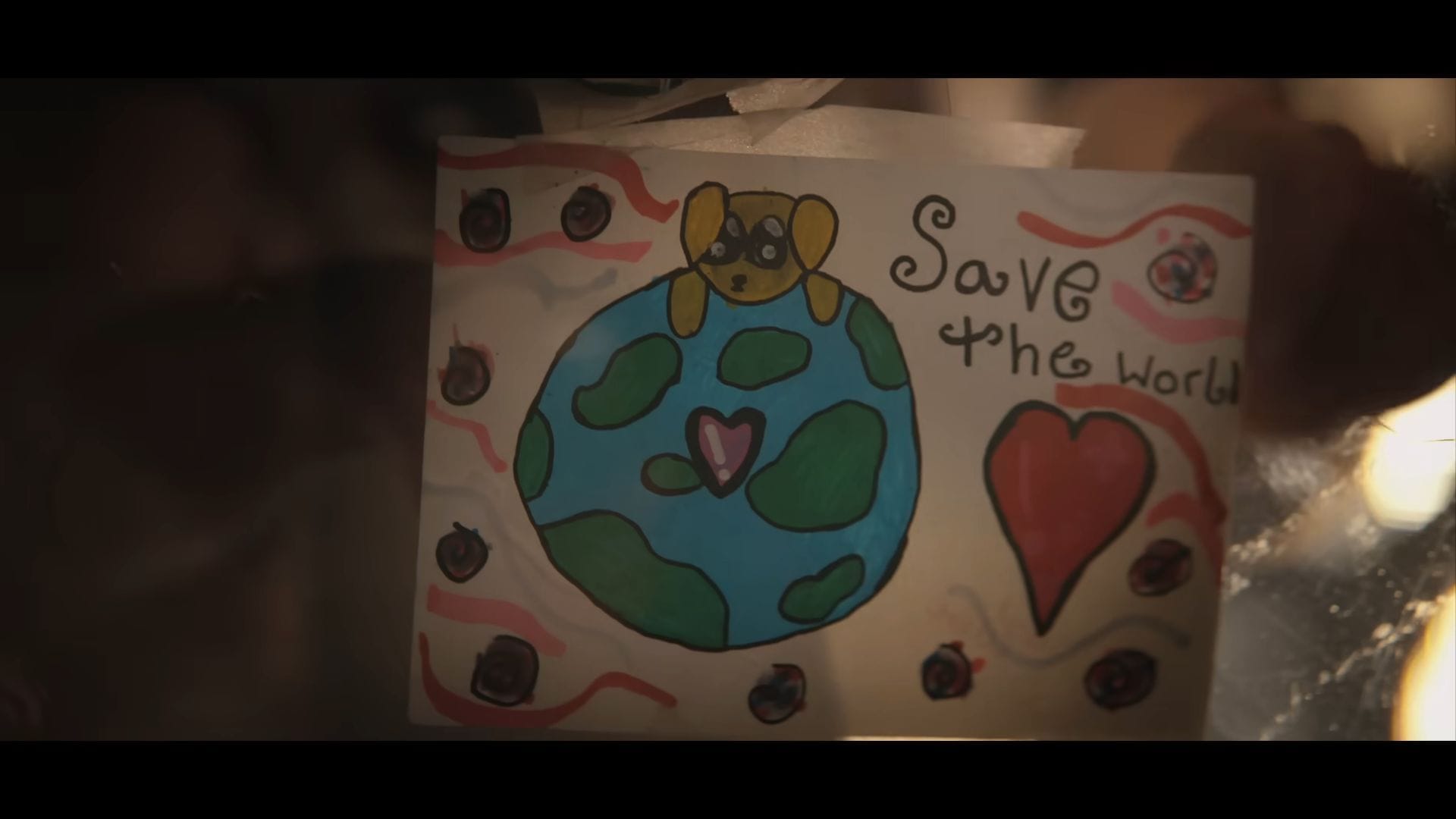

It is important to take note when these stories come to be, of what they tell, where they tell, and how they tell. Be it fictional in books, movies, and video games or through actual struggles and perseverance of humans in real life, the mundane, the emotions, and the feelings must not be overlooked or brushed off. In the immortal words of Mr. Keating:
“We don’t read and write poetry because it’s cute. We read and write poetry because we are members of the human race. And the human race is filled with passion. And medicine, law, business, engineering, these are noble pursuits and necessary to sustain life. But poetry, beauty, romance, love, these are what we stay alive for.” – Dead Poets Society (1989).
To sum up this over 3000-word-long monologue, do watch Project Hail Mary and play Pragmata as soon as you possibly can, especially if you love space and human relationships.
Are you stuck on today’s Wordle? Our Wordle Solver will help you find the answer.
Edited by Angshuman Dutta
Recent Comments