
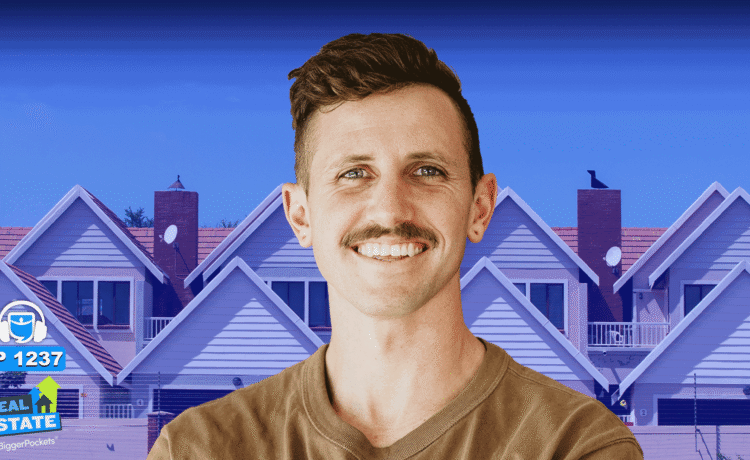
One property can change your entire life. Less than a decade after buying your first, you could be completely financially free, like today’s guest, who has one piece of advice:
Cameron Philgreen bought a small house in Kansas. Less than ten years later, that home’s profit allowed him to build his dream business—a coffee shop that he runs, instead of working a 9-5 job. But that’s just the effect of one property. After finding BiggerPockets, Cameron knew he needed to start actually investing. His goal? 25 rentals by 2025. He did it in under a decade.
By trading comfort for cash flow (including sharing a bathroom with strangers), DIY-ing rehabs to save money, and learning how to scale instead of stress, Cameron now has a rental property portfolio producing $18,000/month in cash flow. His days consist of volunteering, running his dream business, For Keeps Coffee & Bakery, and spending time with his kids.
Cameron shares how he finds perfect (on-market!) BRRRR deals with little effort, why outsourcing actually makes you more money, and the easiest way to get into the real estate investing game.
Complete financial freedom in your 30s? Cameron has it, and you’re only a few years away from it yourself.
Henry:
How much short-term sacrifice are you willing to make to control your long-term financial future? Would you share a bathroom with three strangers? Cameron Philgren didn’t start investing in real estate with a master plan or a ton of money. He and his wife just made a decision to sacrifice comfort early so they could buy back their time later. They househacked in Waco, Texas and rented out their extra bedrooms to maximize cashflow. And yes, there was at least one gross uncomfortable situation involving that shared bathroom, but that property set Cameron on a path five years ago. Today, he owns more than 30 rental units. Instead of working a traditional day job and slowly saving for retirement in his sixties, Cameron followed a proven repeatable real estate investing strategy. Now he’s running a specialty coffee shop as a passion project, spending leisurely mornings with his kids and traveling the world with his church.
That’s Cameron’s financial freedom dream, and he’s living it today. Take a moment to think, what’s your dream? Are you on the path to achieving it? This episode isn’t about get rich quick schemes or extremely risky investing. It’s about what can happen when an average person makes a few uncomfortable decisions and sticks with them.
What’s going on everybody? I am Henry Washington, co-host of the BiggerPockets Podcast. And today’s episode is an investor story with Cameron Phil Green from Waco, Texas. And this is a special one because I had a chance to meet Cameron in person during the BiggerPockets Cashflow Roadshow in Texas last month. Dave and I actually visited one of the properties Cameron talks about in this very episode to see how he turned his former primary home into a rental property cash flowing thousands of dollars per month. So I’ve seen firsthand how almost anyone can repeat this formula and replicate Cameron’s success in just a few years. I cannot wait for you all to hear how he did it, so let’s bring Cameron on. Cameron, it’s good to see you again.
Cameron:
Hello, sir. Great to see you.
Henry:
Let’s talk a little bit about your journey, man. Tell the audience your background and how you got into real estate.
Cameron:
Well, first off, I’m not trying to be a teacher’s pet, but I do owe a lot to BiggerPockets. I discovered you guys back in 2018 through Graham Stephen’s YouTube channel. Totally got the bug and started house hacking in this house we bought in 2018. Moved down to Waco, Texas in 2019 and got as much square footage as we could for a really good price, fixed up the kitchen, Airbnb all the bedrooms. And so very much bootstrapped our real estate investing career. After reading Brandon’s book, The Book on Rental Property Investing, made the goal of 25 units by 2025. 25 by 25 was our thing, my wife and I. Before 2025, I think we hit 28 or 30 units or so. Amazing. So hit the goal and it’s been a blast. We’ve learned a lot and really thankful for BiggerPockets and just the education and that you guys provide through the podcast and the forum and so many relationships.
And it’s led to us opening a coffee shop here. We can talk about that. And man, and financial freedom. I mean, it’s freedom of time and just really thankful for you guys. So appreciate you.
Henry:
Oh man. Well, thank you. BiggerPockets has always been a great help to me as well when I was first starting. So I completely can get on board with that sentiment, but I appreciate the kind words. But I want to dive a little deeper into what you said in terms of telling your story of how you got started, because you did several things it sounded like. And one of those things sounded slightly uncomfortable, yet you were able to pull it off.
Cameron:
This was actually back in Lawrence, Kansas. We had a little three bedroom house with one bathroom upstairs, and we were sharing the bathroom with our Airbnb guests. And that turned into some funny stories. One time this, I wouldn’t call her super strange, but she had this guy over and I noticed the next morning my toothbrush was used. And so I approached them about that. And that was probably one of the weirder things that happened like, dude, this Airbnb guest used my toothbrush.
Henry:
Did you continue to use said toothbrush after?
Cameron:
No, sir. But I did continue to Airbnb the room because we got a house sack. We got to eat. And so anyway, when we moved down to Waco, we kind of did the same thing, but it was a five bedroom house and we Airbnb’d the rooms, also shared bathrooms with guests. And that’s not for everybody. I think that’s my point in sharing. That’s not for everybody, but I’m a huge believer in househacking and eliminating your housing expense as a way to get started investing in real estate. And I’m just so thankful for those uncomfortable times that led to funny stories and all the people we got to meet along the way. It’s been a blast.
Henry:
Yeah, man. I thank you for sharing that because a lot of people, we talk all the time on the BiggerPockets podcast and on various other platforms on the BiggerPockets ecosphere about how much we love househacking just as a strategy. And you did what we would call a, air quotes, extreme version of househacking, where you lived in the house, but you also had strangers living in the house with you via short-term rental. That’s definitely a house hack. You can also house hack by renting out a separate unit so you’re not actually living with your tenants. But to me, househacking is just finding a way for your primary residence to pay for itself to generate some sort of income.
Cameron:
Yeah, nailed it. I mean, I’ve been doing wedding photography for about 12 years, so it wasn’t my only form of income, but yeah, definitely have over the last six or seven years put every dollar I can into real estate. Huge believer in this method of investing. And I just want to say also there’s less uncomfortable ways to house hack. We chose the discomfort for the extra cash flow, but we could have just had roommates. What were we thinking?
Henry:
What kind of profit you were getting for said uncomfortability? How much were you renting each room out for versus what was your mortgage?
Cameron:
Yeah, I think our mortgage on that house is somewhere around 1,400. In Waco, I think a room, like roommates, I’d say about 500 a room is appropriate. So we could have had three roommates and made 1,500 bucks just from a few friends. On Airbnb with just a bed and some light furnishings and sharing the kitchen, sharing bathrooms with people. I think we were bringing in something like 3,000 a month, but it felt worth it to us because we had this five bedroom house. We had to do something with it.
Henry:
I don’t know that it’s worth it for everybody, but to bring in $3,000 where instead of now you’re having to pay for a place to live, but now you don’t have to pay. And I want people to see the compounding benefit of doing this because we all have to spend money on a place to live. So let’s say you were going to spend 1,500 on a place to live. Now you don’t have to do that. Plus you were bringing in an extra 1,500. That’s three grand a month of additional income that you could put towards focusing on building your investing business. And so I often tell people that the more uncomfortable you’re willing to get, the more profitable or the more opportunity for profitability there is. Again, not for everybody, but if you’re similar to Cameron where you have an anomaly of a wife who wants to be okay living with strangers in their house, then this is a great way to build up some capital.
Cameron:
This is also before we had three kids, so keep that in mind too. Another thing I just want to say, if you’re listening and you’re like, “How do I get started? I need to get my first property.”This property, which is our second property, one property can change your life in a pretty significant way. I mean, we paid 180 grand for it, pretty cheap property, not super nice. We fixed it up, we painted, we did the kitchen ourselves, added a porch in the back. And I want to share, later on, we turned the two car garage into a dwelling, separated it with a little fence. And then in 2020 with COVID, we moved out, moved into a different house, rented that house for 2,800, and then ended up later renting the ADU for, it averages around 2,000 a month. And so one property is bringing in 3,000 to 3,500 a month, one property, you guys.
And everyone wants to go and get 10 units that are each going to cash flow two or $300. What if you could get into one property and live there for one or two years and move out and rent it? That’s what we did. And I’m just thankful for that. And again, I give a lot of credit to BiggerPockets for even implanting that idea in my mind.
Henry:
Yeah, man. I think that obviously I got to see this property when we visited you in Waco, and it’s a pretty cool story and a pretty cool property. But I want to dive into a little bit of, what was the goal? So you moved here, you started house hacking, you were saving money. You said you set the goal of 25 doors by 2025. That seems if you’ve only done one or two deals, like a pretty aggressive goal. Yeah. Tell me what kind of fueled the fire. Why 25 doors? What was the plan?
Cameron:
Well, I will say in 2020 when we set that goal, it felt so daunting and so impossible. We’re going to have to really bust our butts to get there. Our primary form of investing was the BRRR method because I’m not a trust fund kid. I don’t come from money. I mean, so it was very much like starting from nothing, kind of using whatever money we made from wedding photography. We would try to put that into a property and then refinance out of it. If we bought the deal right, my back of the napkin math is around 70 or 75% rule is what I aim for. If I can hit that, then I can get all my cash back when we refinance and then do it again. And then over time, of course, I discovered hard money lenders. There’s individuals out there that are comfortable lending to me.
And so I can do multiple deals at the same time because cash and capital is not the constraint. And so that became a thing. As those relationships and the network grew and continue listening to podcasts and reading books, it just became easier and easier. Once you do it a couple times, then you’ve got the system down. And then yeah, before we knew it, we had hit 25 units and we’re still growing. I’m still hitting it hard. I’m focused on flips now. But yeah, it felt super daunting at first and just became easier as we went.
Henry:
Setting a goal, an aggressive goal is a good thing to do, but then actually being able to execute it on it is difficult. And typically the key constraints to growing and scaling a real estate business is access to money and access to deals. You talked about access to money. You were using hard money and built relationships with lenders, but you still got to find deals to buy. So what was and what currently is your primary method for finding deals to help you hit your goals?
Cameron:
Yeah. I mean, there’s a couple Facebook groups here that are just wholesalers posting deals. I’m not going to lie. Some MLS deals have been super solid, maybe a pocket listing from a realtor. I’ve done some direct to seller, I’ve done mail, I’ve done cold calling, I’ve done driving for dollars, I’ve put notes on people’s doors. You name it, I’ve tried to get deals. Roll down the window, talk to somebody, “Hey, you want to sell your house?” I literally got a deal that way, just a lady raking her lawn. So all over the board, but I’d say the most consistent is on market deals that I tend to have to do, make 10 offers in order to get one because I’m usually low balling or wholesalers are a great way.
Henry:
I love that, man. I wanted people to hear that because I mean, 25 can sound like a daunting goal, especially if you’ve only done one dealer to some people out here listening who probably have done no deals. But you can find deals through free channels like utilizing wholesalers. And for those of you who don’t know what a wholesaler is, wholesalers are people who go out and spend money on marketing and go direct to seller. They find a deal and then they look for people like Cameron or myself to sell the contract to. And then Cameron and myself will buy the property typically at a discount. And yes, the wholesaler does make a fee, but the goal is there’s typically still meat on the bone for us to be able to be profitable. And then on market, there are more on market deals right now than I’ve seen in a long time.
It’s
Cameron:
Crazy, dude. Yeah.
Henry:
It’s opportunity is out there if you’re willing to look and if you’re willing to get uncomfortable enough to make the offers necessary to get the deals at the price point we need them at. Yeah.
Cameron:
Because
Henry:
I assume this is still current day how you’re finding your deals.
Cameron:
Yeah, for sure. And I agree. There’s a lot of on market deals right now, especially January where in the middle of winter and stuff has been sitting on market. So quick tip if you’re listening and you’re like, “I want to check out Zillow and get an on market deal.” What I search for on, I think it’s Redfin that you can do days on market plus the price per square foot is in our area. Every area is going to be different, but as a good rule of thumb, like anything under $100 a square foot that’s been on market for more than 45 days, I just have that as a filter and then it will like notify me. It’ll email me whenever there’s a house that’s been sitting for more than 45 days that’s under 100 a square foot. And I’ll try to reach out and look at it.
Usually I need it for closer to 60 or 70 a foot, but if it’s been sitting, the sellers are going to be more inclined to accept a lower offer. I
Henry:
Hope y’all took some notes. That’s a little bit of a cheat code you just gave. I mean, seriously, to be able to, you’re fine, because what you need to get a deal are two things, right? You need equity and you need motivation, right? People have to have equity in their home for you to make them an offer that they’ll actually make some money. If they were to sell to you and people need motivation, they need a reason to sell at a discount. And if you’re shopping on the MLS, the only true way to figure out motivation is to use an indicator like days on market or expired listings. You’re just assuming that because it’s sad and hasn’t sold, that that seller may be willing or may be motivated to take a lower offer. And so it’s very simple stuff, guys. These are things that anyone can do.
You can all go out right now and get on Redfin and set up a filter for price per square foot that would be under the average price per square foot in your market. You could do under a hundred a square foot in your market. In my market, that would get you maybe a parking space, maybe not. But in some market, you have to figure out what that price per square foot is for you.
Put that as your filter and then look for properties that have been sitting. I typically tell people, look, if you’re going to look for days on market, figure out what the average days on market is in your market and then add 30 days. So if the average days on market is 30 days in your market, you should be looking at anything that’s 60 days or older that fits your buy box and then you have to make the uncomfortable offers. But that’s a great way to get free deals on the market. Is it easy? No. Are you going to get told no a lot? Absolutely. You’re going to get told no a whole lot. But when you get the yes, that’s how you start building wealth and the profitability. So I love your story because it’s truly, you said it earlier, it’s like you bootstrapped your way in, but that’s what it is.
You buy a house, you house hack, you save the money, you take the money, you put it towards your investments, you start looking for deals. You didn’t have to go send direct mail immediately. You didn’t have to go higher
Cameron:
Up
Henry:
VA to manage cold calls. You just looked in the places where people said, “Hey, I’d like to sell a house,” and you were able to make some offers. And I want to highlight that because this is something that anyone can do. These methods have been around for decades and it still works if you do it consistently enough. So I love hearing your story. Thanks, man. All right, Cameron, I want to transition and talk a little bit more about the actual process of you scaling maybe what your first true investment deal looked like, but first we have to take a quick break. As a real estate investor, the last thing I want to do or have time for is to play accountant, baker, and debt collector. But that’s what I was doing every weekend, flipping between a bunch of apps, bank statements, and receipts, trying to sort it all out by property and figure out who’s late on rent.
Then I found Baseline and it takes all that off my plate. It’s BiggerPockets official banking platform that automatically sworts transactions, matches receipts, and collects rent from every property. My tax prep is done, my weekends are mine again, plus I’m saving a ton of money on banking fees and apps that I don’t need anymore. Get $100 bonus when you sign up today at baselane.com/bp. BiggerPockets Pro members also get a free upgrade to Baselane Smart, and that’s packed with advanced automations and features to save you even more time.
All right, we’re back with Cameron Fieldgreen, and we’re talking about how he grew his real estate business from zero to 25 doors by 2025. All right, Cameron. So you moved to Waco, you house hacked, you saved money, you started to buy deals and do some birds. You were setting a goal of 25 doors by 2025. What did that first true investment property look like that you didn’t live in?
Cameron:
Yeah, man. I’ll be honest, it was super difficult. I remember it was 601 North 5th Street, if you want to look it up. And we bought it for a little bit too high. I mean, it wasn’t a home run on our first one. I remember we bought it for 95,
But we actually prayed about it and we really felt like the Lord was saying, “Hey, go for it. ” And we actually fixed up the whole thing ourselves. My wife and I, my wife is amazing. She gets her hands dirty and she’s a hard worker. And I have a little bit of a handy background with my dad and we’d fixed up our basement together. So I knew a thing or two, but YouTube University got me through this house and we ended up way deeper into it than we expected. So I ended up redoing all the plumbing, drains and supply, rewired the whole house. It was a full gut. We did some pretty significant framing changes ourselves and honestly just like friends and helping us out. And it was three grueling months being there six days a week, taking one day off. But it was really fun, but I mean, really, really hard.
Henry:
What’d you spend on that renovation?
Cameron:
Like 80. And then the ARV was like 200, so we were way over. But hey, we have an investment property. We have a rental property and we did it. It was a huge success, learned a ton. I’m really thankful for a lot of the handy and just construction stuff that I learned during that. I don’t take that for granted, but we learned that we don’t want to do that again. We learned like we do not want to be doing the work. And so that became a huge goal of mine is like, “Hey, can I invest in real estate and scale using other people’s labor, using other people that actually know what they’re doing better than I do, buy the houses at the right price, calculate the rehab more accurately than I did with that house and do it again.” So nowadays where I used to go fix stuff, like now I’ll just pay the $99 service call or 150 bucks to have someone else do it so that I can focus on my kids and my family and finding deals.
That’s where I need to focus my time.
Henry:
I like this part of the conversation because I believe there’s a lot of new investors who are in this position because a lot of people are handy and can do the work and find it difficult to want to pay somebody a few hundred dollars to do something that might take them an hour or two in their spare time. But I think a lot of it too is you have to remember why you’re doing this. A lot of people are getting into this for freedom, for freedom of time. And then they take their time and they spend it renovating a property to save a few dollars. That’s one thing that I wish I had done sooner. And now that I’m growing, I’m putting in processes to remove myself, but I still spend time doing things that I shouldn’t. Now I’ve never been handy, so I don’t have the problem of being able to fix something, but I do have a truck and probably go to Lowe’s way more often than I should picking up things that someone else could be doing.
And so I want people to think about it this way. If you set up your business to not need you to do those things, it doesn’t mean you can’t do them. It’s actually better because now you get to pick and choose the things you decide to do because you don’t have to do it. So you can really work on the projects you enjoy working on versus having to go to a house and fix some plumbing that you don’t want to fix.
Cameron:
100%.
Henry:
How did you get out of that one since you were all in for about one, it looks like you were all in for about 175. ARV you said was 200. Did you rent it? Did you borrow it? Did you sell it?
Cameron:
Yeah, we refinanced. We rented it out and we obviously left some cash in that deal, but the lessons we learned, everything that we came away from that deal with, I think was worth the extra like $30,000 that we ended up leaving in it.
Henry:
So did you pull any cash out?
Cameron:
No, we weren’t able to pull cash out. Now here’s the beauty of real estate is like fast forward five years. I think that that note came due as like on a five one arm or something and we were able to refinance and it appraised for like 270. And so we were able to pull a little bit of cash out.
Henry:
The slow burr.
Cameron:
The slow burr.
Henry:
Nothing wrong with the slow burr, guys.
Cameron:
That’s right.
Henry:
Yeah. So Cameron, you did the thing. You house hacked, saved money, started to buy properties, set the goal, 25 doors by 2025, you hit that goal. That’s an amazing accomplishment. You did it by sourcing deals yourself through free channels and being a little bit creative with how you are monetizing those properties. Great business, great way to grow and scale. What has that allowed you to do? You’ve hit the 25 doors by 2025. What has that cashflow allowed you to do?
Cameron:
Yeah, so the cash flow has definitely given me freedom. I mean, I’m super blessed and really thankful for this business and thankful to the Lord for everything he’s given us. And I’m able to … I wake up early, but I don’t have to. I love waking up early. I love working, but I’m able to just kind of wake up, spend time with my kids, make breakfast, get to work whenever I am ready, whenever I feel like. And that’s just a tremendous feeling. And that’s why I love real estate investing and why I encourage other people to look into it because the time freedom is just phenomenal.
Along with that, that house I talked about in Lawrence, Lawrence, Kansas, I went to KU and that house in Lawrence we bought in like 2017, as I said, and we lived there for a couple years and then rented it out for three years and then sold it. And if you don’t know, if you live in a property for two out of any five-year period, the IRS has a rule that you can sell for tax-free gains up to, I think it’s 500 grand for married couples. So we sold that house and we made like 110 on just this dinky little three-one house. There was nothing special. It was like a hundred-year-old house, foundation issues. I’m just telling you guys, get into something like buy something that you can live in and that could be your first investment property. But we sold that house and with the 110, we put it into this commercial property here in Waco.
And we ended up renovating this commercial property and owner occupying it sort of with a coffee shop. So I’m a huge coffee nerd, specialty coffee, and everywhere my wife and I travel, we’re just looking for where’s the good coffee, where’s the good food? So by this time we had lived in Waco three years or something and we just kind of saw the niche that Waco needs. So anyway, we started For Keeps Coffee. This was in 2023. It’s just been super fulfilling, love our staff and love that we get to serve the community with this product that we were only able to do it because of real estate investing. And we were only able to do it because we got into that first owner-occupied property in little Lawrence, Kansas, you guys. And so if you’re on the fence about starting or you’re on the fence about, should I buy a property to live in?
The answer is just do it. Come on, do whatever you have to do, put as little amount of money down as possible, which is what we did, and try to get a good deal, try to get something that needs some aesthetic work that’s always helpful. And then just watch where it takes you in five or 10 years. It’s a slow game, but it’s a great way to build wealth and to just do what you’re passionate about. So if it’s not coffee, what is it? What are you passionate about and what business might you start because you bought this dinky little owner-occupied residence.
Henry:
I have been to your coffee shop and I have seen that it is a passion project for you. You can see all over that business how much you care about the product and service that you’re putting out into your community.
Cameron:
Yeah. Thanks,
Henry:
Man. And I think when people hear Yahoos like Dave and I get on here and talk about real estate, they can see the passion that we have for real estate. But I’ve often said and want people to realize that real estate does not have to be your passion, but it can absolutely fund your passion. And you’re right, the bakery was phenomenal. So if you get a chance to go get yourself some baked treats. But I love your story and love how you were able to take real estate and use it to fund a passion project that has turned into something beautiful for your community.
Cameron:
Thanks, man. Real estate is a great way. Again, whatever your passion is, whatever your why is, get clear on that why and let that fuel you in your investing journey because it’s not going to be perfect. You’re going to make mistakes, there’s going to be hard times, but having that why is super important for us. Yeah.
Henry:
All right. It’s time to take a quick break, but we’ll be right back after this message from our sponsors. And we’re back on the BiggerPockets Podcast. Yeah, man, thank you so much for sharing with us your passion project that real estate has allowed you to provide to your community. Before we get out of here, Cameron, can you share with our audience maybe just a couple of small things that they could be doing if they are starting their journey into real estate investing, specifically looking for properties to Burr?
Cameron:
Yeah. I mean, I think meetups are another great way to connect with other investors. Once you become known as someone who does buy, whenever you become known as a cash buyer, they’ll call you. You get on those email lists, you get on those wholesalers, text feed, you meet them face to face. I mean, that’s a huge way to find deals.
Henry:
Those are great tips. And I think things that people need to do, especially do more seriously. Yes, people know you should go to meetups, but I think you need to go to meetups consistently. And I think we need to be speaking up at meetups and letting people know who you are and what you do. I think a lot of people go to meetups and they sit in the back, they don’t talk to anybody, they just wait and listen quietly. But you got to let yourself be heard and be known and be seen as a mover and a shaker because if people think you’re doing things, then they’re going to bring you more opportunities.
Cameron:
Yeah.
Henry:
Cameron, I think one thing that’s unique about you is you were doing photography prior to investing in real estate, then you were investing in real estate and still are investing in real estate and running a coffee business. Do you feel like your journey as a photographer kind of prepared you for being a real estate entrepreneur and now a coffee shop entrepreneur, or is it all like completely different things?
Cameron:
I think the time freedom bug, the entrepreneurship bug, I definitely got that several years ago and just fulfilled that through wedding photography. I’ve just always wanted to work for myself and not beholden to the nine to five. So it definitely informed and gave me the freedom of time to go fix up that property, go find the deals. There’s a great book by Dan Martel called Buy Back Your Time, and I just read it a few months ago, but phenomenal book, if you want to learn, what are the first kind of hires, what are the first kind of action steps I need to take to buy back my time, to literally purchase someone labor or something that can free up my time so that I can spend it more wisely. Super helpful book.
Henry:
I think exposure to entrepreneurship is very helpful if you haven’t started investing in real estate yet, no matter the kind of entrepreneurship. A lot of the lessons across any entrepreneurship journey are going to translate regardless of the product or service that you’re providing. So for me, it was my father. My father was a high school art teacher, but he owned an arcade back when you had to go places to play video games. He sold ice cream out of a little push card. He had a barbecue restaurant for 10 years and never spoke to me about being an entrepreneur myself. That was never a thing. He was never like, “Start your own business, son.” But because I saw him own businesses, it helped open my eyes to that this is a thing so that when it was time for me to be an entrepreneur, a real estate entrepreneur, I never questioned if entrepreneurship could work because I saw it work through my father.
It kind of helped eliminate some of that fear that I think people feel when they’re jumping into entrepreneurship. And so my advice to anybody who is thinking about jumping into entrepreneurship, most communities have like local entrepreneurship meetups where local entrepreneurs just meet, sometimes have coffee talk,
Get around some of those people and just start to see how they move, how they talk, how they operate, talk to them about their problems. And I think it will start to maybe alleviate some of those fears that you have around jumping into entrepreneurship. Totally.
Cameron:
Yes.
Henry:
All right. One more question, Cameron. Talk to us about where you are now on your real estate journey. You hit your goal of 25 doors in 25 years. Are you still doing deals? Are you still growing or are you just a coffee man now? Yeah. So we got
Cameron:
Something like 20 25 properties in 35 units. 80% of it is residential, triplex, duplex kind of stuff. And then 20, 25% of it is commercial space. So that’s the coffee and we have a cigar place and a clothing boutique. And cash flow, I think we’re right around 18 or 19,000 a month if you add it all together.
Henry:
That’s amazing, man.
Cameron:
And I’m focused on flips this year. So my goal is to do 12 flips this year. And my goal is to make 60 on each of them. So I’m really focused on flips. Some of you may know what I’m talking about. When you do the birdmat thing, when you start investing in real estate, you’re going to feel poor for a long time. And I think to an extent, we kind of still feel that way. It’s just like every dollar that comes in, we’re putting it right back into real estate. So I’m trying to flip my way up a little bit. And we purchased this 50,000 square foot retail commercial. It’s like two blocks of buildings. It’s like seven different buildings and we’re going to completely revamp the whole thing and make it a really beautiful spot for families and folks to come. And so several restaurants and clothing and retail and really excited about that.
So that’s going to be like an 18 or 24 month project. Just really feel like we’re doing a great work for the neighborhood. And if you’re curious, it’s called Brookview Hills. It’s on 34th and Bosky here in Waco, Texas. So you can watch that come to life on my YouTube channel. And yeah, we’re excited about that.
Henry:
Yes, man. I love to see that you are continuing to grow your real estate business, moving into doing more commercial deals, but still improving your community. I think that is awesome. And yes, you and I were talking. I feel like for me, the sweet spot is 24 to 25 flips a year. That’s like two deals a month. So if you’re consistently buying two a month and churning them, after about a year or two of doing that consistently, then you start to hit that consistent, every month I’m selling a deal. Every month I’m getting that paycheck. I feel like that’s the sweet spot. So we’re going to test that out this year. I’ve upped my goals to 25 flips and to do that for a couple of years consistently and see if that helps me feel more … I don’t know if financially secure is the right word.
It’s more just about knowing when that next paycheck is coming. I think that’s the tough part about entrepreneurship for people. I saw a video that was like, nine to five broke ain’t like entrepreneur broke because nine to five broke, you know when that next paycheck is coming. But entrepreneurship broke, man. It could be months before that next one’s coming. So we want to have that more consistency of income. And I think that about that two deals a month is where I think that sweet spot starts to come
Cameron:
In. Yeah. And here’s a great example of inspiration that can come from relationship is like we were chatting and I was like, “Well, how are you going to source your deals?” And you said you’re doing mostly direct mail, right? And I don’t do like … I’ve had very little success with direct mail, but now I’m like, “Bro, if Henry’s doing direct mail and he’s trying to do 25 flips a year, I’m going to do direct mail and try to get up to his level.” So thank you, man. That was inspiring. I’m going to be looking into direct mail.
Henry:
And you inspired me to hire that full-time handyman. So get out there and network with investors. When Cameron and I were chit-chatting, I was like, yes, that is what I need to do. So spend some time around other investors. The inspiration is helpful. Cameron, thank you so much for sharing your journey.
Cameron:
Thanks, Henry. Great to be with you and thank you for all you do in BiggerPockets. Thank you guys.
Henry:
Thank you so much, Cameron, for coming on and sharing this very inspirational journey. For anyone out there that is listening that wants to come on the show and share their real estate journey with us, you can head to www.biggerpockets.com/guest and fill out the form. Thank you everyone for listening. We appreciate you being here and we’ll see you on the next episode of the BiggerPockets Podcast.
Help us reach new listeners on iTunes by leaving us a rating and review! It takes just 30 seconds and instructions can be found here. Thanks! We really appreciate it!
Interested in learning more about today’s sponsors or becoming a BiggerPockets partner yourself? Email [email protected].




Recent Comments