

Spying on the spies
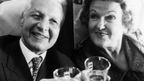
The other side of the spy ring – the communications experts – had developed the perfect cover story. Peter and Helen Kroger were, to their neighbours in sleepy suburban London, an antiquarian bookseller specialising in Americana and a homemaker. This was the ideal cover for their activities because it explained their regular business trips abroad with their books, even behind the Iron Curtain. Inside their outwardly nondescript bungalow, they had built a sophisticated communications centre, complete with a concealed radio transmitter and microdot equipment. Their real names were Morris and Lona Cohen, both US citizens who were veteran Soviet agents.
In the middle, the KGB contact running the operation on behalf of Moscow was known around London as Gordon Lonsdale, a Canadian businessman who specialised in supplying jukeboxes and vending machines. He enjoyed the rewards of capitalism, with his lucrative business paying for a fleet of cars and a yacht. In reality, his name was Konon Molody, a Russian-born KGB agent. His role in the Portland spy ring was to take the information from the two insiders at the research facility and pass it to the Krogers. This activity carried on undetected for several years until intelligences services received a tip that could not be ignored.
One of the Cold War’s most important spies, Polish intelligence officer Michal Goleniewski, aka Sniper, was a triple agent who supplied Soviet and Polish secrets to the CIA. He told them that the Soviets had a highly placed British informant involved in naval research. While this information was vague, it was troubling enough to prompt MI5 to send investigators to the Portland facility. Suspicion soon fell on Harry Houghton, whose clandestine trips to central London with Ethel Gee were watched with great interest. On one occasion they were seen handing a bag to a man who was later identified as Gordon Lonsdale. The trail led out to the suburbs, with Lonsdale being followed to the Krogers’ high-tech bungalow.
Over the next two months, MI5 and police laid a trap for the Krogers at the house across the road owned by their friends, the Search family. This surveillance operation was so dramatic that Judi Dench would later star in a hit 1983 West End play about it called Pack of Lies. Officers monitored comings and goings at the Krogers while the Searches maintained the pretence of normality. Daughter Gay Search, who was aged 15 at the time, told the BBC’s Witness History in 2014: “It’s astounding that Mum was so effective. I think at first it wasn’t clear to my parents that the Krogers were a big part of the investigation. Bit by bit MI5 let Mum see that Peter and Helen weren’t the people they claimed to be.”



Recent Comments