
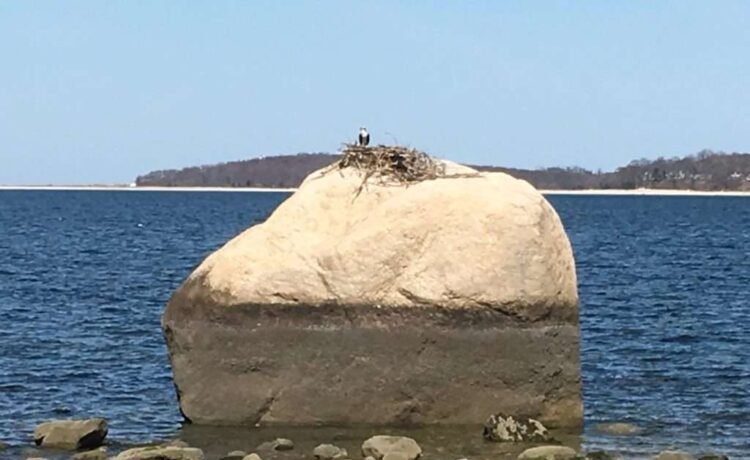
 A highly popular shore fishing destination, Target Rock is just one of five properties that form the Long Island National Wildlife Refuge Complex. It also has an interesting history.
Located on Lloyd’s Neck in Long Island Sound 25 miles east of New York City, the land was originally maintained as a garden estate by the Eberstadt family who donated it in 1967 to establish a sanctuary for migratory birds.
The refuge contains 80 acres of mature oak-hickory forest, a half mile of rocky beach, a brackish pond and several vernal ponds. It serves as critical habitat for a variety of plants and animals on Long Island.
The beach areas of sand ridge have juniper trees, which provide habitats for “olive” juniper hairstreak butterflies and eastern prickly pear cactus, a state-protected species. The one-acre brackish pond is particularly rich in biodiversity from plants to birds, turtles, mammals, and fish.
Black ducks and other puddle ducks live on the invertebrates and aquatic plants that inhabit the pond, while herons and egrets stalk the water’s edge for fish. Robins, catbirds, mockingbirds, thrushes, and other bird species roost and forage in the cordgrass that surrounds the pond and in the red cedar and other trees that border the upland edge of the pond.
The refuge is also a perfect destination for history buffs. The refuge was named after a large, 14-foot-tall rock in the water off the beach overlooking Huntington Bay.
As a prominent coastal glacial erratic boulder, it was used as a local navigation aid and for cannon and target practice during the Revolutionary War and the War of 1812.
During the American Revolution in 1778 the British erected “East Fort” on eastern side of Lloyd Neck near the rock to defend the harbors against American and French forces. During the British-occupation of Long Island between 1776 and 1783 the area became a refuge for displaced Loyalists.
You can reach Target Rock Refuge from Main Street (Route 25A) in the Village of Huntington. Take West Neck Road for five miles, then continue on Lloyd Neck Road which ends at Target Rock.
Photo: Target Rock.






Recent Comments