
Utility giant Duke Energy may not be a household name, but it sits at the epicenter of the AI data center boom and affordability debate as it plans to spend an industry record of $103 billion for growth over just five years—and CEO Harry Sideris isn’t afraid to say he expects that eye-popping number to grow.
“Ours will probably go up as we move into the future because the growth is not slowing down,” Sideris told Fortune in a sit-down interview recently, citing the AI surge. “We’re only beginning. This thing is not just a blip; it’s going to go on for a while into the foreseeable future.”
Charlotte-based Duke aims to add about 20 gigawatts of new power generation over a decade through gas-fired power plants, solar energy, battery storage, grid upgrades, and efficiency gains. That’s enough to service about 15 million homes. Compare that to the nearly 17 million residents in the combined Carolinas. And that’s not even counting the next-generation nuclear power that Duke aspires to add in due time.
Duke counts Amazon, Microsoft, Google, and Meta as major data center customers and has some of the fastest-growing states in population in its Southern and Midwestern service area. Charlotte-based Duke—the highest-ranking utility in the Fortune 500 at No. 144—leads the regulated utility industry in power generation and grid scale. The 125-year-old company gets its name from the power and tobacco industrialist, James Buchanan “Buck” Duke, whose family also gave its name to Duke University.
“It’s a good time to be in the utility business. I say that we’re the cool kids now,” said Sideris, who just finished his first year as CEO following an entire career at Duke and predecessor companies. “Everybody else has picked up on it.”
But despite Duke touting an emphasis on affordability and rate hikes below industry peers, its rates are still rising. Data centers account for only a fraction of the price increases, but the overall situation has sparked a feud with the Democratic North Carolina Gov. Josh Stein and others.
Stein complained earlier in April that Duke is asking for both a 15% rate hike and an extra $800 million in fuel costs, arguing that Duke is shifting the “cost of electricity from large industrial users onto the backs of regular people, making your utility bills more expensive.”
Sideris counters that Duke’s data center deals require the hyperscalers to pay for their own infrastructure. Duke’s rate hikes are needed, he said, because of population growth and grid upgrades, including hardening infrastructure to combat increasing severe weather events from climate change. In Duke’s footprint, Florida and the Carolinas are three of the fastest-growing states in the country for population, while Ohio, Kentucky, and Indiana are showing more modest growth. And all of them are attracting more data center projects.
“There are certain parts of the country where [data centers] are driving the cost higher in some of these markets. That’s not in our territory,” Sideris said, pointing to the Northeast and other parts of the Midwest.
“That doesn’t mean [rates] are not going to go up because there is so much to build. The data centers are paying for theirs, but there’s so much to build for population migration. We have 200,000 people moving into our service territory each year. So that takes infrastructure that does get spread out amongst everybody,” Sideris said. “Then there’s the other piece of that, which is hardening and making your system more resilient. That’s adding value, but it does cost money to invest in that. We’re replacing our wooden poles, like in Florida, with steel and concrete.”

The great power generation race
Out of Duke’s $103 billion capital spending plan—and counting—about 60% is dedicated to building new power generation, while the rest is going to grid expansions and upgrades—essentially the poles and wires.
Duke represents the single-biggest slice of the pie out of Investor-owned utilities nationwide aiming to spend at least $1.4 trillion through 2030, according to the nonprofit PowerLines. In doing so, utilities requested a record high $31 billion in rate hikes in 2025—more than twice the near record from 2024.
And speed in spending those trillions is critical to meet the needs of the AI hyperscaler developers, who emphasize the race against China for global AI supremacy.
Sideris argues that being a vertically integrated utility is an advantage in the AI game.
“The hyperscalers tell us that,” Sideris said. “They love to come to us because they know that there’s one person to deal with, and you’re going to be able to serve me from here to here.
“A lot of the issues that are in markets don’t exist for us because we go from soup to nuts—from the grid planning to the generation planning,” he added. “We can tell exactly how long it’s going to be.”
Another key advantage is the early adoption of so-called demand-side management—essentially requiring data centers to rely some on their backup power on the hottest and coldest days of the year when demand peaks. Sideris said Duke was the first utility to require such curtailments from hyperscalers to get them onto the grid more quickly.
“What we found is 99.99% of the time, we have plenty of power, but it’s those really cold mornings or those really hot afternoons,” Sideris said. “In our contracts, we have 50 hours (per year) that we can curtail them.
“Their first and foremost objective is speed, so this allows them to come online now versus having to wait—just for that short period of time—for an upgrade on a transmission line or a transformer to come in.”
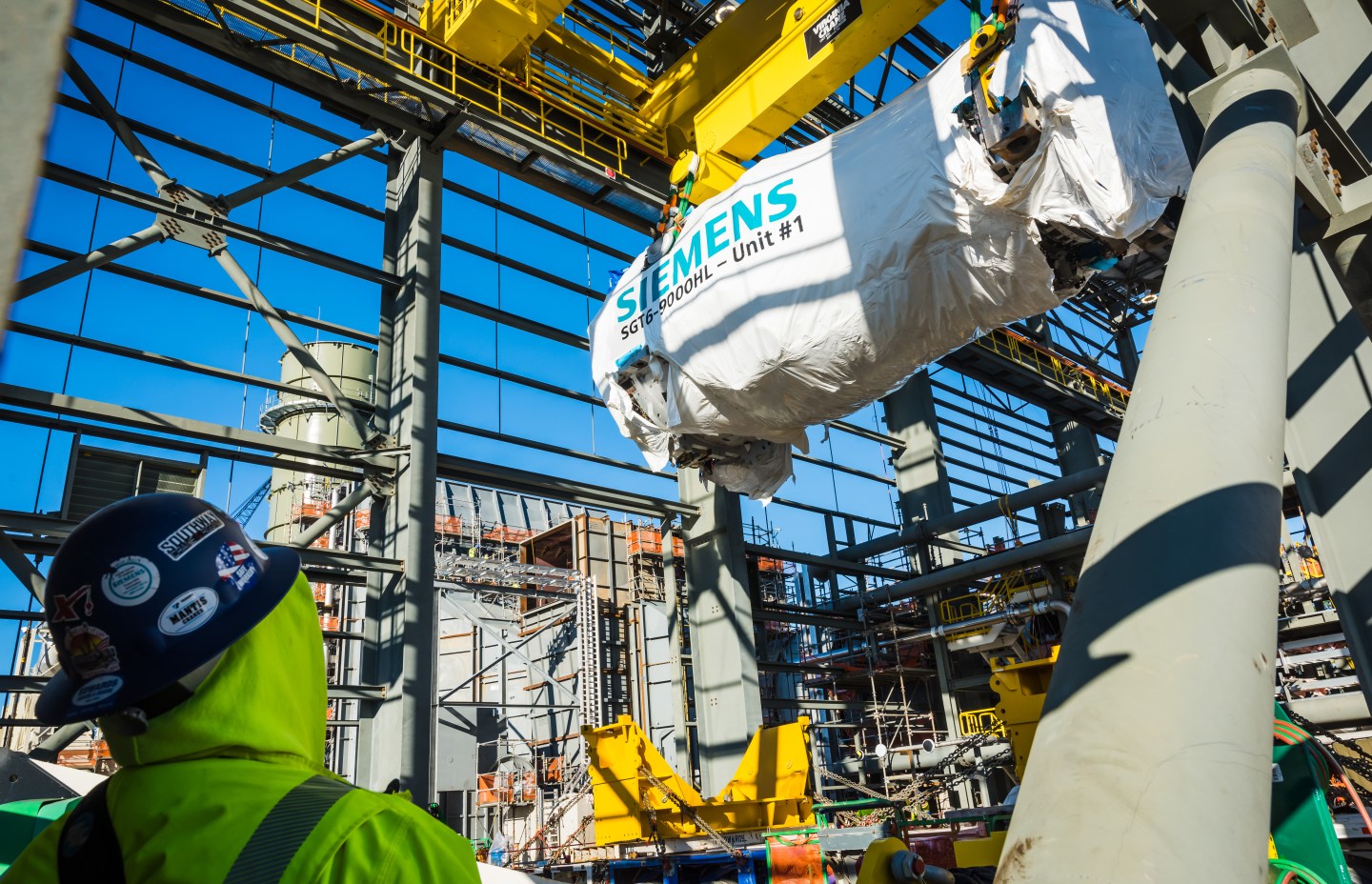
To meet the power demand, Duke is adding a lot of gas power. Duke contracted with GE Vernova for about 20 new, gas-fired turbines. Duke also is investing heavily in solar and batteries. And, with a large legacy nuclear fleet, Duke is extending the lifelines of its nuclear plants and upgrading them to produce more power.
And, yes, the plans involve keeping some of the dirtier coal-fired plants on life support beyond the previous goal of phasing out coal by 2035.
“We have always said that we’ll make sure that we keep things reliable and affordable first and foremost, and then increasingly clean,” Sideris said. “So, as this new load has grown so much, it has actually moved some of those (coal) dates out.”
Part of the feud with Gov. Stein involves a law approved in North Carolina last year—overriding the opposition of the governor—to eliminate certain state mandates for carbon emission reductions by utilities, and to allow for more flexibility on certain rate hikes.
Critics saw this as bad for ratepayers and for the environment, while supporters said it was necessary for grid reliability and growth—both for population and data centers.
After all, out of the $1.4 trillion in nationwide utility capital spending, the bulk of spending is in the South—from Texas to Maryland—where $572 billion in spending is planned. Next up is the Midwest with $272 billion in spending on the books.
Climate change and ‘bananas’
The spending costs will rise much higher if the utilities are reactive instead of proactive in their efforts to support growth and harden the grid, Sideris said.
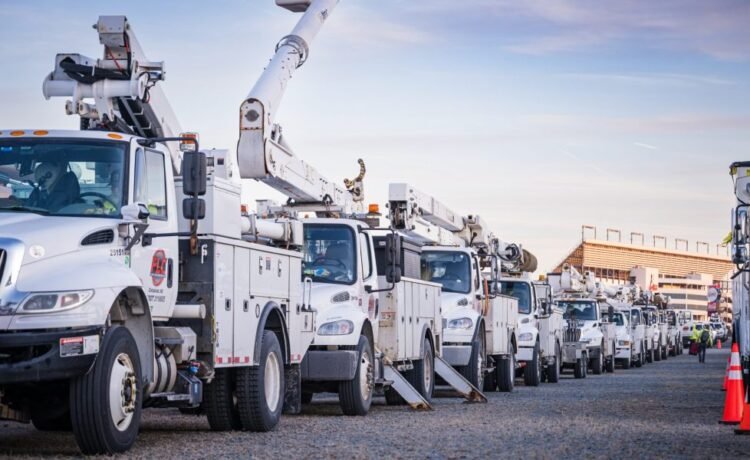
The Duke service area has taken hard hits of late from Hurricane Helene in 2024 to Winter Storm Fern in January.
“We take a very data-driven approach. We do know that storms are getting more frequent and stronger, and we’re seeing impacts in places that we usually didn’t see impacts,” Sideris said, citing repeated weather-related outage problems in the western Carolinas, typically more immune from weather events than Florida and the coastal regions.
“Where are the issues? Florida and on the coast of the Carolinas. That’s where we’ve been hardening things,” he said. “But then we have the storm that just completely destroyed western North Carolina, so we’re having to rethink what we need to do there.”
After decades of limited or flat electricity growth nationwide, the industry is dealing with record growth at the same time the grid needs major upgrades and repairs. All of that costs a lot of money.
And, when it comes to the AI boom, Sideris says there’s a range of views: Some welcome data centers and the added tax revenues, while others put up a fight. So communication is key. “Anytime you want to build infrastructure anywhere, there are going to be questions,” he said, and those questions deserve honest answers from Duke stakeholders who live and work in the same communities.
On the other hand, he said, some people simply oppose everything that’s new—well beyond NIMBYism, “not in my backyard.”
“I call it BANANAs now. Build absolutely nothing anywhere [near anything],” Sideris said. “It used to be not in my backyard, but now even people who don’t live there don’t want it.”






Recent Comments