
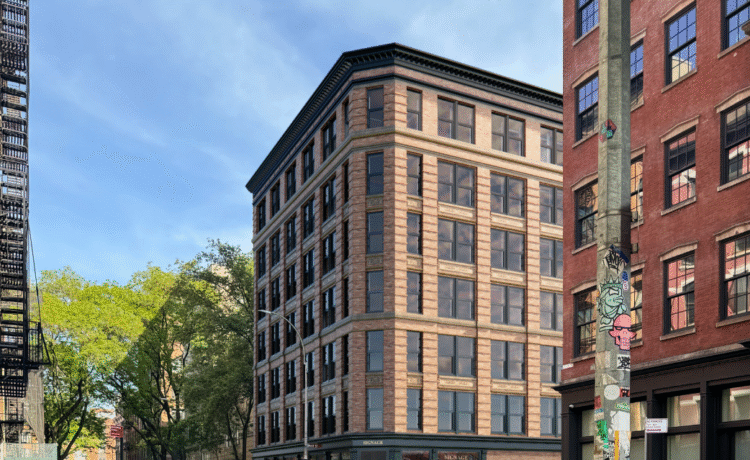
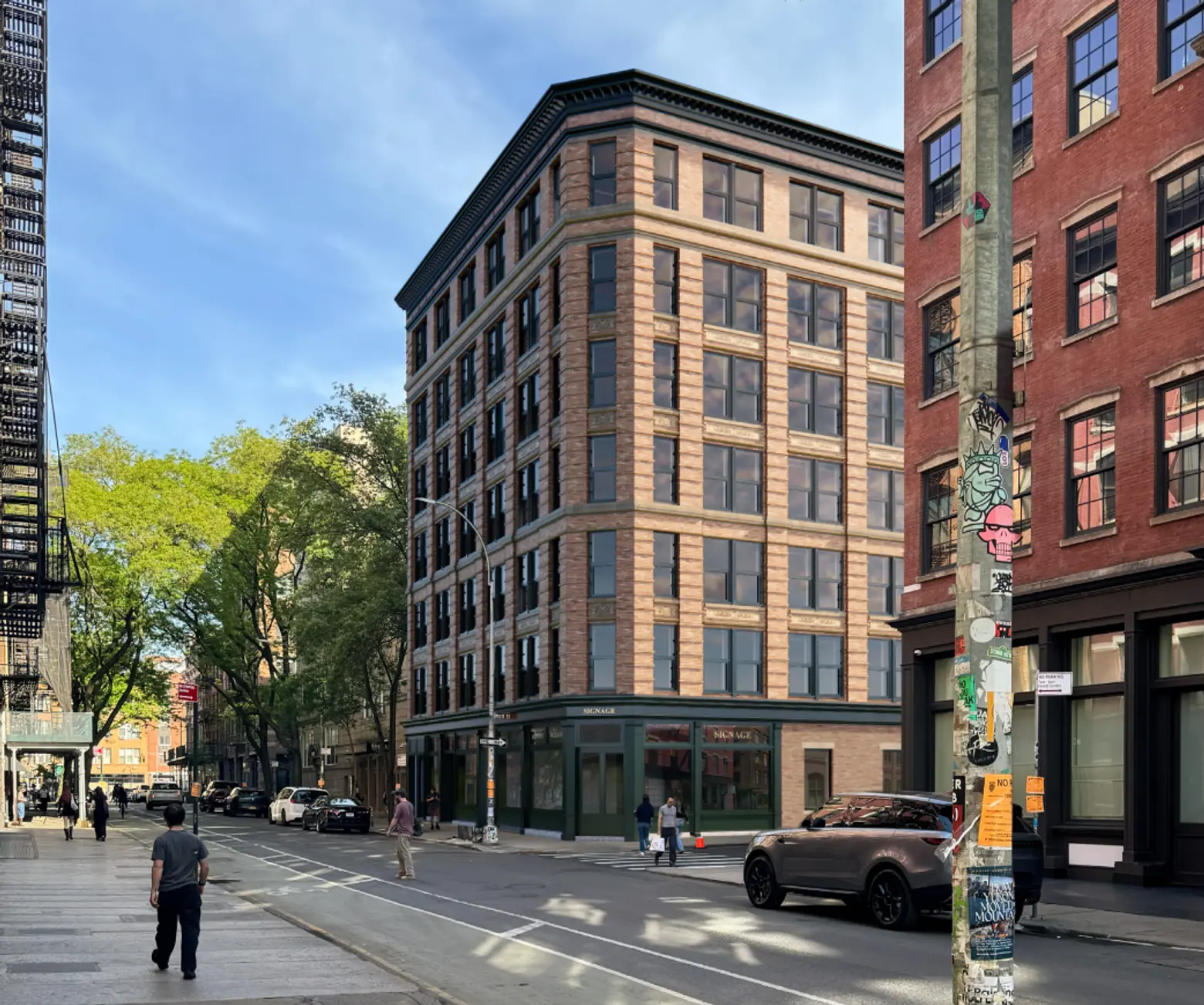
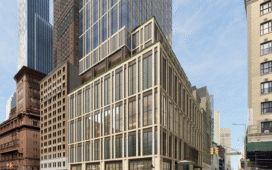
Rendering of the proposed building from Bleecker and Mott Streets. Credit: BKSK Architects
The former home of Manhattan’s only Planned Parenthood clinic in Noho is set to become luxury condos. The Landmarks Preservation Commission this week approved a plan to convert the Classical Revival-style commercial building at 26 Bleecker Street into 15 luxury condominium residences. Planned Parenthood, which first moved to the building in 1989, sold the property last year to Israeli development firm Izaki Group Investments for $38.1 million. The nonprofit, which officially shut down operations at the building last October, cited increasing financial and political pressures as reasons for selling.
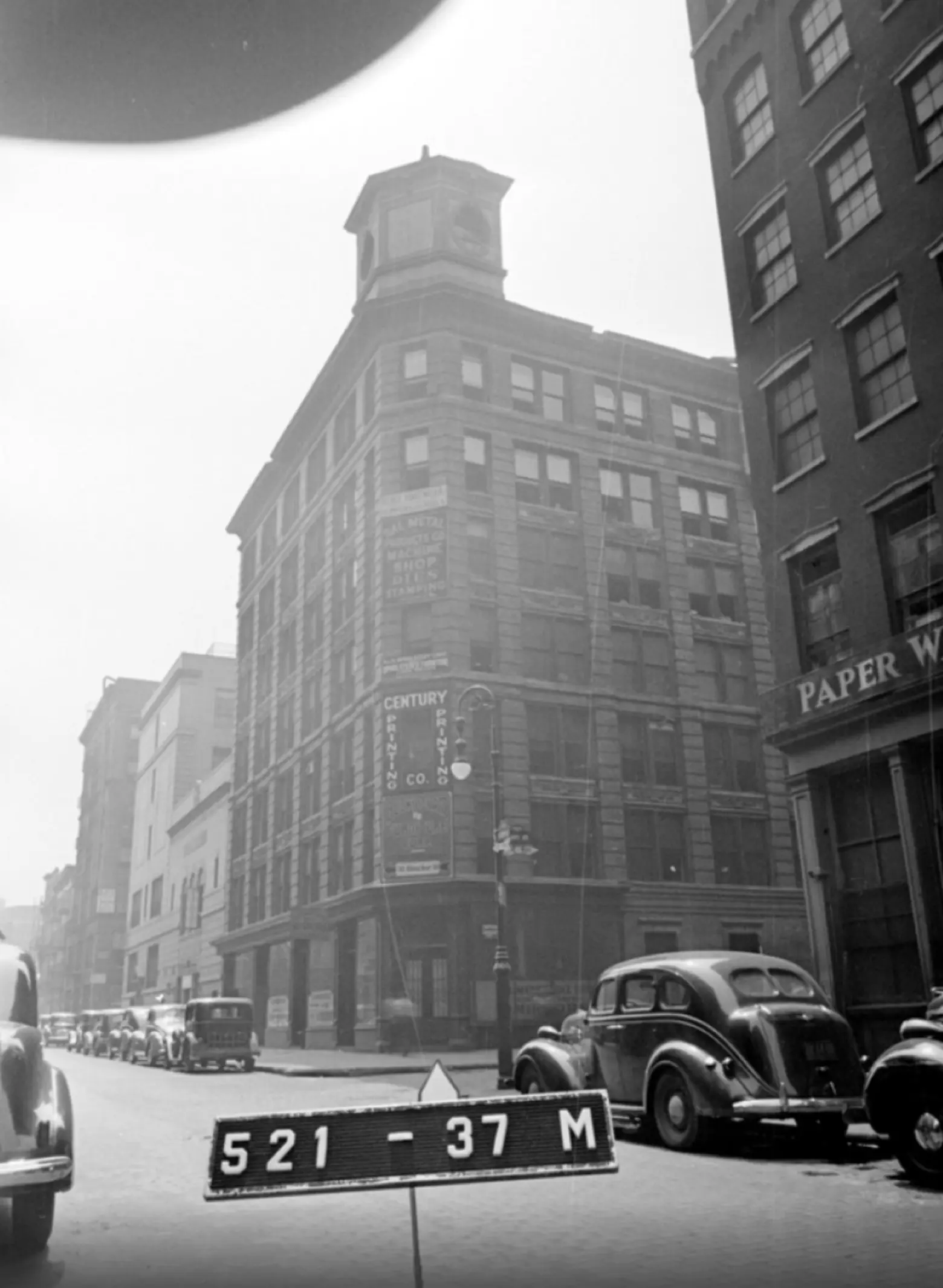
Designed by architect Louis F. Heinicke in 1900, the building served several purposes before Planned Parenthood, including as space for clothing manufacturers, furriers, and printers, according to the LPC.
The building sits within the Noho East Historic District, which was designated by the commission in 2003 as part of an expansion of the earlier established Noho Historic District.
As the presentation reveals, the building will offer no more than three units per floor, with a new addition containing two penthouse units. In total, plans show 15 residences and amenities like a fitness center, thermal spa, and a shared rooftop terrace.
Modifications to the building, designed by BKSK Architects, include the addition of ground-floor retail space, restoration of brick, terracotta, and cast iron elements, installation of energy-efficient windows, restoration of the building’s cornice, and the addition of a penthouse on the top level.
During Tuesday’s hearing, Jeremy Woodoff, representing the Victorian Society of New York, said the group supports most of the proposed changes to the building.
“Thanks to the admirable research the applicant has done to locate historic facade drawings, it seems the work on the ground floor is very close to being fully restorative,” Woodoff said. “The materials, details, and finish of the proposed painted wood storefront infill are completely appropriate.”
“The work will not destroy any significant historic material and will bring the building closer to its original condition,” he added. “We also have no major concerns about the proposed rooftop addition.”
Woodoff did say the group believes the cornice restoration “does not go far enough,” pointing to a 1904 image of the building provided in the presentation that shows two anthemions and other architectural elements that were not included in the proposal.
He also said the permits would allow developers to replace the building’s historic one-over-one double-hung windows with energy-efficient hybrid windows. Woodoff reiterated the group’s previous stance on the importance of replacing elements in designated buildings with materials and configurations as close to the original as possible.
“Small energy savings” from the hybrid windows compared to the original windows are “not enough” to compromise the building’s architectural integrity, according to Woodoff.
Representatives from the Historic Districts Council and Village Preservation also expressed support for the project during public testimony.
Planned Parenthood first leased space in the roughly 43,000-square-foot building as a tenant in 1989, and officially purchased the property in 1993 for $5 million. Before the sale, the organization was the building’s sole tenant.
A representative previously told Curbed that the building requires HVAC and boiler replacements estimated to cost several million dollars, funds the group said it would prefer to direct toward patient care.
In an October statement announcing the building’s closure, Wendy Stark, the president and CEO of Planned Parenthood Greater New York, blamed President Donald Trump and Congress for defunding the nonprofit and broader system challenges of the country’s health care system
“Like many health care providers, PPGNY is fighting to overcome ongoing structural health system, social, and political challenges: inflation, stagnant reimbursement rates, shrinking grant revenues, staffing shortages, continued pandemic recovery, increasing cybersecurity costs, and a federal government that is attacking our fundamental human right to sexual and reproductive health care, particularly abortion and gender-affirming care,” Stark said.
“The sale of 26 Bleecker Street will allow us to maintain a strong presence in historically underserved communities, where we’ll continue to serve and support the people who need us most. Though this chapter is closing, our commitment to you remains unwavering.”
The sale leaves the organization with no locations in Manhattan and just three citywide, including clinics in Queens, the Bronx, and Brooklyn, at a time when reproductive rights are under attack. A Staten Island center closed last year, along with three others upstate.
Last year, President Donald Trump signed the “Big Beautiful Bill,” which included funding cuts for Planned Parenthood nationwide, including restrictions on Medicaid patients receiving care at the organization. As more than half of the organization’s patients rely on Medicaid for essential care, millions of individuals were cut off from cancer screenings, STI treatments, birth control, and other preventive services.
Those cuts are slated to expire this summer, though Congress could renew them for another year, according to Stateline.
RELATED:





Recent Comments