
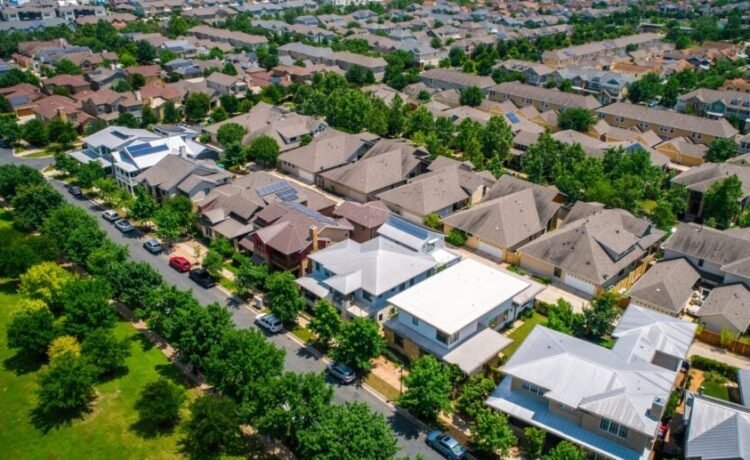
Both active and passive real estate investors have pulled back over the last year. For example, Redfin reported that mom-and-pop investors pulled back by 6% late last year and 13% for condo investments.
Anecdotally, I’ve heard this from professional real estate operators as well. I talk to at least a couple every week, and for several years now, they’ve said the same thing: “It’s really hard to raise capital from individual investors right now.”
But here’s the thing about retail investors: Because they invest based on “vibes” and headlines, they only start investing well after a recovery. They wait until the headlines are all hunky-dory again, and after assets have been performing well for a while. By then, they’ve missed out on the best opportunities.
Don’t take my word for it. Dalbar has studied this for decades, pointing out how retail stock investors consistently underperform the market at large. Over a 20-year period, the S&P 500 earned an average annual return of 8.2%, while the average retail investor earned a quarter of that at 2.1%.
Here’s why you should rethink everything you “know” about today’s real estate market and start investing slowly and steadily in real estate every month as I do.
The Post-Crash Multifamily Recovery Is Still Early
Apartment property prices crashed 25%-30% in 2022, after interest rates and cap rates shot through the roof. They’ve since started recovering but remain in the early stages of that recovery.
Check out Freddie Mac’s Apartment Investment Market Index (AIMI).
Everyone (myself included) assumed that recovery would go faster after prices hit bottom in late 2022-early 2023. But cap rates move in near-lockstep with interest rates, and persistent inflation has kept rates higher for longer.
That leaves plenty of room for improving prices over the next few years.
Institutional Investors Are Moving More Money Into Real Estate
Seeing that recovery underway, large investment firms poured $216 billion into apartment buildings, industrial, retail, and other commercial real estate in the first quarter of 2026. Globally, that’s an 18% increase over last year, and North America saw a 25% jump in investment.
What do they know that you don’t?
A lot, actually. They have access to world-class data from private firms—and entire teams of professionals whose full-time job is to analyze risk.
Returning to the stock analogy, this is why active fund managers still outperform individual investors, even if they don’t consistently outperform benchmarks like the S&P 500.
Higher Cap Rates and Bang for Investors’ Buck
Higher cap rates mean lower property prices per dollar of income. That’s bad news for sellers but great news for buyers.
Sure, higher interest rates throttle cash flow today, at least for investors who finance a huge portion of the purchase. But as they say, you marry the property but date the rate. Investors can refinance when rates move lower, but they buy in based on today’s (relatively) high cap rates.
That sets you up for supercharged cash flow as rents rise and your loan payments potentially fall.
Distressed Sellers
Investors score the best deals from distressed sellers. And those lingering high cap rates and interest rates have left plenty of distressed multifamily operators.
High cap rates have put many operators who bought from 2020 to 2023 upside down on their properties. They can’t sell, and they can’t refinance without bringing huge amounts of cash to the table—which they don’t have.
Plus, high interest rates have left many people who took out floating-rate loans with negative cash flow. Many have defaulted on their loans and are being forced to sell at steep discounts.
That’s no fun for them. But it’s great for us as investors buying in today.
New Rental Construction Is Falling
An excess of new rental supply has sent rents falling in much of the country, especially the Sunbelt.
That imbalance of supply and demand is shifting. Permits for new apartment construction have fallen from 761,000 in early 2023 to 491,000 in April. That’s a 35% drop.
It takes time for markets to absorb a supply glut, but many are in the process of doing so in mid-2026. Sure enough, you can see it in the surging apartment vacancy rate over the last few years, hitting a peak in early 2026 and starting to decline again.
More Conservative Underwriting
In the years leading up to 2022, many real estate investors played fast and loose with underwriting. They borrowed short-term, floating-rate mortgages and projected huge rent growth and modest expense growth.
Those operators have since gone out of business. Those who survived learned some expensive lessons.
Investors today use more conservative financing and underwriting. They have to, with rents stalling and even declining year over year, and the surge in property taxes and insurance between 2023 and 2025.
For passive investors, that means safer investments than those available a few years ago. Often, we see investments paying 8% distributions immediately, between the high cap rates and operators pursuing low-risk, high-cash-flow properties that are already performing well today. No major renovations or rent hikes are required—just strong cash flow based on today’s rents.
Better Terms for Passive Investors
Because many operators have had trouble raising capital over the last couple of years, they’ve had to offer better terms to attract investors, like higher preferred returns and better profit splits. We see this all the time in my co-investing club, with more operators offering 8%-10% preferred returns and 70/30 or 80/20 profit splits instead of 60/40.
How I’m Investing Today
Don’t get me wrong: I’m not suggesting you try to time the market. Quite the opposite, in fact.
I practice dollar-cost averaging with my real estate investments, investing $2,500 or $5,000 every month. I go in on these investments with a co-investing club, where we all split the minimum investment so we can each invest less.
Too many individual investors look at recent returns and headlines, letting emotion dictate their investments. Look at the big picture instead: Markets go through cycles, but those cycles aren’t always predictable. If you keep investing month in and month out, however, you’ll come out ahead of all those nail-biters sitting on the sidelines.
I do try to invest in recession-resilient real estate, however. Shocks happen, and I don’t want my portfolio melting in the next rainstorm.
Rather than trying to time the market or pick the next hot asset class, I invest passively in deals all over the country. I invest in many different property types, from single-family to multifamily, mobile home parks to industrial, and raw land to ground-up construction. In fact, my co-investing club just vetted our first international deal, in Canada.
Some investments will inevitably underperform. Others will overperform. Most will fall in the middle of the bell curve. That broad exposure is precisely what helps me sleep at night.





Recent Comments