
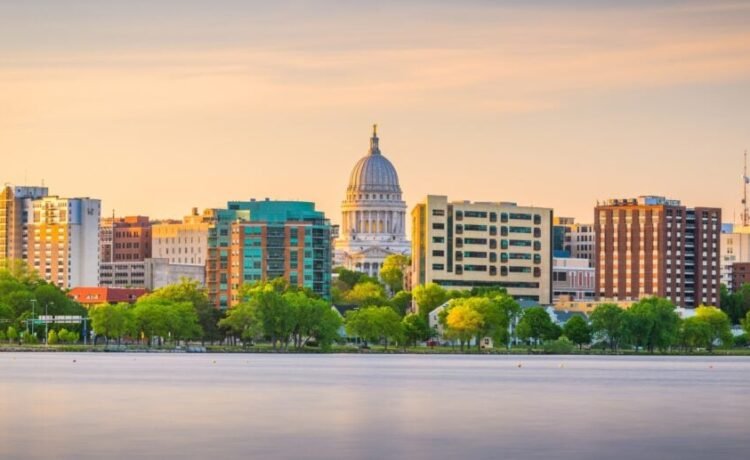
Your best investment could be a goose-feather-filled down jacket and a pair of fur-lined winter boots. Why? Because Michigan and Wisconsin are the hottest housing markets in the U.S.
That’s according to Redfin’s 2026 “hottest neighborhoods” ranking, where Michigan and Wisconsin took five of the top 10 spots between them.
Why the Midwest, and Why Now?
Redfin senior economist Asad Khan explained:
“Midwest cities and lesser-known places in Florida are having a moment—and affordability is the reason. Many of these neighborhoods sit just outside major hubs like Milwaukee, Chicago, and Tampa, hitting a sweet spot: lower cost of living without giving up access to highly rated schools, shopping, and dining. They have the convenience of big cities without the big-city price tags.”
For small investors looking to offset risk with lower price points, the Great Lakes and other Midwest cities offer buy-and-hold workhorses to buttress your portfolio without sleepless nights.
According to Redfin’s 2026 analysis, Wisconsin landed three of the 10 hottest neighborhoods—Oak Creek, West Bend, and Menomonee Falls, all Milwaukee suburbs. Michigan contributed two more: Lincoln Park near Detroit and Howell in Southeast Michigan.
Redfin’s ranking was based on year-over-year growth in listing views and measures of buyer competition. Proving its staying power, 2026 was the second consecutive year that Midwestern metros dominated the list.
Here is how Redfin ranks the 10 hottest neighborhoods in America for 2026 and their respective median home sales prices:
- Land O’Lakes, Florida (Tampa metro): $425,000
- Plant City, Florida (Tampa metro): $320,000
- Oak Creek, Wisconsin (Milwaukee metro): $381,200
- Oceanside, New York (Nassau County): $725,000
- West Bend, Wisconsin (Milwaukee metro): $350,000
- Lincoln Park, Michigan (Detroit metro): $158,000
- Lee’s Summit, Missouri (Kansas City metro): $397,500
- Little Neck, Queens, New York (New York City metro): $796,500
- Howell, Michigan (Warren metro): $385,000
- Menomonee Falls, Wisconsin (Milwaukee metro): $410,000
Bygone-Era Pricing
In an unaffordable housing market, some of the prices on the Redfin list appear to be from a bygone era. Fortune reports that many of these markets are 30% or more below similar houses in coastal cities. For example, the Redfin top 10 list shows an average home price in Lincoln Park, on the outskirts of Detroit, at $158,000.
“For many, it’s not just about cheaper homes, but about being able to build wealth earlier without drowning in overhead,” Danielle Andrews, a real estate agent with Realty One Group Next Generation, previously told Fortune.
More Than Cheap Houses
Crucially, offering more than just cheap accommodation, the Midwest is attracting residents for employment, lured by an affordable lifestyle commensurate with starter salaries.
For Generation Zers who are making entry-level salaries, “it’s going to be really difficult to survive and save money” in major cities like Los Angeles and New York, Sam Radbil, research and content strategist at Checkr, a background screening company, told CNBC. The Midwest already has a natural catchment of renters, too: university graduates entering the workforce.
The Wall Street Journal notes that one of the most sought-after areas for would-be residents is the stretch of Wisconsin along the Fox River Valley from Oshkosh to Green Bay. In the six surrounding counties near Appleton, Oshkosh, Neenah, and Green Bay, only 1 in 7 buyers spends over 30% of their income on housing—the bellwether for affordability—while the national average is 1 in 5.
Equally, only 40% of renters in the area spend more than 30%, compared to half nationwide, while wages are above the national level, thanks to the heavy emphasis on manufacturing jobs.
“The Value Play of the United States”
“It is the value play of the United States,” Joe Wadford, an economist at the Bank of America Institute, told the Journal. “It is a great place to put down roots.”
For remote workers who can keep high-paying jobs based on the coasts, parts of the Midwest are a potential gold mine. For investors, too, looking to release home equity, certain cities make sense; however, as out-of-towners flood in, prices are increasing, and potential investment properties are being snapped up by homebuyers.
Buying Frenzy Heats Up
In analyzing Redfin’s data, Fortune notes that Lincoln Park has seen a 14% year-over-year increase in home sales, and nearly 40% of homes here sold for over asking price, a trend also reflected in other in-demand parts of Michigan.
“It’s pretty low inventory,” Michigan-based Redfin Premier Anne Loehr said of Howell, Michigan, in the Redfin report. “There aren’t many homes to sell because it’s such a popular place.”
This is also visually reflected in Zillow’s Market Heat Index for March 2026, which showed the power balance shifting from buyers to sellers in certain Midwest markets. Meanwhile, the dynamic reversed in some Sunbelt markets, shifting from sellers to buyers.
Larger Midwestern Cities Dominate for Cash Flow and Appreciation
For a combination of cash flow and appreciation, Norada Real Estate Investments did a side-by-side evaluation of major Midwestern markets—showing 8%+ cap rates from properties priced around $160K, generating rents of about $1,500 a month in B and B+ neighborhoods—and found that Cleveland, Indianapolis, Kansas City, and St. Louis were the top-performing metros, depending on which neighborhoods investors chose.
The Wall Street Journal/Realtor.com Spring 2026 Housing Market Ranking, which evaluates the 200 most populous U.S. metropolitan areas based on a mix of housing market conditions and broader measures of economic health and livability, had South Bend-Mishawaka, Indiana/Michigan, in the top spot for the second consecutive quarter, while Appleton, Wisconsin, was in second place.
There were other notable Midwest cities in the top 20, too, including:
- Canton-Massillon, Ohio
- Akron, Ohio
- Flint, Michigan
- Lansing-East Lansing, Michigan
- Milwaukee-Waukesha-West Allis, Wisconsin
- Peoria, Illinois
- Kalamazoo-Portage, Michigan
- Rockford, Illinois
Final Thoughts
As demonstrated across various reports, the Midwest is having its moment and appears to have stolen the Sunbelt’s thunder. For investors, the combination of affordability and jobs makes it an attractive proposition, but many people share the same idea of moving here, which is heating up competition for great deals. That’s to be expected and what investors want. Buying in an affordable area with no jobs is a recipe for disaster.
The good news is that the Midwest will continue to have heat indices in the high 90s for a while to come. “The Midwest will become the fastest-growing region of the country by the end of the decade,” said demographer Diana Lind, publisher of the New Urban Order newsletter.
However, the Midwest is not monolithic. It’s made up of a myriad of diverse markets and economies. For investors, the challenge is not simply to follow the herd, which has been disastrous for some in Indianapolis, but to research and discern which markets best suit their needs.



Recent Comments